Who Will Buy My Kidney? The Organ Trade Market in Egypt
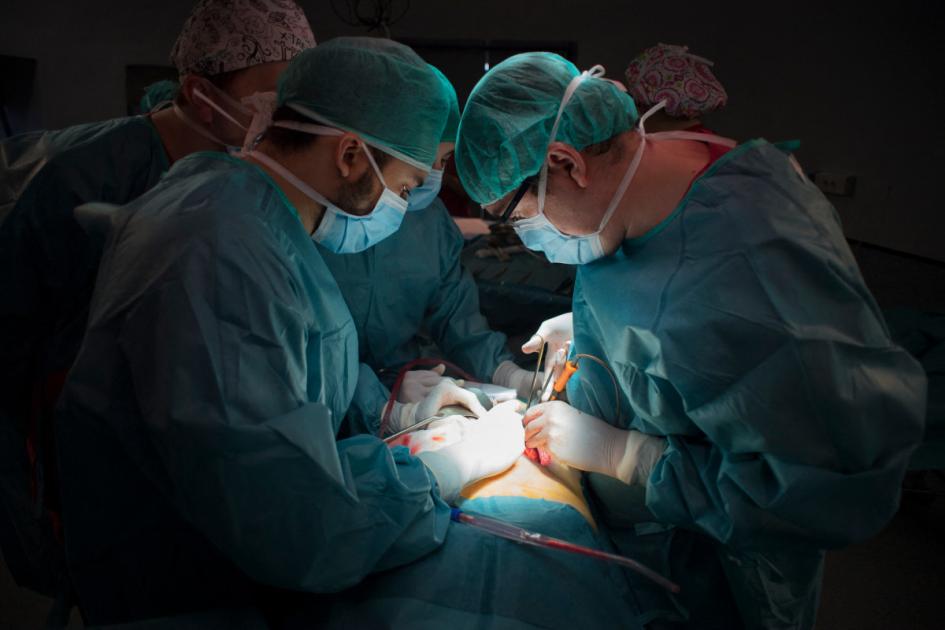
Egypt is a regional hub for organ trafficking, with a thriving black market due to weak regulation, social media exploitation, and high poverty, according to WHO and local officials.
A study by the World Health Organization revealed that Egypt is a regional hub for human organ trafficking, ranking among the top five countries worldwide in exporting human organs, along with China, the Philippines, Pakistan, and Colombia, and first in the Middle East.
Over the past years, numerous human organ trafficking crimes have spread, sparking debate in Egyptian public opinion, as gang methods and tricks have multiplied—'financial enticements, fake accounts on social media platforms, forging X-rays and medical tests, signing promissory notes, and unlicensed medical centers,' according to what 'Independent Arabia' has monitored from previous incidents and conversations with doctors and specialists.
Doctors attributed the prevalence of human organ trade in Egypt to 'the absence of legislation regulating organ transplantation.' They stressed that the lack of law 'caused the spread of these crimes and contributed to their boom in the black market, leading many patients to resort to illegal means.' In addition to the absence of legislation, unmonitored social media became 'an open field for mafias and brokers of human organ trade.'
"Kidneys" are a hot commodity
Dr. Refaat Kamel, head of the Middle East Society for Organ Transplantation, believes that the law regulating human organ transplantation criminalized the sale and trafficking of human organs for money, but 'networks, brokers, and criminal gangs attract victims willing to donate organs for meager sums.'
Kamel added, in his interview with 'Independent Arabia,' 'During the preparation of the organ transplantation law, there were calls to tighten penalties for such crimes, up to execution for perpetrators. However, some committee members at the time found that penalty too harsh, and the committee settled on life imprisonment for cases of organ trafficking.'
The professor of liver transplantation points out that 'over 23 years, no cases of trafficking in liver operations have been reported despite performing more than 5,000 liver transplants, unlike kidneys where some trafficking cases have occurred in recent years.'
In September 2022, Egyptian President Abdel Fattah El-Sisi ordered the establishment of the largest regional center for organ transplantation in Egypt, the Middle East, and Africa within the new medical city at Nasser Institute, in cooperation with major specialized global companies, aiming to create an integrated system including a database of transplants, patients, and donors.
Last April, a 15-year-old child living in the Shubra El-Kheima area of Qalyubia Governorate north of Cairo fell victim to 'dark web' gangs, instigated by an Egyptian citizen residing in Kuwait. The killer livestreamed the crime online and dismembered the victim's organs to facilitate their sale to organ trade mafias via 'dark web' sites for 5 million Egyptian pounds ($102,959).
Last May, security forces in Port Said Governorate arrested a woman who intended to sedate her child to extract his internal organs and sell them to organ trafficking mafias. The mother had contacted individuals on 'dark web' sites, who asked her to film her child completely naked and send videos and photos in exchange for a large sum of money. She gave her son an overdose of drugs and was then arrested.
Three years ago also, security forces arrested a gang of 10 people, including three doctors, a female employee at a kidney institute, a private lab employee, and a private hospital nurse, who carried out more than 100 human organ theft operations. They recruited people willing to donate their organs through advertisements posted on social media.
In December 2016, the Administrative Control Authority dismantled the largest international human organ trafficking network, comprising 41 defendants, including 12 doctors, 8 nurses, and several university professors and brokers. They amassed huge fortunes through these illegal operations. The network, which included Egyptians and Arabs, exploited the economic conditions of some Egyptians, trafficking organs for meager sums while selling them to Egyptian and foreign patients for millions of pounds and performing surgeries in unlicensed places.
Away from oversight and the eyes of the law
On the use of the internet in these crimes, former Assistant Interior Minister for Information Major General Mahmoud El-Rashidi says, 'Social media platforms have become an open field and breeding ground for human organ trafficking gangs and brokers.' He attributes this to 'their lack of security or legal oversight, allowing them to carry out criminal and terrorist activities away from the eyes of the law.'
According to El-Rashidi, human organ trafficking gangs attract many internet users who seek quick profits and lack technological awareness, explaining the recent widespread proliferation of 'dark web' crimes.
The former Assistant Interior Minister for Information points out that the problem currently facing security authorities in Egypt is that some pages promoting human organ trafficking crimes 'are broadcast from outside the country, and the state has no authority over them according to the principle of territoriality of laws, except in the presence of international treaties and agreements. As for pages broadcast from within, they are subject to the authority of the Egyptian state and perpetrators are punished under the Anti-Cybercrime Law.' He revealed that many crimes occur from platforms broadcasting from within the country but using servers outside the country to promote organ trade, thus evading security and judicial prosecution.
In El-Rashidi's view, the first line of defense against organ trafficking crimes on social media platforms lies in 'spreading technological awareness about safe and rational internet use.'
Read more
Organ donation in Egypt: an unresolved issue
Celebrities donating organs after death in Egypt: real or propaganda?
Global revolution in organ transplantation and 'uterus' expands
The Egyptian government denied last May the circulation of posts on social media claiming the spread of organ trade gangs including doctors, luring and kidnapping children to sell their organs in several governorates. It clarified that the circulating posts are fake and have been repeatedly shared with the same wording since 2017.
According to lawyer at the Court of Cassation and member of the Foreign Lawyers Association in Germany, Amr Abdel Salam, human organ brokers 'exploit citizens' financial need to obtain organs for meager sums.' He explained that human organ trade 'has expanded its activity and now surpasses arms and drug trafficking,' according to Abdel Salam.
The lawyer at the Court of Cassation, in his interview with 'Independent Arabia,' noted that the law regulating human organ transplantation is a deterrent and includes decisive penalties against human organ brokers, with penalties reaching life imprisonment. He pointed out that the law prohibits the sale or trade of organs for any monetary amount.
Original source: Independent Arabia

Comments (0)
Be the first to comment.