Collective Marriage: A Social Culture That Promotes Solidarity and Eases Burdens
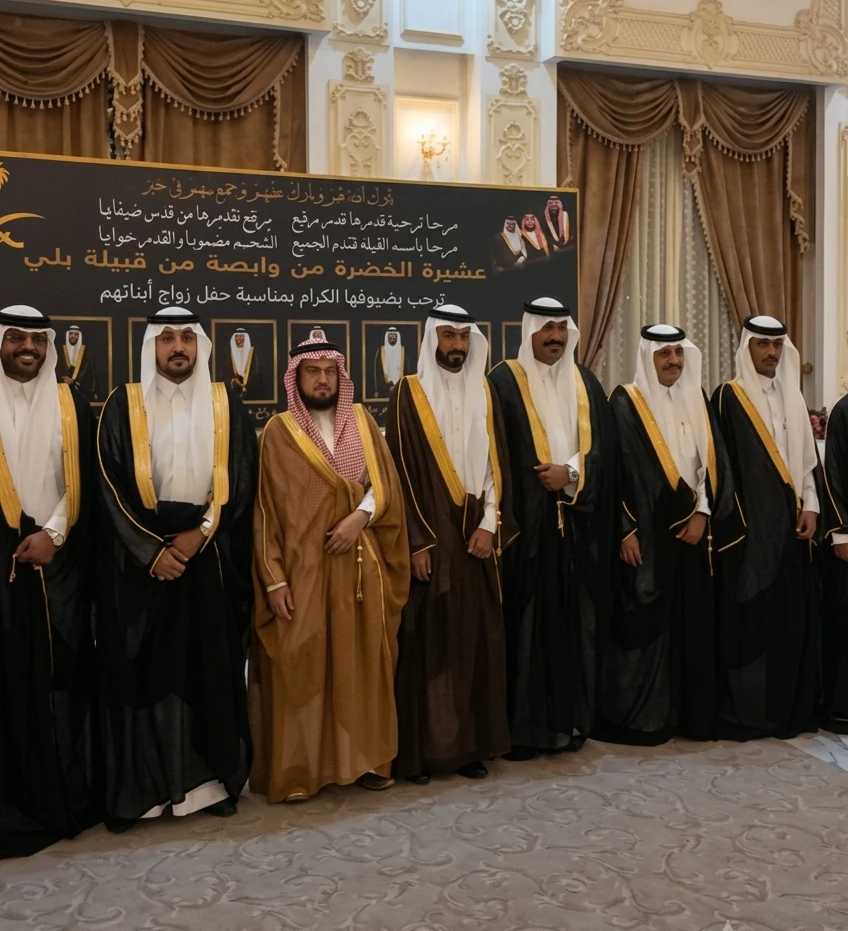
In recent years, collective marriage has become a prominent social initiative in regions of the Kingdom, turning into an occasion that strengthens values of solidarity and cooperation among community members and brings families together in a single celebration, in addition to the economic and organizational benefits it provides.
The Al-Khadra clan of the Bali tribe in Tabuk celebrated the fourth edition of the collective marriage, with the participation of several grooms and a large attendance of relatives and friends, reflecting the cohesion of the community and its keenness to continue these initiatives.
34 young men wed in two years.
Sheikh Abdullah Subaih Al-Balawi confirmed that collective marriage has achieved remarkable success in the past period and contributed to marrying off 34 young men in less than two years, noting that all marriages were successful, adding that these initiatives enhance solidarity, ease burdens on youth, and encourage those whose marriage has been delayed to take the step.
Ibrahim Abdullah Al-Khadri Al-Balawi, one of the organizers of the ceremony, explained that the idea of collective marriage was launched on the initiative of the clan's elders and youth with the aim of bringing the family together and strengthening bonds among them, noting that holding a single ceremony helped save time and effort, and distributing organizational tasks among specialized committees reduced responsibilities for the grooms and their families.
For his part, Sheikh Mutab Obaid Al-Balawi emphasized that collective marriage is not limited to reducing costs but represents a social occasion that strengthens family ties and acquaintance among family members, adding that these initiatives contribute to rationalizing effort and reducing the multiplicity of banquets, calling on tribes and clans to adopt them for their positive effects.
One of the supervisors of the collective marriage committees in the Al-Harouf clan, Rashid Onaizan Al-Harfi Al-Balawi, pointed out that the experience has proven successful and has become of wide interest, explaining that its benefits include saving time and effort for grooms and invitees by combining all occasions into one date.
He added that the organizing committees handle all the details of the ceremony, which alleviates the burden on the groom, noting that the groom's contribution in the marriage of the Al-Ruwaifan clan does not exceed 10,000 riyals and he receives greater returns thanks to solidarity among the clan members, stressing that the experience started in the north of the Kingdom before spreading to a number of tribes.
Abdullah Dakhilallah Al-Balawi, father of one of the grooms, explained that collective marriage embodies the meanings of cooperation and solidarity among the tribe's members and contributes to saving time and reducing costs and burdens, noting that one of its most prominent advantages is bringing family members together in one occasion, which strengthens family ties and gives everyone a chance to meet, wishing success to all the grooms.
Original source: Akhbaar24





Comments (0)
Be the first to comment.