Decoration with Marw: White Ornaments in Traditional Architecture
Marw Decoration: White Ornaments in Traditional Architecture
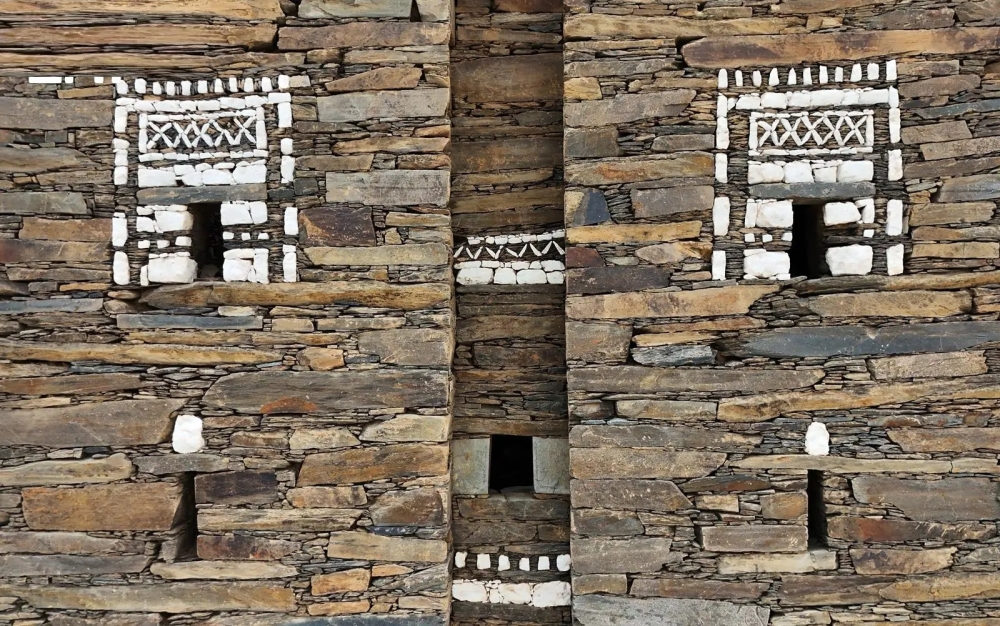
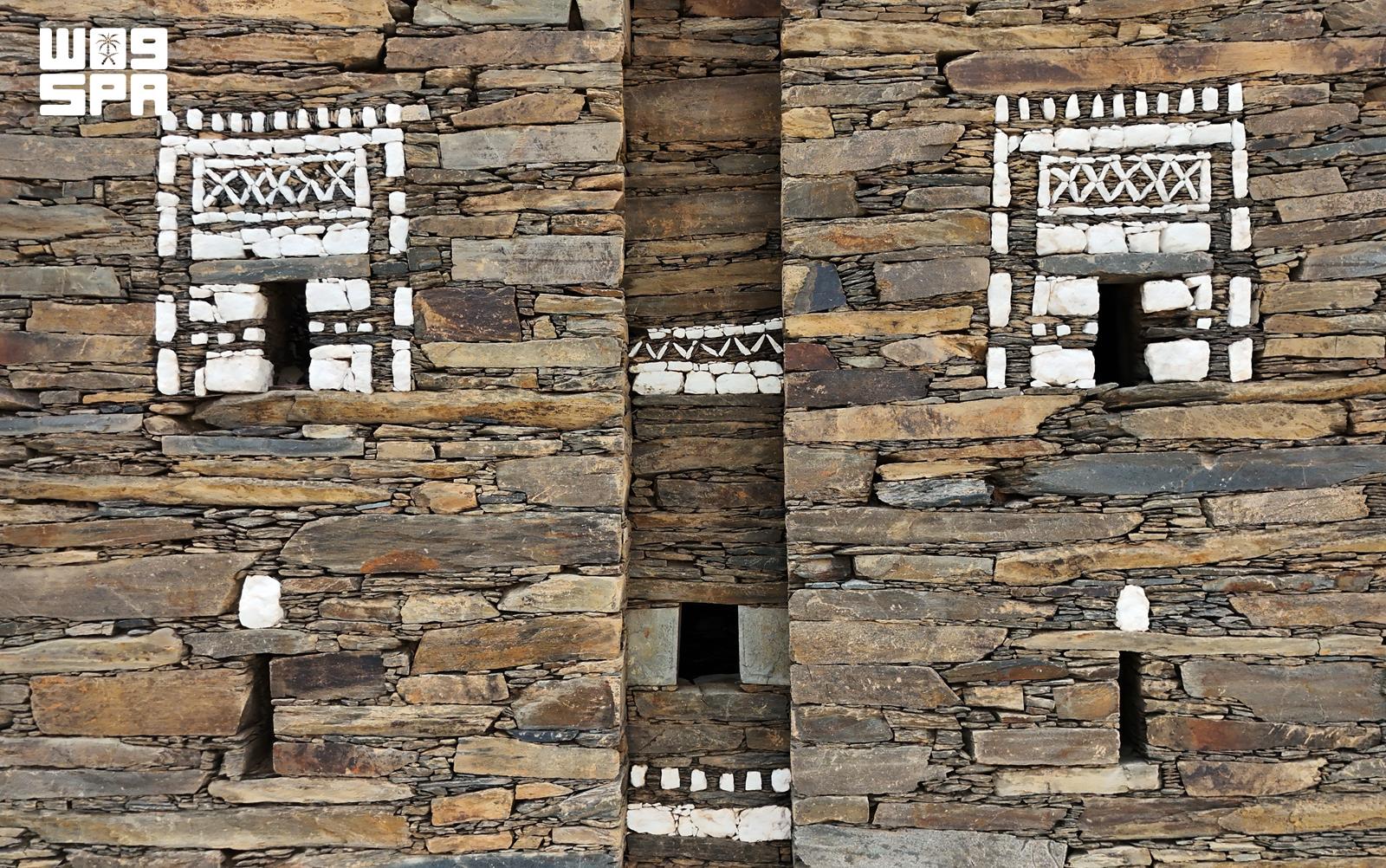
Traditional stone buildings in the Asir region preserve one of their most prominent aesthetic elements, namely 'Marw', the shiny white stone that for decades has been a distinctive feature in decorating house facades, embodying the skill of the Asiri builder in utilizing local environmental elements to produce architecture that blends function with beauty.
In the past, builders would collect 'Marw' stones from mountainous sites, then break them into small pieces that were carefully arranged within stone facades to form geometric decorative units adorning doors and windows, extending to the tops of buildings in patterns varying between triangles, squares, and vertical and horizontal lines, giving the building a striking visual contrast between the white of Marw and the dark color of the stones.
The use of Marw was not limited to aesthetics; it represented one of the elements that reflected the architectural identity of the Asir region, contributing to highlighting the uniqueness of traditional buildings and showcasing the artisans' skill in executing intricate decorative patterns using local natural materials, without the need for manufactured materials or modern techniques.
Marw was accompanied by a number of decorative elements popular in Asiri architecture, including 'Al-Kharija', 'Al-Khidar', 'Al-Khamshah', 'Al-Shurufat', 'Al-Qadab', and 'Al-Qatran', together forming an integrated artistic system that reflects the taste of Asiri society, its close connection to place, and its desire to add aesthetic character to its dwellings.
The traces of these decorations are still present in many heritage villages in the Asir region, where Marw continues to serve as a witness to the authenticity of local architecture, thanks to its hardness and natural luster that enabled it to withstand the elements of time and maintain its presence on the facades of historic homes.
The growing interest in preserving heritage buildings comes within the framework of national efforts aimed at safeguarding architectural heritage, reviving traditional crafts, and strengthening cultural identity, in line with the goals of Saudi Vision 2030 to protect national heritage, highlight its civilizational value, and transform it into a cultural and tourism resource that enriches the visitor experience and passes on the legacy of Asiri architecture to future generations.
Original source: Al-Riyadh


Comments (0)
Be the first to comment.