Are Flowers the Most Cunning Creatures in Nature?
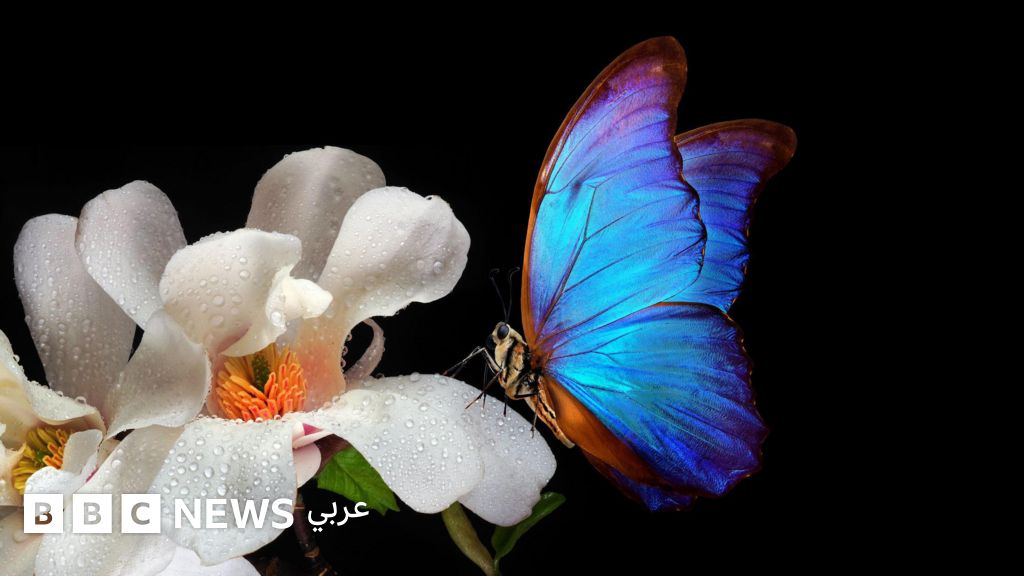
Some flowers have developed clever tricks to lure pollinators, from mimicking female insects to adding caffeine to their nectar.
Are flowers the most cunning creatures in nature?
Published 10 July 2026, 16:13 GMT
Last updated 16 minutes ago
Reading time: 5 minutes
We all know flowers are beautiful, but we may not realize how cunning they are.
About 90 percent of known living plant species produce flowers, which serve as the reproductive organs of the plant.
Inside the petals are the male parts that produce microscopic grains called pollen, from which male reproductive cells develop. These grains must be transferred to the female parts in a process called pollination.
Plants can pollinate themselves when pollen moves within the same flower. But most species transfer pollen between different flowers, increasing genetic diversity.
How do 'predatory' plants attract insects?
A visit to the area where humans eat predatory plants
Image caption, The fly orchid looks like a fly to the human eye, and attracts male digger wasps by mimicking the scent of a female wasp.
Some flowers scatter their pollen through the wind, while many rely on their shape, scent, and other remarkable adaptations to attract insects and small animals to carry the pollen.
From making bees addicted to caffeine to emitting smells like rotting meat, these tricks have helped flowers spread and thrive since they appeared about 150 million years ago.
How did flowers dominate?
Professor Bill Baker, a biologist and senior researcher at the Royal Botanic Gardens, Kew, told BBC Radio's 'Rare Earth' program that 'there are about 350,000 species of plants that produce flowers.'
He added: 'Flowering plants are a success story.'
Skip most read and continue reading
Trump agrees to continue talks with Iran, Tehran vows to bomb Israel in response to any attack on infrastructure
The volcanic eruption that produced the loudest sound in recorded history
Bonnie Tyler... the husky voice that changed the power ballad
The Iran-US ceasefire collapsed even before Trump declared its end... Why?
These plants are relatively recent arrivals on our planet.
Dr. Sandra Knapp, a botanist and director of research at the Natural History Museum in the UK, says the world before their emergence 'was completely different.'
She says the land was once dominated by dense forests of plants like tropical ferns and ancient moss-like plants, adding: 'Flowering plants changed the world in many ways.'
Image caption, As flowers evolved, so did bees.
Some scientists believe many species, including humans, would not have existed without flowers.
David George Haskell, a writer and assistant professor of environmental science at Emory University in the US, says: 'We are a species that originally evolved in grasslands, which are based on a specialized type of flowering plant.'
He adds: 'Before flowers appeared, there were no bees, butterflies, or grazing mammals.'
Haskell believes flowers managed to transform insects from a nuisance to cooperative partners with plants.
He says: 'By communicating with other organisms through their beauty and scents, flowers contributed to the evolution of entirely new groups of animals, thus changing the face of the Earth.'
Deceptive flowers
Some flowers, like roses, open wide and emit plenty of fragrance, attracting many types of pollinators.
In contrast, other flowers target very specific insects. Some orchid species, for example, depend on just one type of bee or wasp, often doing so 'in cunning and deceptive ways,' as Haskell says.
Image caption, The warty hammer orchid is one of ten known species of hammer orchids, mimicking females of specific wasp species.
The fly orchid emits a scent that mimics the mating pheromones of the female digger wasp.
When male wasps emerge in spring, they imagine the meadow is full of females, so they are attracted to the flowers in vain.
When they try to mate with the flower, a small packet of pollen sticks to the back of their heads, which they then carry to another fly orchid they are drawn to, thus becoming unwitting pollinators.
A Moroccan robot to detect bacteria and harmful insects on plants
Haskell says: 'This trick works very well for the orchid, while the insect pays a high price.'
The hammer orchid in Australia mimics the female thynnine wasp in both shape and scent.
When a male wasp tries to mate with it, a lever-like mechanism catches it and thrusts it forcefully toward the pollen-bearing part, then releases it.
Haskell says the insect flies away, 'probably stunned and dazed,' then lands on another orchid without having learned its lesson, and transfers pollen to it.
Image caption, The 'corpse flower' is sometimes called the stinkiest plant in the world
Titan arum, known as the 'corpse flower,' relies on a completely different type of smell.
It has evolved to emit the odor of rotting meat, aiming to attract pollinating insects that typically feed on animal carcasses.
It can grow up to three meters above ground, and what appears to be a single flower is actually a structure containing many small individual flowers.
It blooms only once every few years, for a day or two, because flowering consumes enormous energy.
A perfect partnership
These tricks also benefit the insects.
Some flowers, like those of houseplants and magnolias, act as living fragrance diffusers, raising their temperature to release scent more effectively, in a process known as 'floral thermogenesis.'
Haskell says: 'These flowers spend energy to warm themselves, sometimes ten degrees above the surrounding air, and the difference can reach 30 degrees.'
This heat also provides a refuge for insects, as many spend cold nights inside the warm flowers, ready to be active by morning, according to Haskell.
Image caption, The sacred lotus can maintain its flower temperature within a range of roughly 30 to 35 degrees Celsius over several days
Some other methods seem more sinister at first glance, but they may benefit insects in unexpected ways.
When insects visit flowers, they get nectar rich in sugar. Haskell says 'a number of plants mix their nectar with a low concentration of caffeine, giving bees a little boost that helps them remember.'
Thus, bees learn to associate these flowers with the reward they offer.
He adds: 'But caffeine is also a subtle way to influence bee behavior, making them overestimate the quality of the nectar. So they may continue visiting citrus flowers, for example, even after their sugar or pollen content has decreased.'
Nectar also contains chemicals that may help rid bees of parasites or fungi.
Haskell says: 'Flowers use these chemicals in nectar to influence the behavior of pollinators, and in some cases to help them as well.'
Constant adaptation
Image caption, Some flowers are rapidly adapting to climate change and other threats
And the ingenuity of flowers is not limited to attracting pollinators; they seem to be adapting in smarter ways than we might imagine.
Original source: BBC Arabic





Comments (0)
Be the first to comment.