Mehri: A Rooted Language from Oral Tradition to the Keyboard
"); googletag.cmd.push(function() { onDvtagReady(function () { googletag.display('div-gpt-ad-3341368-3'); }); }); }
In the far east of Yemen lies Al Mahrah Governorate, whose inhabitants speak the Mehri language, which dates back thousands of years, in addition to Arabic. Generations have inherited this language from their fathers and ancestors. It is considered a form of Arabic from a different perspective and style, as it contains all the Arabic alphabet letters plus three additional letters not found in Arabic.
Mehri is the language of the Mahra tribe in eastern Yemen, Oman, Kuwait, the UAE, and Saudi Arabia. It is one of the modern South Arabian languages, and researchers and linguists consider it a primitive Semitic language, and linguistically the purest among Semitic languages due to its isolation.
A spoken language
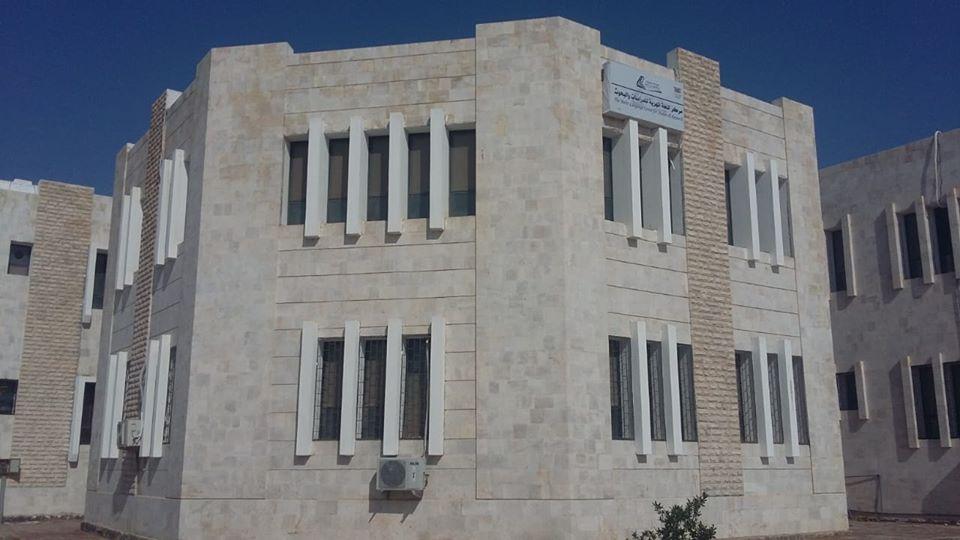
Amer Belhaf, director of the Mehri Language Center for Studies and Research, explains that Mehri is a spoken language in the south of the Arabian Peninsula, which some scholars have studied for years. Some saw it as a remnant of the South Arabian languages (Himyaritic), some likened it to Classical Arabic, and others went too far by making it closer to Hebrew or Ge'ez (Ethiopic). A number of researchers who studied Mehri and its dialects, especially orientalists, made hypotheses, some hitting the truth, but most missing the truth, correctness, and logic.
Read more
This section contains related articles, placed in (Related Nodes field)
Belhaf, in his interview with 'Independent Arabia', relies on some studies that revealed that the Mehri language is over 3,000 years old, and others estimate its age exceeds 5,000 years, based on anthropological principles. He adds that it is the tongue of the people of Mahra, who trace their lineage to Mahra bin Haydan bin Amr bin Lahaf bin Quda'a, extending back to Malik bin Himyar. Their land, Mahra, is now a governorate of Yemen and its eastern gateway, bordered by Oman to the east, Saudi Arabia to the north, Hadramawt to the west, and the Arabian Sea to the south. This land spans a large geographical area exceeding 93,000 km, making its geological composition diverse, including coastal, plain, and mountainous areas, with deep valleys and vast deserts inland.
He continues: 'In this geographical expanse and geological diversity, people have spoken Mehri since ancient times, and their tongues varied according to geography. The truth is that Mehri was not confined to these drawn borders but extended to neighboring countries such as Oman, where some tribes of the southern region (Dhofar Governorate) descended from Mahra origins speak it, as do some tribes of Saudi Arabia in the Empty Quarter and the Eastern Region descended from the same origin, and also the Mahra tribes in the UAE.'
Language or dialect?
Responding to 'Independent Arabia's' question whether Mehri is a language or a dialect, he said: 'Mehri is a language, not a dialect, because it has distanced itself from its original roots, making it foreign to its sisters and difficult for speakers of other dialects of the same language to understand. Moreover, the differences are no longer in linguistic features within a specific environment or independent speech habits, but extend to various linguistic elements overlapping in deeply ancient periods. These principles are relied upon by linguistics today in distinguishing between language and dialect.'
Belhaf elaborates: 'I have proven that Mehri is a language and not a dialect. It retains various linguistic elements, meaning its linguistic features are not uniform, nor are its speech habits. Therefore, it is a language, not a dialect. Then, there is the terminology of researchers on the tongues found in the south of the Arabian Peninsula; some termed them South Arabian dialects, others South Arabian languages. The latter terminology has become more convincing, especially after inscriptions proved some differences between those tongues. Moreover, we have established that Mehri has existed since ancient times, influencing and being influenced. By modern linguistic scientific concepts, this makes it a language, as it became a broader, more comprehensive, and more diverse environment than its neighboring environments. When I consider Mehri a language, I do not separate it from its Arab context; it is Arabic, which no denier can deny or falsifier falsify.'
Closeness to Classical Arabic
He points to the great closeness of modern Mehri to Classical Arabic: 'Most of its verbs correspond to Classical Arabic in pronunciation and meaning, and most of its nouns also correspond, such as family terms, body parts, colors, numerals, and much, much more.'
He added: 'Mehri also matches Classical Arabic in verb forms, verb divisions (past, present, imperative), passive constructions, transitivity and usage, dialectal phonological phenomena such as imala, lightening, and vowel lengthening, and linguistic systems in pronoun divisions (first, second, third person), nisba (attribution), and numbers. Moreover, modern Mehri today retains several South Arabian linguistic elements.'
The Mehri Keyboard
Regarding the present state of the Mehri language, he affirms that the people of Mahra take great pride in their language, passing it down orally from father to grandfather. Today, it receives significant attention at both popular and official levels in a time of many challenges. He considers two main challenges facing Mehri: the first is the lack of a writing system, and the second is the absence of a dictionary to preserve its vocabulary. He refers to popular efforts to preserve the Mehri language, including the Mehri Language Center for Studies and Research proposing a writing system in summer 2019 based on Arabic characters with special symbols for additional letters. This proposal was turned into a program known as the 'Mehri Keyboard,' currently used on computers and mobile phones. Additionally, field trips are organized for those interested in Mehri culture and language to the governorate's districts to document its vocabulary, in preparation for compiling a comprehensive Mehri dictionary.
Geographical Extension
Researcher and heritage enthusiast Salem Lahimar Al Qumairi believes that 'Mehri' still occupies researchers and scholars up to the present day.
In his interview with 'Independent Arabia', he notes that Mehri as a language has not been confined to its drawn borders, but has extended to neighboring countries such as Oman, where tribes of the southern region of Dhofar Governorate descended from Mahra origins speak it, as do tribes of Saudi Arabia in the Empty Quarter and the Eastern Region. In this geographical extension and geological diversity, people have spoken Mehri since ancient times, and their tongues varied according to geography. He reveals that the Mehri language is linked to local dialects from ancient times, such as Harsusi, Bathari, Hobyot, Shehri, and Soqotri.
According to Al Qumairi, the hypothesis of the extension and survival of the Mehri language from Semitic to the people of 'Ad to the Sabaeans is a hypothesis that needs study and research, especially its relationship with some ancient scripts such as Musnad and Cuneiform. He expresses the hope of the Mehri people to know the exact origin of this language, when it began and where it stopped, which peoples spoke it, and what the alphabet and script of these languages are.
Efforts of Orientalists
Original source: Independent Arabia

Comments (0)
Be the first to comment.