Six Reasons Why Making Mistakes Could Be a Good Experience
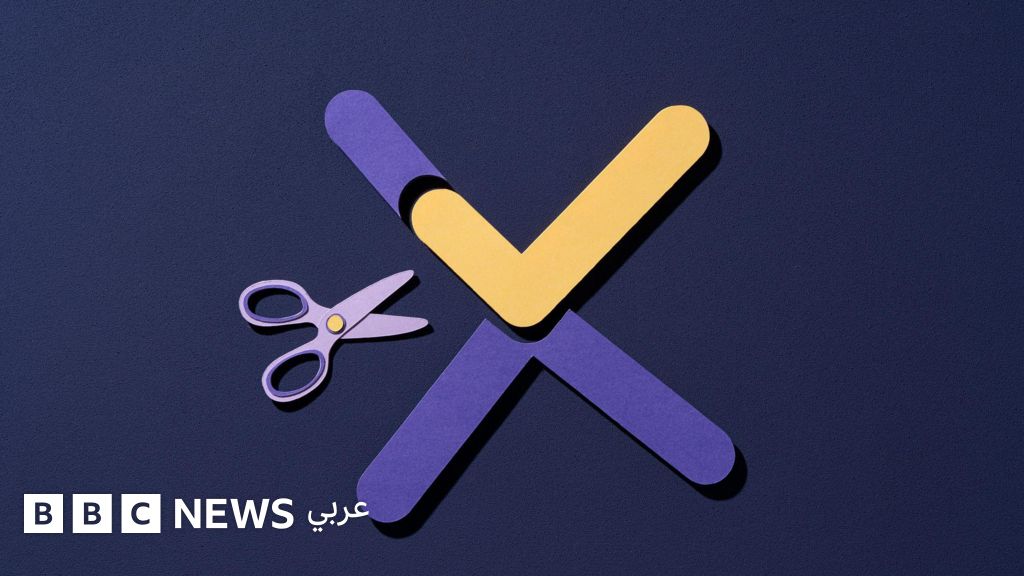
Some mistakes can lead to greater discoveries, and mistakes can be hilarious.
Six Reasons Why Making Mistakes Could Be a Good Experience
Published 2 hours ago
Reading time: 5 minutes
Making mistakes doesn't necessarily lead to bad results; in fact, it can become an advantage.
How can we actually benefit from mistakes?
1. A method of learning
Image caption: We can often learn from our mistakes
We've all heard the saying 'You learn from your mistakes.' This is true because trial and error is an important part of how our minds and skills develop.
To realize this, we must think about how a young child learns to walk, how a gymnast masters her moves, or how a baker makes a cake for a contest 20 times to impress the judges.
Psychologists at Michigan State University in the United States have shown us that to learn from our mistakes, it is helpful to have a 'growth mindset'—the belief that intelligence is something we can work on and develop.
In a study of 123 children, scientists observed that those who believed intelligence is developable and not fixed paid more attention to their mistakes, and thus learned more.
How do we maintain the 'spark of beginnings' without losing passion midway?
Tips to protect your brain from future risks and think more intelligently in the 21st century
2. Mistakes can have unexpected positive outcomes
Image caption: Mistakes made by inventors led to greater discoveries
Many mistakes have positive outcomes, though not all of course.
Christopher Columbus sailed to find a new sea route to Asia, but ended up discovering America instead.
Skip most read and continue reading
France enters second half strongly, England leads 4-2 in the 'bronze final' of the World Cup
Khamenei: Washington's breach of the memorandum proves its signature is 'worthless', and the killing of two American soldiers in a 'military operation' in Jordan
With orange lips and a roar-like call... discovery of a new monkey in the forests of Congo
'Control, threats, and surgery that left scars': my life inside Jeffrey Epstein's 'cult'
On a different scale, mistakes made by inventors led to greater discoveries, including the microwave and the pacemaker.
Had it not been for the simple mistake made by Scottish scientist Alexander Fleming in 1928, the last 90 years would have looked completely different. Fleming discovered the antibiotic penicillin after leaving a dirty dish during a holiday, only to find it contaminated upon his return.
Before cleaning the dish, Fleming noticed something strange in it: mold had grown and bacteria had not.
This was not ordinary mold, but the Penicillium fungus. The growth and production of penicillin as a tool to fight bacterial infections followed.
This was the mistake that saved millions of lives.
3. Mistakes teach us who we are
Image caption: Admitting a mistake can be embarrassing for some
English writer Oscar Wilde said: 'Experience is the name everyone gives to their mistakes.'
Wilde astutely touched on something very important: making mistakes is crucial for learning a lot about ourselves and our lives.
When you fail a major exam, you will know how to deal with frustration.
If you were the 19th-century religious preacher William Miller and worked hard to convince thousands of people that the end of the world was imminent, you would discover whether you are brave enough to admit the mistake and bear its consequences.
On the morning of October 22, 1844, Miller had to face thousands of his stunned followers, still alive, after his prophecy of the Second Coming of Christ and the end of the world did not come true.
Amidst an atmosphere of anger and mockery, Miller admitted his mistake, saying: 'We expected the coming of Christ at this time, and now we would be dishonest if we said we were not mistaken. We should never be ashamed to frankly confess all our errors.'
4: Mistakes can free us to achieve our goals
The late US President Theodore Roosevelt said: 'The only man who never makes a mistake is the man who never does anything at all.'
Although fear of failure may prevent us from trying new things, accepting the fact that making mistakes is part of life can have the opposite effect—it can free us to achieve our goals without limits.
5: Mistakes help us set our priorities
English writer J.K. Rowling said that when she was in her mid-twenties, she had already failed 'on an epic scale.'
Her marriage had collapsed, and she and her daughter were living in poverty. Under these circumstances, what were her chances of success as a writer?
In her 2008 speech to graduating students at Harvard University, Rowling said: 'I stopped pretending to myself that I was anything other than what I was, and began to direct all my energy into finishing the only work that mattered to me.'
She added: 'I was set free, because my greatest fear had been realized, and I was still alive, and I still had a daughter whom I adored, and an old typewriter, and a big idea.'
Now, the author of the 'Harry Potter' novels has become one of the richest and most famous writers in the world.
Announcement of the Harry Potter TV series: everything we know so far
6: Mistakes can give us something to laugh about in the end
From Shakespeare's play 'The Comedy of Errors' to John Cleese's series 'Fawlty Towers', many famous comedic works revolve around mistakes and misunderstandings.
Mistakes can be hilarious. While you may be angry about leaving the house in your pajamas, there is a chance you'll laugh about it.
Skip short clips and continue
Short clips
End of short clips
The man who woke up in the future: 'I was the wrong man at the wrong time' July 4, 2025
Ukrainian prisoner of war uses Harry Potter stories to help others survive the torment of their prison June 12, 2026
How chewing boosts brain activity May 18, 2026
Original source: BBC Arabic





Comments (0)
Be the first to comment.