Social Media: Parents' Legal Responsibility in the Face of Children's Moral Decadence
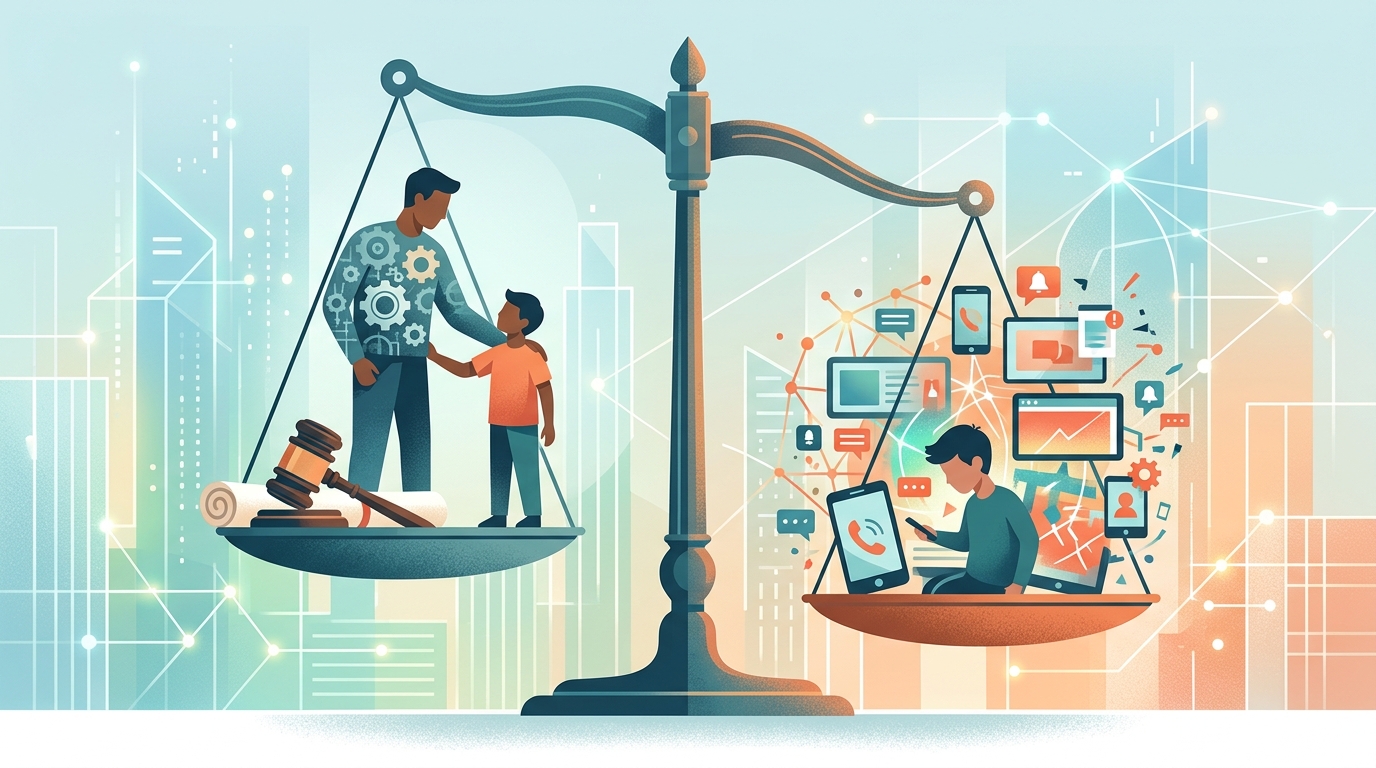
The article discusses the legal accountability of parents for their children's actions on social media, highlighting the risks of online misconduct and the legal consequences under UAE law.
Abdullah Al-Majid
Published: July 10, 2026: 12:41 PM GST Last updated: July 10, 2026: 12:42 PM GST
Reading mode
100% font size
Listen to the article: Audio automatically generated by an automated system
0:00
3 minutes to read
The use of social media today has gone beyond mere knowledge exchange, becoming an open space for expression, criticism, and content creation, which may expose its users to legal accountability when they exceed the boundaries set by law. In contrast, this unprecedented openness has produced concerning behaviors and manifestations, including moral decadence, harm to others, privacy violations, spreading rumors, cyberbullying, incitement to hatred, and the pursuit of fame at the expense of human values and dignity, as well as a decline in the standards of constructive dialogue and criticism.
The danger is evident in the fact that these platforms are accessible to minors, who often do not realize the legal implications of what they post or share. Consequently, responsibility may extend in some cases to those responsible for their care or guardianship, provided the conditions stipulated by law are met. The word that once ended with its utterance is now preserved, spreads rapidly, and may reach millions of people, leaving effects that are difficult to erase or contain, in addition to some digital practices now posing a real threat to social order and public security.
Despite some believing that cyberspace is beyond monitoring or accountability, the legal reality confirms otherwise. The penalty for such behaviors when committed through these digital platforms may double the severity of liability if they lead to widespread dissemination or cause serious harm. As for minors, their accountability is subject to the special provisions regulated by law, with the possibility of imposing liability on their guardians in cases specified by the legislator.
The Penal Code and related special legislation, such as Law No. 60 of 2014 on Information Technology, have included many acts that constitute cybercrimes, including defamation, insult, damage to reputation, privacy violations, publishing images or recordings without permission, incitement to hatred or violence, slander, or those related to sending data containing threats, destruction, or electronic hacking such as disrupting or blocking data, or possessing or creating pornographic material, among others. These acts may incur criminal liability, in addition to the victim's right to seek compensation for material and moral damages suffered.
The law does not aim, by criminalizing these acts, to restrict freedom of opinion or limit freedom of expression, but rather to protect rights and freedoms, uphold the dignity of individuals, and safeguard the public interest. Freedom of expression is not a justification for abuse, nor a cover for defamation, nor a means to attack the rights of others, as the established legal principle dictates that the exercise of any right stops where the rights of others begin.
Furthermore, the absence of legislation specifying a minimum age for using social media does not mean a lack of legal protection or the impossibility of holding accountable those proven to have neglected their duties of care or supervision, provided the legal conditions for that are met. This underscores the importance of legal awareness alongside ethical awareness. Societies are not maintained by legal texts alone but also rest on a system of values and proper upbringing. Ethics prevent wrongdoing before it occurs, while the law intervenes to address its consequences after the fact.
Accordingly, society's need today is not so much to tighten penalties as to establish a culture of digital responsibility, strengthen value-based upbringing, activate conscious family supervision, and instill in children the conviction that everything written, posted, or shared in cyberspace may have real legal consequences. Moreover, enabling minors to use these tools should be accompanied by sufficient maturity, awareness, and family oversight, achieving a balance between benefiting from technology and protecting society from the effects of its misuse.
Translated from "Al-Bilad"
Advertisement
Advertisement
Disclaimer: All published articles represent the views of their authors only.
Original source: Al Arabiya





Comments (0)
Be the first to comment.