A Historic Clock in the Exhibition of the Architecture of the Two Holy Mosques... A Witness to the Care for the Two Holy Sanctuaries
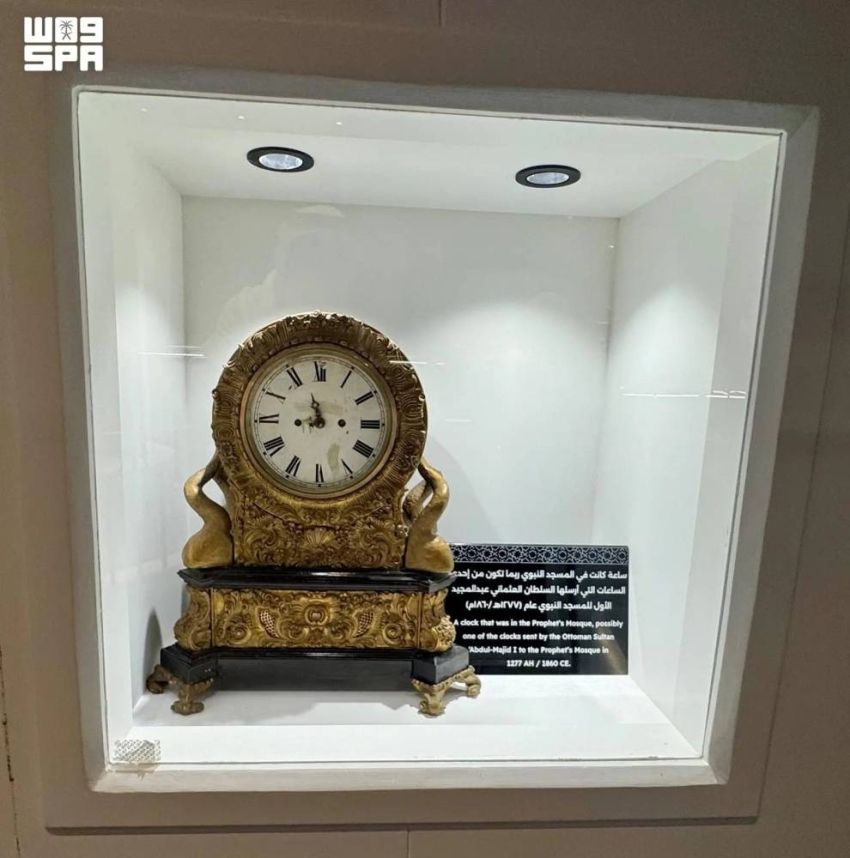
In the corridors of the Exhibition of the Architecture of the Two Holy Mosques in Makkah stands a rare historical clock, telling a part of the history of care for the Prophet's Mosque, and catching the visitor's attention with its cultural and archaeological value, as it is believed to date back to the year (1277 AH / 1860 AD), highlighting the interest in the architecture and furnishings of the Two Holy Mosques. This clock is considered one of the most prominent historical artifacts housed by the exhibition, due to its documentary value reflecting the development of timekeeping methods in the Prophet's Mosque during the thirteenth century AH, and its role in organizing prayer times and worship, in addition to its precision in craftsmanship and beauty of design, embodying the level of skill for which industries were known at that time. The Exhibition of the Architecture of the Two Holy Mosques preserves this historical piece within an integrated system of rare artifacts that document the stages of care for the Two Holy Mosques through the ages, and highlight the continuous attention they have received in various times, up to the comprehensive care provided by the wise leadership - may Allah support them - for the Two Holy Mosques in this flourishing era. The clock stands out as one of the historical testimonies associated with the service of the Prophet's Mosque; mechanical clocks in that era contributed to organizing the affairs of the mosque and accurately determining prayer times, before the emergence of modern electronic systems, which gave it practical importance alongside its historical and heritage value. The Exhibition of the Architecture of the Two Holy Mosques includes a wide collection of original artifacts documenting the history of the Grand Mosque and the Prophet's Mosque, including old doors of the Holy Kaaba, parts of its Kiswa from different eras, chandeliers and lanterns, marble columns, tools for washing the Holy Kaaba, manuscripts, architectural models, as well as geometric and artistic pieces reflecting the development of the architecture of the Two Holy Mosques over the centuries.
The exhibition aims to introduce visitors to the history of the Two Holy Mosques and highlight the stages of their expansions and architecture, through a museum display style that combines artifacts and documentary methods, contributing to enriching the historical and cultural knowledge of visitors and enhancing their connection to the ancient Islamic heritage. The exhibition constitutes a prominent cultural destination for visitors to Makkah, as it provides them with an opportunity to learn about rare historical treasures associated with the service of the Two Holy Mosques and the efforts to care for them, up to the Saudi era, which witnessed the largest expansion, development, and service projects in the history of the Two Holy Mosques, keeping pace with the increasing numbers of pilgrims and facilitating their performance of worship in an atmosphere of security and tranquility.
Original source: Al-Madina




Comments (0)
Be the first to comment.