Al-Sulaiman: Real Estate Registry Doors Open for Service Development in Partnership with Beneficiaries

The Chief Executive Officer of the Real Estate Registry, Dr. Mohammed Al-Sulaiman, affirmed that the Real Estate Registry's strategy, 'Asehal', primarily focuses on providing an easy and smooth journey for beneficiaries, and developing the real estate system through client-centric real estate services and digital solutions, in cooperation with legislative and relevant authorities. He emphasized the continuation of communication with partners and beneficiaries, and that the doors of the Real Estate Registry will remain open to everything that contributes to developing services and achieving the system's goals.
This came during a visit organized by the Real Estate Registry recently at its headquarters in Riyadh for media professionals, real estate brokers, and engineering offices; to learn about the journey of real estate title registration, application processing mechanisms, and the services and products it offers, in the presence of a number of journalists and those interested in the real estate sector.
The Vice President for Institutional Communications at the Real Estate Registry, Dr. Ahmed Al-Qarni, affirmed that the Real Estate Registry represents a strategic pillar for building a sustainable real estate system, not just a system for documenting ownerships, pointing out that it contributes to enhancing economic growth and generating added value for the state, by building a reliable real estate database and raising awareness of the importance of real estate registration.
He added that real estate is not limited to being a financial asset, but is linked to the rights of individuals, heirs, investments, and national ambitions, explaining that the Real Estate Registry is working to develop the concept of ownership by moving from the question: 'Who owns the property?' to 'What do they own?', which includes location, area, boundaries, and rights associated with the property.
He pointed out that the Real Estate Registry is leading a major national transformation despite the huge legacy of millions of properties and historical data, stressing work to develop this data to become more accurate, transparent, and sustainable, calling on specialists, media professionals, and interested parties to build effective partnerships that contribute to achieving the goals of the real estate system.
For his part, the official spokesman of the Real Estate Registry, Yazeed Al-Yahya, revealed that more than 4.9 million properties have been announced and are ready for title registration, while 1.8 million ownership registration deeds have been issued so far, with the partial announcement of the Asir region expected during the current year as part of the registration plan.
He explained that title registration of real estate has undergone a qualitative transformation due to reliance on modern technologies, including implementing topographic surveying using drones and manned aircraft, and registration upon request, which contributed to the project's success and accelerated its work.
He affirmed that title registration aims to give absolute authenticity to deeds and enhance the attractiveness of investment in the real estate sector, through establishing a comprehensive real estate registry for all properties in the Kingdom, starting with the initial registration of the property and then documenting subsequent transactions. He stressed that the success of the system depends on the integration of roles among relevant authorities, foremost the General Real Estate Authority, the Ministry of Justice, and the Ministry of Municipal and Rural Affairs and Housing, in addition to property owners.
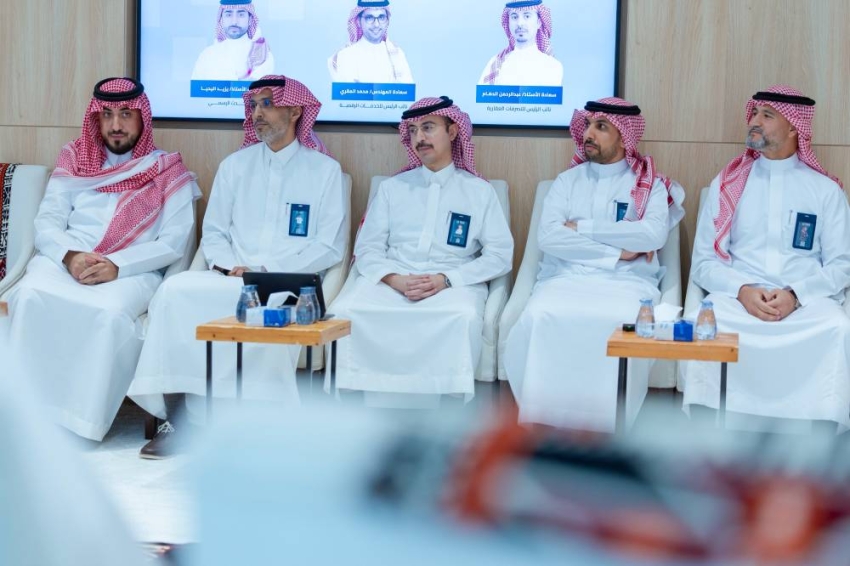
At the conclusion of the visit, the attendees met with a number of Real Estate Registry leaders: Engineer Hatem Qazaq, Vice President for Geospatial; Osama Al-Ajlan, Vice President for Registration Operations; Abdulrahman Al-Daham, Vice President for Real Estate Transactions; Engineer Mohammed Al-Muqri, Vice President for Digital Services; and Abdulrahman Al-Arifi, Vice President for Business Development. A number of opinions and proposals were discussed that would contribute to developing services and enhancing work efficiency, in a way that achieves the aspirations of beneficiaries.
Original source: Ajel.sa
Comments (0)
Be the first to comment.