Intermediate Stage Highest with 1,500 Classes per Year
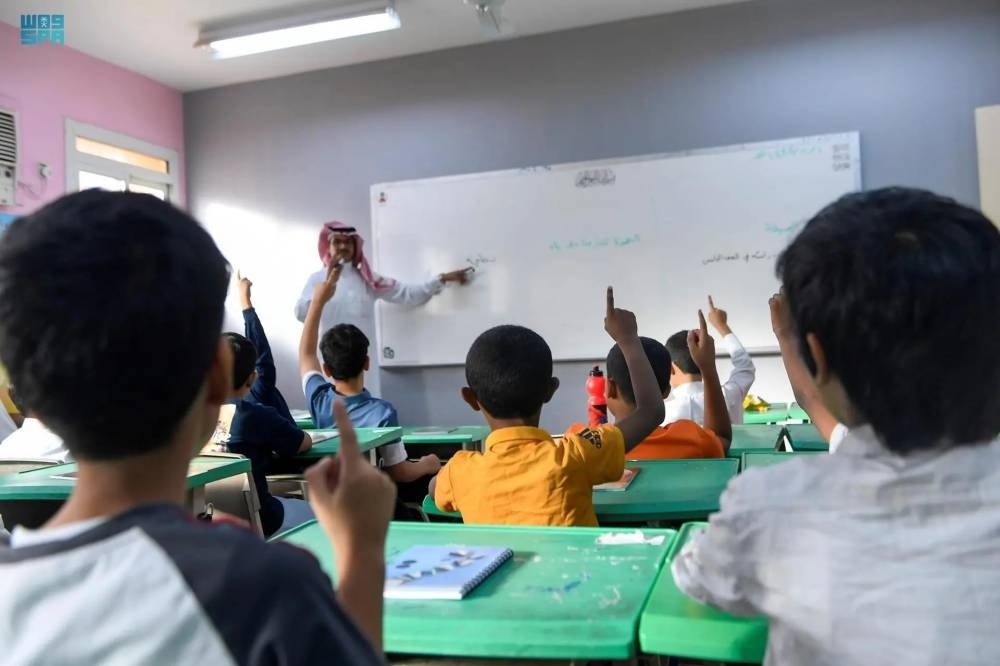
The National Curriculum Center has set the number of annual class hours in general education, with 1,428 classes for primary stage, 1,500 classes for intermediate stage, and 1,368 classes for secondary stage, coinciding with the introduction of two temporary models for blended learning within the study plans, allowing the distribution of courses between in-person education, distance education, and blended education, according to the needs of the educational process. Sciences and Skills In the first model, Arabic language, mathematics, science and activity courses are taught in person, while the Holy Quran and Islamic studies, social studies, technical and digital skills, life and family skills, and critical thinking are offered remotely, while physical education and self-defense, art education, and English language are taught in a blended learning system. As for the second model, it adopts teaching Arabic language, mathematics, science, English language, physical education and self-defense, and art education through blended learning, and the Holy Quran and Islamic studies, social studies, technical and digital skills, life and family skills, and critical thinking are offered remotely, while in-person education is limited to the activity class. Extracurricular periods The new study plans guide issued by the National Curriculum Center confirmed that Saudi schools abroad are obligated to add classes on 'local culture of the host country' within the available activity classes during the academic year, including the language, history, and geography of the host country, after reviewing and approving the content by the National Curriculum Center, provided that the host country requires it and with the approval of the Saudi ambassador. The guide emphasized allocating extracurricular periods totaling no less than one hour daily, granting schools flexibility in implementing student activity classes so that they may extend to two consecutive periods during the school day, and allocating no less than 10% of the weekly schedule to student activity programs. It also stipulated replacing classes for self-learning electronic courses at the secondary stage with activity classes, requiring students to attend and participate in implementing approved programs within the student activity plan.
For their part, educators told Al-Watan that the guide aims to increase the efficiency of utilizing the school day, reorganize the use of instructional time, improve learning outcomes, and give schools greater scope to organize educational programs and student activities in line with the needs of learners and different operational conditions, in addition to increasing the scope of student activities and allocating time for specialized professional development for teachers, contributing to raising their efficiency and developing their teaching practices in their specializations.
Key updates: - Raising the minimum student activities to 10% of the study plan - Including Chinese language for third intermediate grade in schools that implement it - Allocating up to 5% of subject classes for teacher professional development - Introducing new qualitative programs in student activities - Adding new study plans for specialized schools - Including competitions within the study plan for student activities
< Previous PageNext Page >
Original source: Al-Watan



Comments (0)
Be the first to comment.