Education Ministry to Implement 'Integrated Schools' Model Next Year
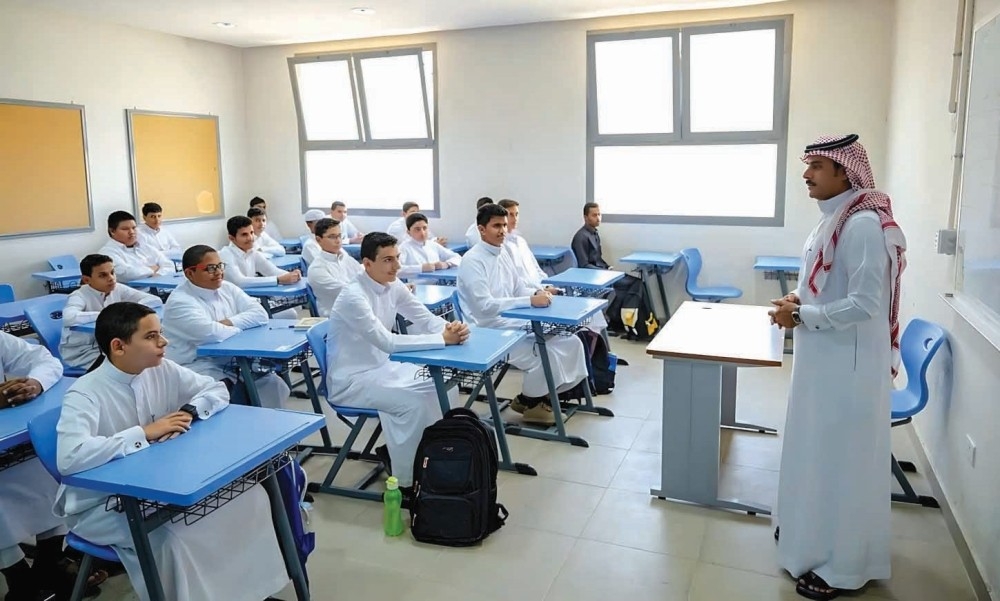
The Saudi Ministry of Education plans to launch an 'Integrated Schools' model next year, grouping public schools into professional clusters to improve quality, efficiency, and learning outcomes through collaboration and resource sharing.
The Ministry of Education intends to implement the 'Integrated Schools' model during the next academic year, as part of a new national approach to school improvement management. It aims to establish groups of public schools operating within a unified professional and operational framework, enhancing educational quality, raising school performance efficiency, and contributing to achieving better student learning outcomes by strengthening collaboration between schools, exchanging expertise, optimizing resource investment, and sharing responsibility for developing the educational process.
According to the model's founding document, the implementation of 'Integrated Schools' comes in response to challenges facing schools, most notably disparities in performance levels, weak transfer of expertise and successful educational practices, limited continuous professional support, the need to increase the efficiency of investing human and material resources, and building sustainable school leadership that drives development processes, in line with the Ministry of Education's targets and Saudi Vision 2030.
Related news
Achieving integration between schools. The model is based on forming groups of neighboring or similar public schools, with each group led by a general supervisor for the school group, nominated from among educational leaders who have previously managed schools and proven their efficiency in improving performance. The supervisor leads improvement programs, supports school principals, facilitates expertise exchange, monitors performance indicators, analyzes data, and directs resources according to educational priorities, thereby raising performance efficiency and achieving integration between schools. The model also preserves each school's independence and its principal's powers, does not introduce a new organizational level or merge schools, but rather reorganizes the professional relationship between them to enhance cooperation and integration.
Improving learning quality. The 'Integrated Schools' model is based on a set of governing principles, most notably considering the school group as a unit for improvement, enhancing shared responsibility for student learning, bringing leadership closer to the field, making professional development an ongoing practice within the work environment, relying on data and performance indicators as a basis for decision-making, maximizing the impact of shared resources, while maintaining the administrative and executive independence of schools.
The model aims to improve the quality of teaching and learning in all schools within the group, build school leadership capable of driving sustainable improvement, enhance the exchange of expertise and successful educational practices, support data-driven educational decision-making, establish effective professional learning communities, raise the efficiency of investing human and material resources, and contribute to achieving the Ministry of Education's targets and Saudi Vision 2030.
The application of the model is expected to contribute to improving the quality of school leadership, raising the efficiency of planning and implementation within schools, increasing the exchange of expertise between schools, improving the quality of teaching and learning, reducing performance gaps, increasing the effectiveness of professional development programs, building a second tier of school leaders, and enhancing the ability of education departments to monitor performance and direct support, in addition to establishing a professional culture based on cooperation, accountability, and continuous improvement, thereby supporting the achievement of educational development targets in the Kingdom.
Original source: Al-Yaum



Comments (0)
Be the first to comment.