Wadi Al-Fara'.. Oasis of "Palms and Springs"
Friday/Saturday, July 17, 2026
Al Jazeera - Abdulmutaleb Mubarak Al-Badrani:
Between the Two Holy Mosques, 140 kilometers south of Madinah, lies Wadi Al-Fara' Governorate, one of the most historic and agricultural regions in the Arabian Peninsula. This valley, with its proud history stretching back thousands of years, is not just a piece of geography through which roads pass, but a living cultural heritage that combines the glory of the present with the antiquity of the past.
Special digital subscription
Historical accounts confirm the valley's ancient status; it is the village that supplied and transported dates to Prophet Ismail (Ishmael) son of Ibrahim (Abraham) and his mother Hagar, peace be upon them, while they were in Makkah, proving the valley's role as a source of food security since time immemorial.
The valley has received attention from the Kingdom's leading historians and scholars who have worked to highlight its history, including:
- Historian Dr. Fayez Al-Badrani.
- Literary historian and writer Muhammad Salih Al-Bulayshi.
- Historian Atiq bin Ghayth Al-Biladi.
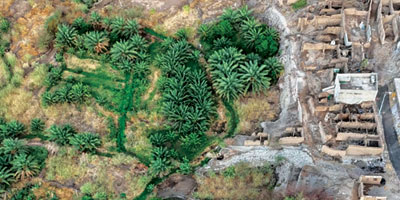
Wadi Al-Fara' was historically known as "Wadi Al-Nakhl" (Valley of Palms) due to its dense palm groves, and it contained more than 45 flowing springs. Although some have disappeared, bountiful rains and floods revive them, while the region takes pride in its perennial springs such as the famous 'Ain Qaryat Al-Madiq' (Spring of Al-Madiq Village).
Ain Al-Madiq: a gushing spring visited by tourists and visitors from far and wide, who come to enjoy its water flowing through the canyon, its lush green farms, and the surrounding towering mountains.
Al-Madiq village has long been known for its abundance of summer visitors who came to buy dates, especially the famous "Al-Mashouk" dates. The people of the valley have their own traditional method of picking and packing dates in what is known as "Al-Majalid", which are exported to all regions of the Kingdom as a mark of quality registered in the valley's name.
The area abounds with archaeological and historical landmarks that bear witness to the early Islamic era, most notably:
- Al-Baroud Mosque: the ancient mosque where the Prophet Muhammad (peace be upon him) prayed, and its remains still stand proudly at the foot and top of the mountain.
- Old mud houses: historic neighborhoods and buildings in the valley's villages (such as the neighborhoods of Abu Dhaba'), which were a refuge for ancestors, protecting them from summer heat and harsh winter cold, and today need care and restoration.
Wadi Al-Fara' is home to ancient villages and enchanting natural features visited by historians who documented their value, including:
- Archaeological villages: Al-Sidr village, Al-Faqir village, Al-Yasira village, and 'Umm Al-'Iyal' village (said to be the path of the Lady of the Women of Paradise, Fatima Al-Zahra, may Allah be pleased with her).
- Natural landmarks and parks:
- Mount Qudus (Adqus): the majestic mountain beloved by visitors.
- Al-Siddah Park: located southeast of Mount 'Irah.
- The ancient Khadra Park: widely famous.
- Other attractions: Hanth, Al-Akhal, Wadi Al-Hafn, Al-Fuqair, Al-Muqayta', and Al-Fayfa Park adjacent to the Hijrah Road.
In this flourishing era of the Kingdom of Saudi Arabia, Wadi Al-Fara' Governorate has been provided with most government departments and basic services directly related to citizens. However, the region's unique agricultural nature, its abundant crops, along with its neglected touristic and archaeological value, make it in dire need of:
1 - A touristic and investment initiative: transforming archaeological villages (such as Al-Madiq and Abu Dhaba') into organized tourism and heritage destinations under Saudi Vision 2030.
2 - Developing services and facilities: supporting natural parks with seating areas and services that cater to visitors.
3 - Supporting farmers: providing greater facilities to support the valley's unique agricultural production and developing its marketing channels.
It is a call from the people and lovers of Wadi Al-Fara' to the Emirate of Madinah Region and officials in the governorate to remove the dust from this precious historical and touristic treasure, so it can take its rightful place on the map of Saudi tourism.
Original source: Al-Jazirah






Comments (0)
Be the first to comment.