Cultural / Aesthetic Sculptures in Qassim: A Visual Identity Embodies Heritage and Enhances Urban Landscape
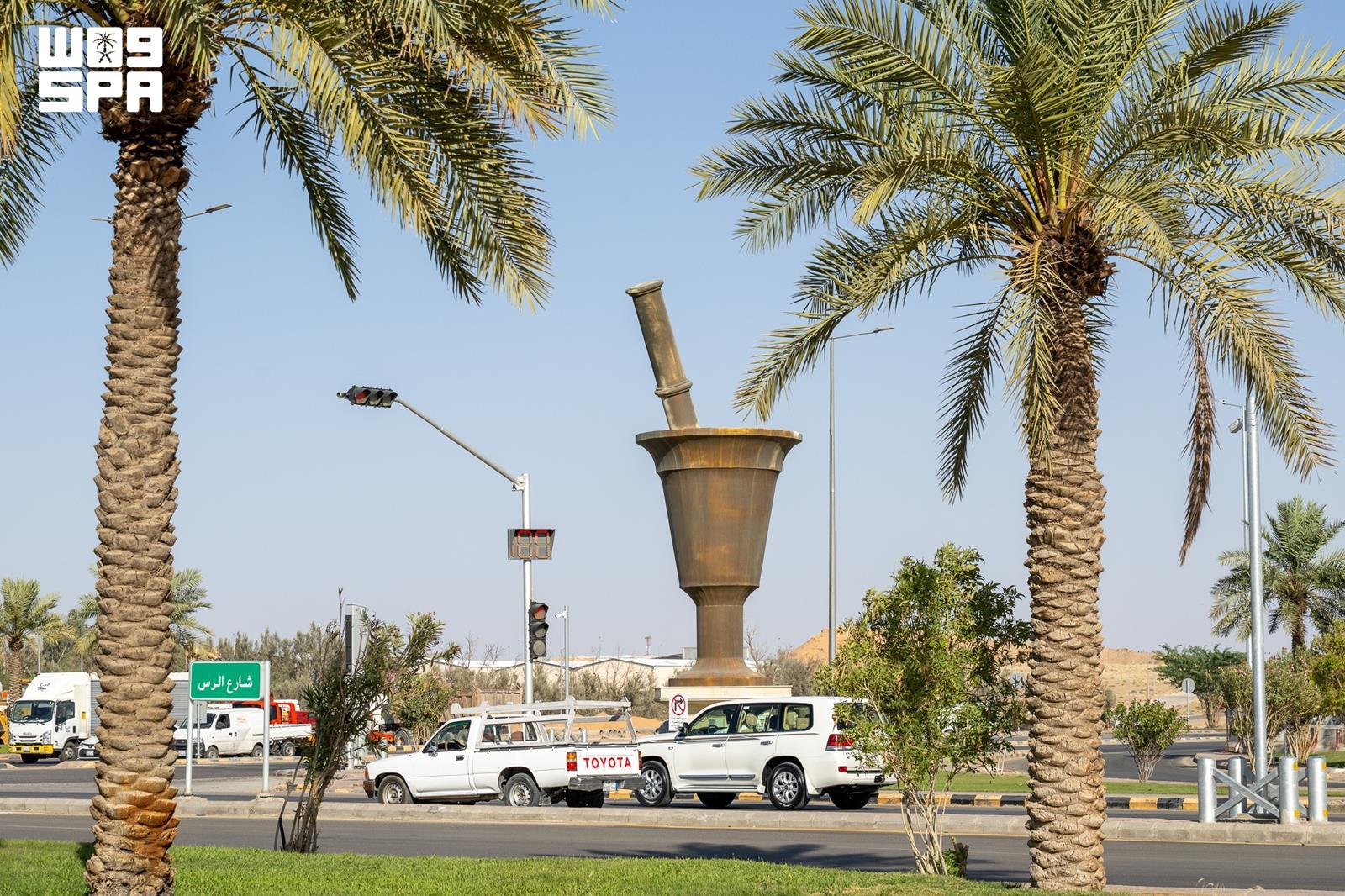
Buraidah, 29 Muharram 1448 AH, corresponding to July 14, 2026, SPA – The roundabouts and squares in the Qassim region are among the most prominent elements that add an aesthetic touch to the urban landscape, as they are no longer limited to organizing traffic but have become visual landmarks that reflect the cultural and heritage identity of the region, documenting a part of its history and urban transformations, thereby enriching public spaces and enhancing the quality of the urban environment, giving the city of Buraidah and the region's governorates a distinctive character that combines authenticity and development.
In the context of enhancing the urban landscape in the Qassim region, aesthetic sculptures have been distributed in roundabouts, squares, and main roads according to planning foundations that consider both aesthetic and functional aspects. The designs of these sculptures were inspired by the environmental, heritage, and cultural characteristics that the region abounds in, reflecting its local identity and highlighting its distinctive urban features. This approach has contributed to enriching public spaces, improving the quality of the visual scene, and raising the level of urban attractiveness of the region.
The official spokesperson of the Qassim Region Municipality, Nayef Al-Nufaie, explained that urban sculptures are important elements in highlighting the identity of cities and enhancing the urban landscape, indicating that the municipality, when implementing them, is keen to draw inspiration from elements that reflect the region's privacy, history, and economic and cultural components, while taking into account aesthetic and engineering aspects in harmony with the urban fabric, contributing to the creation of urban landmarks linked to the community's memory and enhancing the visual image of cities.
He pointed out that the municipality's efforts were not limited to implementing new sculptures, but also paid attention to old urban sculptures by preserving, rehabilitating, and restoring them, due to their historical and symbolic value and the emotional impact they carry in the hearts of residents, as part of the memory of the place and a witness to the stages of urban development, within the framework of preserving the urban heritage and enhancing the sustainability of its landmarks.
The aesthetic sculptures in the city of Buraidah reflect the region's natural and economic components, as their designs were inspired by palm trees and dates, as one of the most prominent symbols of the agricultural heritage that the Qassim region is famous for, including the "Date Cluster" sculpture, which symbolizes the abundance and quality of production, and the palm tree sculpture embodies the status of palm trees as one of the most important symbols of agricultural identity in the region, while the camel sculpture is inspired by the scene of a caravan crossing the desert on its way to palm oases, evoking the region's history and its connection to caravan and trade routes, along with other sculptures expressing the development, urban growth, and economic activity witnessed by the city.
Some old sculptures still retain their place in the social memory, after being associated for many years with well-known landmarks and squares in the city of Buraidah, foremost among which is the "Nijr" (coffee mortar) sculpture, located in the middle of Buraidah, with a height of about (11) meters, and is one of the most prominent heritage landmarks in the city, as it is more than (30) years old, symbolizing the values of Arab generosity and hospitality through its depiction of the tool for preparing Arabic coffee.
Al-Sadah Square is one of the oldest squares in the city of Buraidah, and has remained for decades a prominent landmark that residents and visitors use as a reference, until it became part of the spatial memory of the city. In recent years, the city of Buraidah has witnessed the implementation of a number of modern sculptures, most notably "Hala" Square, which embodies the official welcoming identity of the city and carries the slogan "Hala Hum Hala," an expression of the values of welcome and hospitality that distinguish Buraidah, combining local identity and contemporary artistic styles in line with the urban development the city is witnessing.
These sculptures are part of the initiatives implemented by the Qassim Region Municipality to develop the urban landscape and improve the quality of public spaces, through employing artistic and aesthetic elements in the urban environment to reflect the visual identity of the region. They contribute to improving the quality of life and preparing a more attractive and sustainable urban environment, in line with the targets of urban development and the Kingdom's Vision 2030. // End // 17:45 T M 0146
Original source: SPA

Comments (0)
Be the first to comment.