Departure of the Last Batch of Pilgrims for Hajj Season 1447 AH
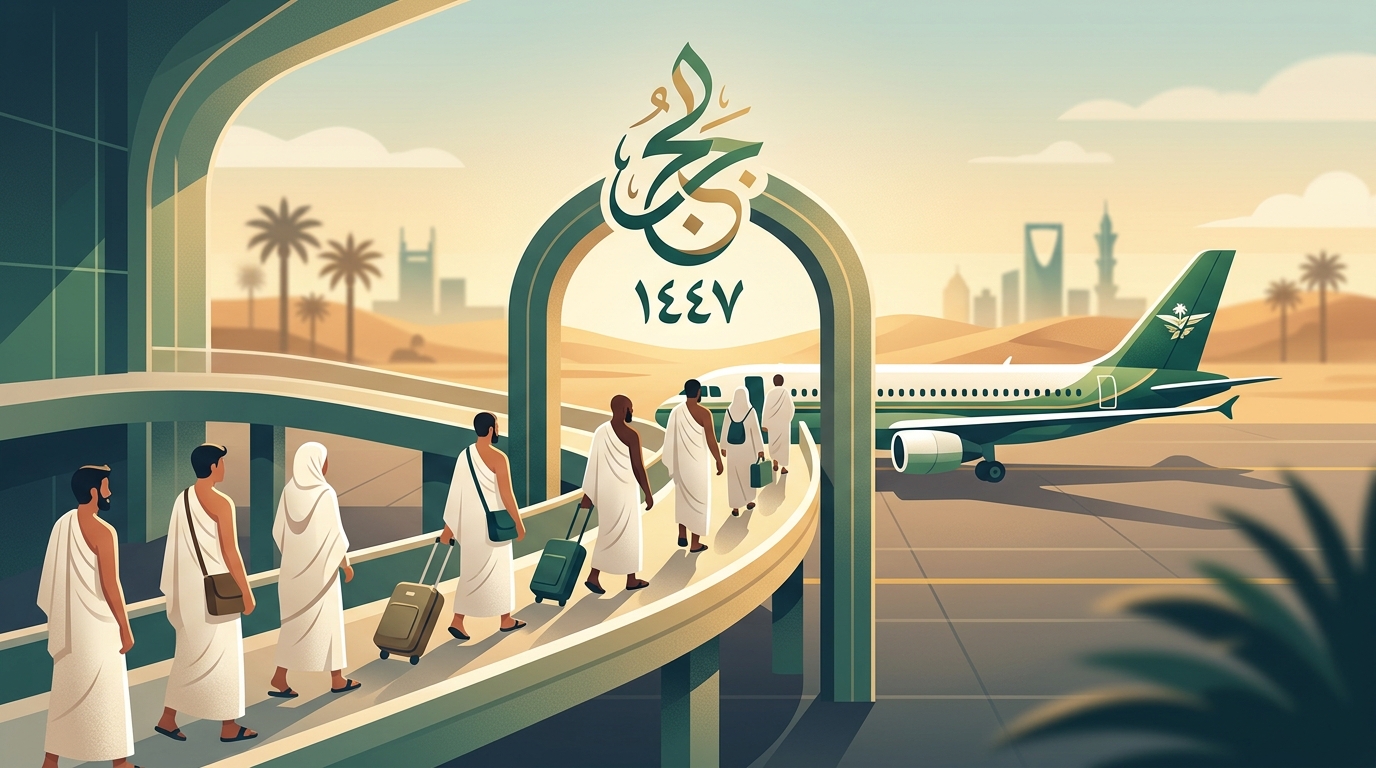
The Ministry of Hajj and Umrah announced the departure of the last batch of the Guests of God for the Hajj season 1447 AH, within an integrated system of services that the Kingdom provided for the Guests of God from their arrival until their departure to their homelands through all land, sea, and air ports, enabling them to perform their rituals with ease and reassurance.
The Ministry affirmed that the success of the Hajj season came by the grace of God, and then by the support and attention that the service system for the Guests of God received from the Custodian of the Two Holy Mosques King Salman bin Abdulaziz Al Saud, and His Royal Highness Prince Mohammed bin Salman bin Abdulaziz Al Saud, Crown Prince and Prime Minister - may God preserve them -, and the direct follow-up of His Royal Highness Prince Abdulaziz bin Saud bin Naif, Minister of Interior and Chairman of the Supreme Hajj Committee, in addition to the continuous efforts of the Emirates of Makkah and Madinah, and the integration between various government and service agencies, embodying the goals of the Kingdom's Vision 2030 and the Guests of God Service Program in improving service quality and enriching the experience of the Guests of God.
The Ministry explained that its services continued until the departure of the last pilgrim, through an integrated operational, digital, and field system, including guidance, care, monitoring, awareness, and field support services, which contributed to completing the journey of the Guests of God with ease and convenience.
The Ministry had begun its preparations for the Hajj season 1448 AH since the 12th of Dhul Hijjah 1447 AH, by announcing the delivery of the preliminary arrangements document to the Pilgrim Affairs Offices, signaling the start of early preparation work for the next season, followed by the implementation of comprehensive evaluation of the season, identifying improvement opportunities, and coordinating with relevant agencies, to enhance readiness, improve service quality, and continue developing the experience of the Guests of God.
The Hajj season 1447 AH witnessed a development in the digital services system through the "Nusuk" application, which includes more than 130 digital services, recording about 54 million interactions by pilgrims, with its users exceeding 1.3 million pilgrims during the season, while the use of Islamic services in it exceeded 6 million times, and the number of awareness, guidance, and health notifications read exceeded 22 million notifications. More than 518,000 pilgrims benefited from the "Digital Mutawwif" service, and about 959,000 pilgrims used Nusuk maps, while the number of readings of the guidance content in the Hajj guide within the application exceeded 610,000 readings, and the number of Nusuk card readings exceeded 9.5 million readings during the season.
On the care side for the Guests of God, the "Nusuk Care" centers provided more than 545,000 services, while the Guests of God Care Center received about 307,000 calls via the unified number (1966) in more than 11 languages, in addition to distributing nearly 670,000 awareness and guidance materials. More than 886,000 pilgrims benefited from the "Happiness Team" initiative, which provided support, guidance, and field assistance to pilgrims throughout the season.
Under the "Pilgrim Without a Bag" initiative, the number of bags shipped during the arrival and departure phases reached approximately 2.9 million bags, an increase of over 106% compared to the Hajj season 1446 AH, including more than 1.58 million bags in the arrival phase and more than 1.31 million bags in the departure phase.
The initiative also helped reduce the time for completing travel procedures at airports from two hours to 15 minutes, enhancing operational efficiency, saving time and effort, and enriching the experience of the Guests of God until their departure.
The Ministry added that it carried out more than 105,000 inspection tours at various service sites, contributing to a 39% reduction in observations compared to the previous Hajj season, reflecting the effectiveness of the monitoring system and continuous improvement efforts to enhance service quality.
The Ministry of Hajj and Umrah affirmed that what was achieved during the Hajj season 1447 AH embodies the continued development of the Guests of God service system, through integration between government agencies, investment in digital technologies and smart solutions, to enhance service quality, achieve the goals of the Kingdom's Vision 2030, and solidify the Kingdom's position as a global model in serving the Guests of God, ensuring that the pilgrim's journey remains a comprehensive and facilitated experience that begins before the moment of arrival and continues until departure with ease and reassurance.
Original source: Al-Riyadh



Comments (0)
Be the first to comment.