Environmental / Puncture Vine: A Cryptogamic Plant Adapted to the Desert Environment in the Northern Borders
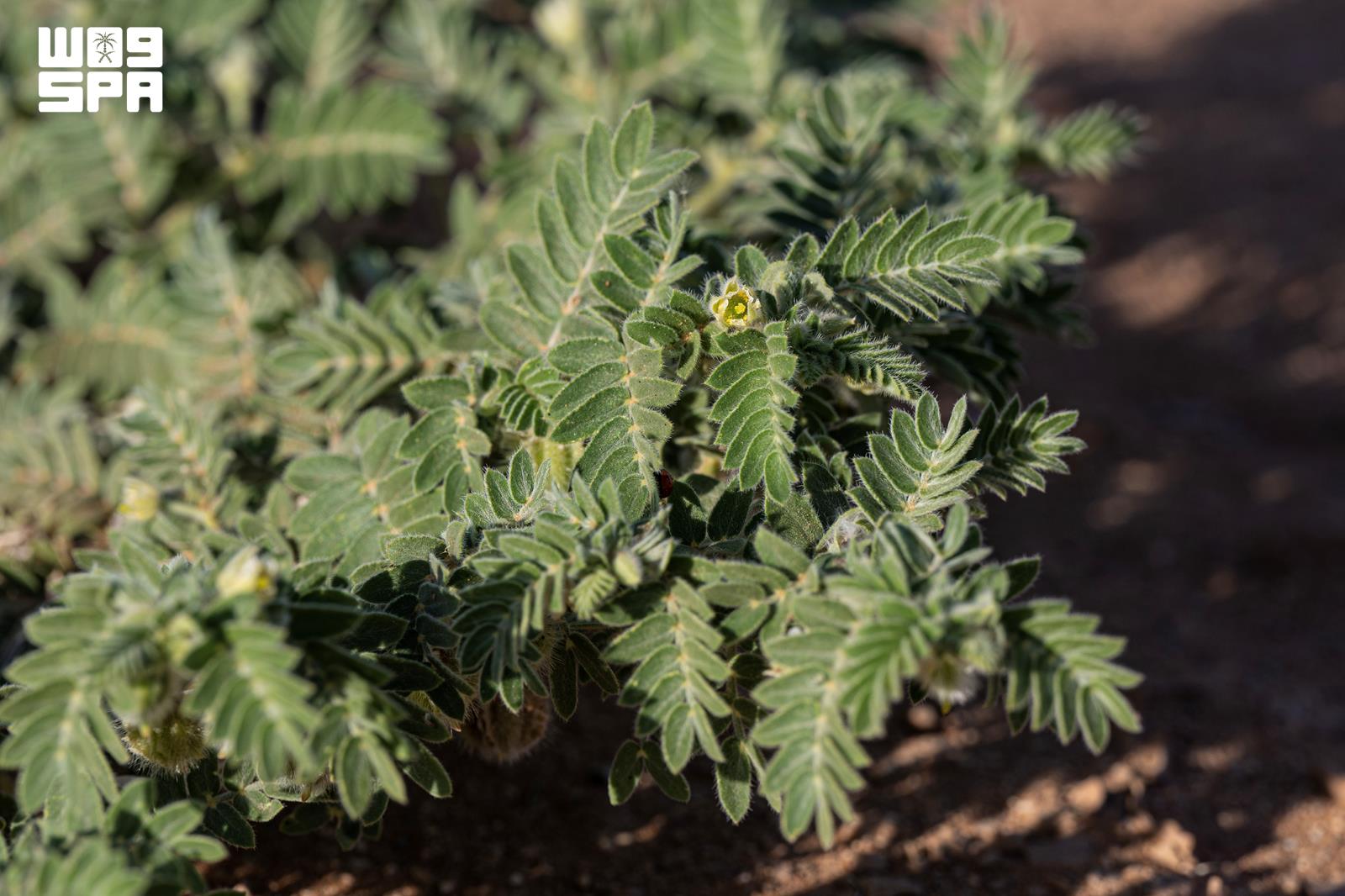
Puncture vine (Tribulus terrestris) is a cryptogamic plant that thrives in the desert and plains of the Northern Borders region, contributing to plant diversity with its high adaptability to harsh conditions.
Environmental / Puncture Vine: A Cryptogamic Plant Adapted to the Desert Environment in the Northern Borders
Arar, Muharram 20, 1448 AH – July 5, 2026 SPA The Northern Borders region boasts a rich diversity of desert plants reflecting the abundance of its natural environments. Puncture vine (Tribulus terrestris) is a cryptogamic plant that spreads across several desert and plain locations, contributing to plant diversity thanks to its ability to adapt to harsh environmental conditions. Scientifically known as Tribulus terrestris, it is an annual flowering plant belonging to the Zygophyllaceae family, growing prostrate along the ground. Its branches are covered with fine hairs, while its leaves are opposite, compound, and feather-like. Its flowers appear singly in leaf axils, and its fruits consist of woody, spiny segments that aid seed dispersal in desert environments. The plant has several common names in different regions, most notably: goat’s head, puncture vine, and caltrop—names that reflect its presence in botanical heritage and local environments. Puncture vine grows in sandy and gravelly soils and open areas, typically appearing after rainfall, benefiting from its high tolerance to drought and high temperatures, making it a plant species well-suited to desert environments. Puncture vine plays a role in enriching the natural vegetation cover and preserving biodiversity in desert environments. Its presence, along with other cryptogamic species, contributes to the stability of ecosystems and reflects the plant diversity characteristic of the Northern Borders region, which is capable of adapting to its desert nature. // End // 21:50 T M 0156
Original source: SPA





Comments (0)
Be the first to comment.