General / Madinah Region Mayor Presents City's Experience in Localizing Sustainable Development Goals in New York

During the UN High-Level Political Forum, Madinah Mayor Eng. Fahd bin Mohammed Al-Belaihshi highlighted the city's pioneering role in localizing SDGs under Saudi Vision 2030, showcasing its second Local Voluntary Review, the Madinah Neighborhoods Atlas, and winning the Shanghai Award 2025 for Sustainable Development.
General / Madinah Region Mayor Presents City's Experience in Localizing Sustainable Development Goals in New York
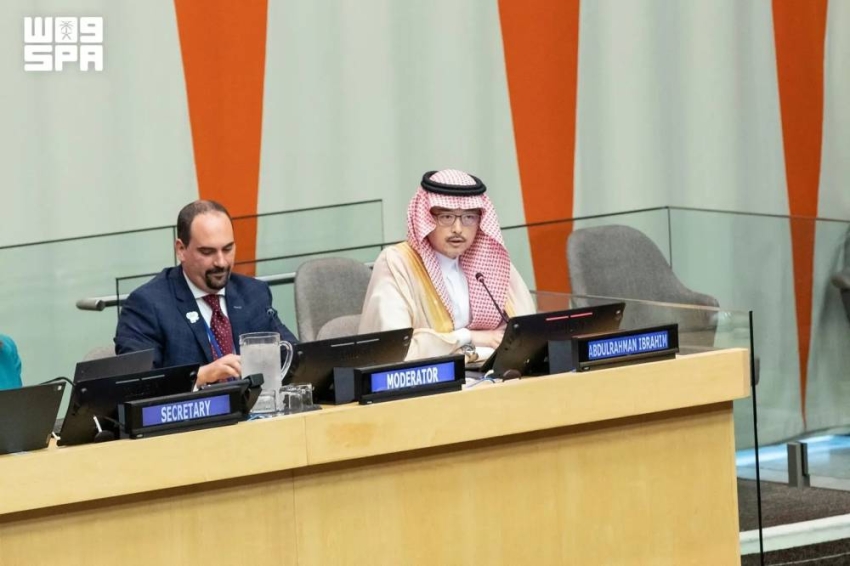
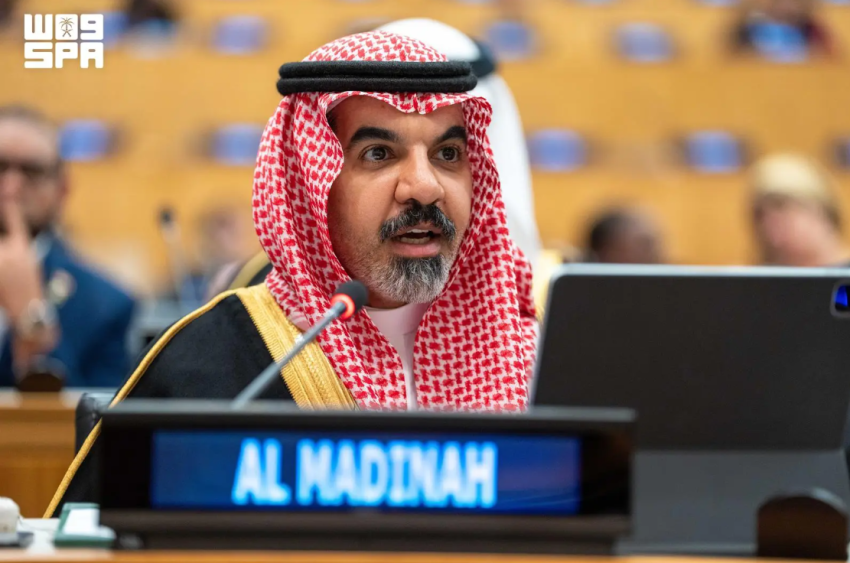
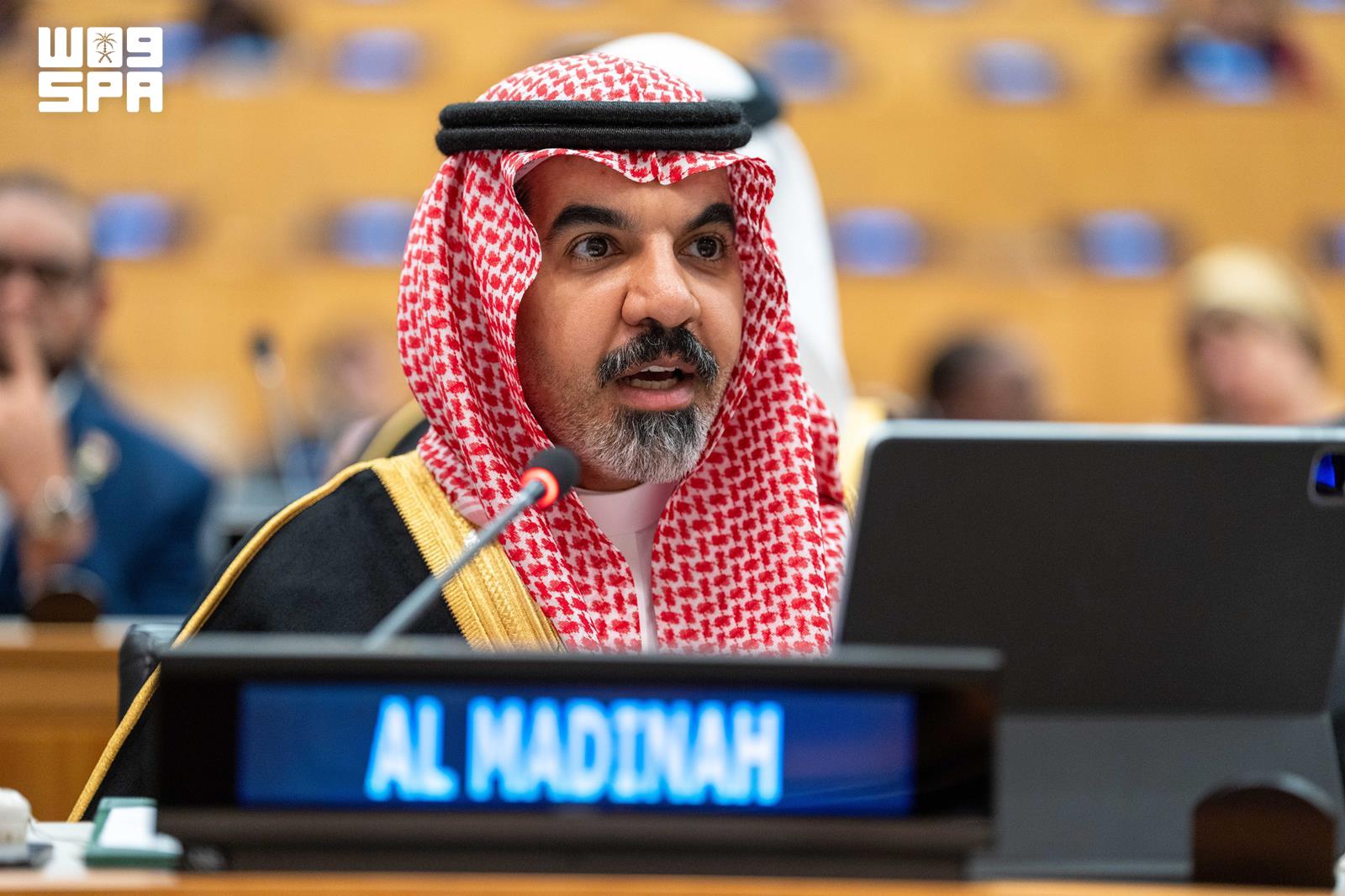
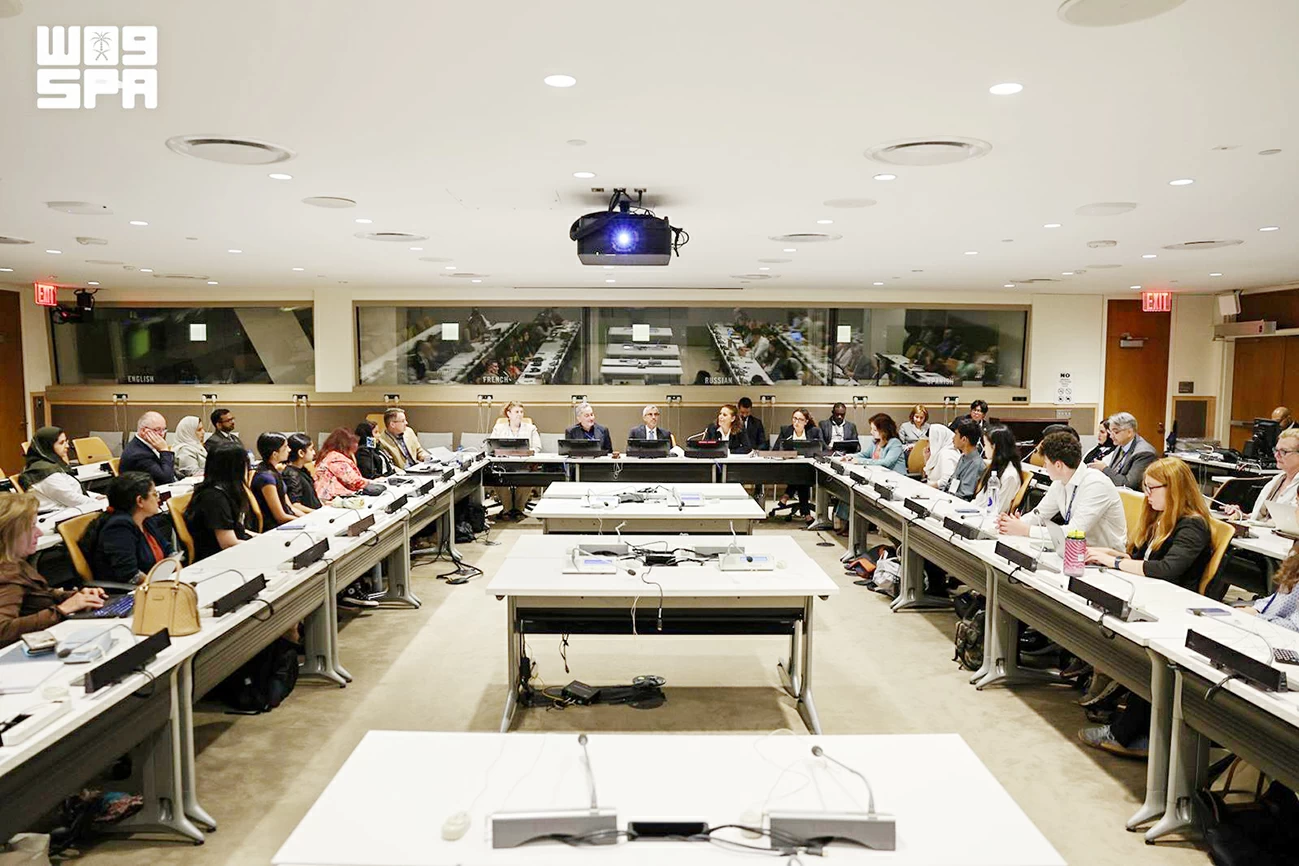
New York, Safar 01, 1448 AH corresponding to July 15, 2026, SPA -- The Mayor of Madinah Region, CEO of the Region Development Authority, Engineer Fahd bin Mohammed Al-Belaihshi, affirmed that cities have become a key partner in achieving the Sustainable Development Goals, thanks to the empowerment and integration provided by Saudi Vision 2030 across various levels of development work, during his participation in the Local and Regional Governments Forum, held as part of the High-Level Political Forum on Sustainable Development 2026 at the United Nations headquarters in New York, USA. During his participation, he reviewed Madinah's experience as a national model in localizing the Sustainable Development Goals and transforming the targets of Saudi Vision 2030 into development policies and initiatives with tangible impact at the local level. He explained that Madinah has continued to develop its institutional model for localizing the SDGs based on global frameworks and standards, including environmental, social, and governance criteria, thereby enhancing sustainable investment, supporting data-driven urban planning and decision-making, and improving quality of life. His Excellency noted that Madinah has completed its second Local Voluntary Review, extending a continuous path of measuring progress, monitoring development indicators, and developing evidence-based policies. He stressed that the review serves as a bridge connecting subnational work with national voluntary reviews, enhancing integration across different levels of development work and enabling cities to benefit from successful experiences and adapt them according to their development priorities. His Excellency also reviewed Madinah's experience in analyzing sustainable development indicators at the neighborhood level through the 'Madinah Neighborhoods Atlas,' as the first such experiment globally, noting that over the past year, the localization of SDGs has shifted from initiatives to an integrated institutional system supporting planning and decision-making. He emphasized the importance of accelerating progress towards Goals 6, 7, 9, and 11 of the SDGs, which the forum is reviewing this year, pointing out that achieving the targets of Goal 17 requires effective partnerships and established cooperation frameworks among various parties, giving data and policies their real impact in achieving development. He explained that this human-centered approach, based on partnership and data, culminated in Madinah winning the Shanghai Award 2025 for Sustainable Development in Cities, in recognition of its excellence in localizing the SDGs at the local level. At the conclusion of his participation, His Excellency renewed Madinah's commitment to continuing work with its partners, exchanging expertise, and building effective partnerships that contribute to accelerating the achievement of the SDGs, affirming that the future of sustainable development is built through partnership, led by cities, and its impact is measured on people's lives. // End // 20:01 T M 0162
New York, Safar 01, 1448 AH corresponding to July 15, 2026, SPA -- The Mayor of Madinah Region, CEO of the Region Development Authority, Engineer Fahd bin Mohammed Al-Belaihshi, affirmed that cities have become a key partner in achieving the Sustainable Development Goals, thanks to the empowerment and integration provided by Saudi Vision 2030 across various levels of development work, during his participation in the Local and Regional Governments Forum, held as part of the High-Level Political Forum on Sustainable Development 2026 at the United Nations headquarters in New York, USA. During his participation, he reviewed Madinah's experience as a national model in localizing the Sustainable Development Goals and transforming the targets of Saudi Vision 2030 into development policies and initiatives with tangible impact at the local level. He explained that Madinah has continued to develop its institutional model for localizing the SDGs based on global frameworks and standards, including environmental, social, and governance criteria, thereby enhancing sustainable investment, supporting data-driven urban planning and decision-making, and improving quality of life. His Excellency noted that Madinah has completed its second Local Voluntary Review, extending a continuous path of measuring progress, monitoring development indicators, and developing evidence-based policies. He stressed that the review serves as a bridge connecting subnational work with national voluntary reviews, enhancing integration across different levels of development work and enabling cities to benefit from successful experiences and adapt them according to their development priorities. His Excellency also reviewed Madinah's experience in analyzing sustainable development indicators at the neighborhood level through the 'Madinah Neighborhoods Atlas,' as the first such experiment globally, noting that over the past year, the localization of SDGs has shifted from initiatives to an integrated institutional system supporting planning and decision-making. He emphasized the importance of accelerating progress towards Goals 6, 7, 9, and 11 of the SDGs, which the forum is reviewing this year, pointing out that achieving the targets of Goal 17 requires effective partnerships and established cooperation frameworks among various parties, giving data and policies their real impact in achieving development. He explained that this human-centered approach, based on partnership and data, culminated in Madinah winning the Shanghai Award 2025 for Sustainable Development in Cities, in recognition of its excellence in localizing the SDGs at the local level. At the conclusion of his participation, His Excellency renewed Madinah's commitment to continuing work with its partners, exchanging expertise, and building effective partnerships that contribute to accelerating the achievement of the SDGs, affirming that the future of sustainable development is built through partnership, led by cities, and its impact is measured on people's lives. // End // 20:01 T M 0162
Original source: SPA

Comments (0)
Be the first to comment.