Prophet's Mosque Imam: Avoid Using Divorce as a Means of Oath or Threat

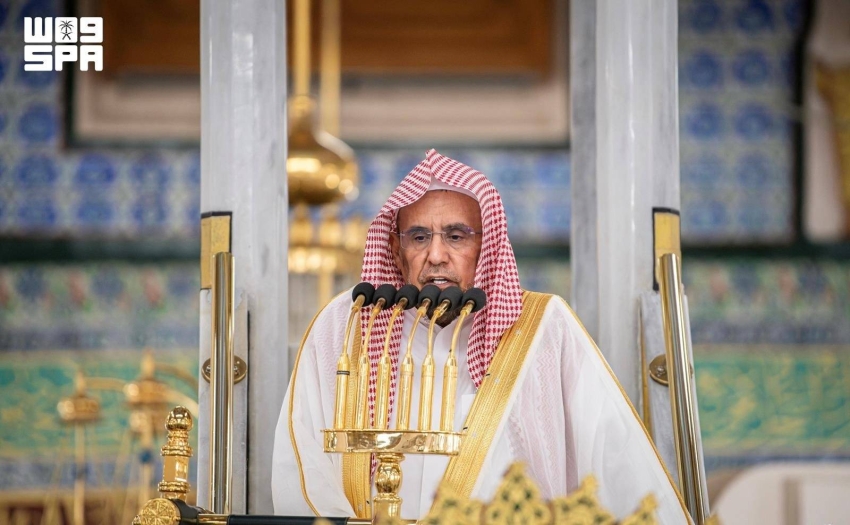
The Imam and preacher of the Prophet's Mosque, Sheikh Dr. Hussein Al Sheikh, spoke about Islam's care for married life, stating that Islamic law established the relationship between spouses on affection and mercy, and legislated rulings that ensure family stability and preserve the rights of its members, making divorce the last resort when reconciliation becomes impossible and harm persists. His Excellency explained that divorce in Islam is legislated after exhausting means of reconciliation and the impossibility of continuing marital life, to serve as a means of preventing harm and achieving benefit, not as a door to hastily ending marital life, citing the Almighty's verse: 'And live with them in kindness. For if you dislike them, perhaps you dislike something and Allah makes therein much good.' Dr. Al Sheikh also referred to the Prophet's hadith: 'A believing man should not hate a believing woman; if he dislikes one trait in her, he will be pleased with another,' clarifying that this prophetic guidance encourages patience, overlooking faults, focusing on virtues, and enhancing opportunities for reconciliation before resorting to divorce. He explained that among the controls of legitimate divorce is that a man divorces his wife with one divorce during a period of purity in which he has not had intercourse with her, or divorces her while she is pregnant, then leaves her in the marital home for the purpose of self-reflection, and perhaps Allah will bring about a matter of the husband returning to his wife and reforming the entire family situation. His Excellency warned against transgressing Allah's limits by issuing divorce in an illegitimate manner, such as a man divorcing his wife three times with one word or in one sitting, or issuing divorce during her menstruation, or during a period of purity in which he had intercourse with her. The Imam and preacher of the Prophet's Mosque emphasized warnings against taking divorce words lightly, or using them as an oath to urge or prevent something, or to affirm or deny something, such as one saying: 'I am divorced if I go to such and such' or 'if you do not do such and such,' or using it when wanting to honor someone and oblige them to respond to an invitation, like saying: 'I am divorced if you have lunch or dinner with us,' stressing that divorce is among Allah's limits that must be revered, citing the Almighty's verse: 'These are the limits of Allah, so do not transgress them. And whoever transgresses the limits of Allah, it is those who are the wrongdoers.' He concluded the sermon advising spouses to be patient and deliberate, to avoid hasty reactions and sudden emotional impulses, stating that among the rulings of divorce is that a woman is not permitted to request divorce when conditions are stable and there are no reasons for separation, citing the Prophet's saying: 'Any woman who asks her husband for divorce without valid reason, the fragrance of Paradise is forbidden to her,' authenticated by Ibn Khuzaymah, Ibn Hibban, and others.
Original source: Al-Mowaten



Comments (0)
Be the first to comment.