Parking Reservation.. Citizens to 'Al-Youm': Random Violations Require Intervention to End Disputes
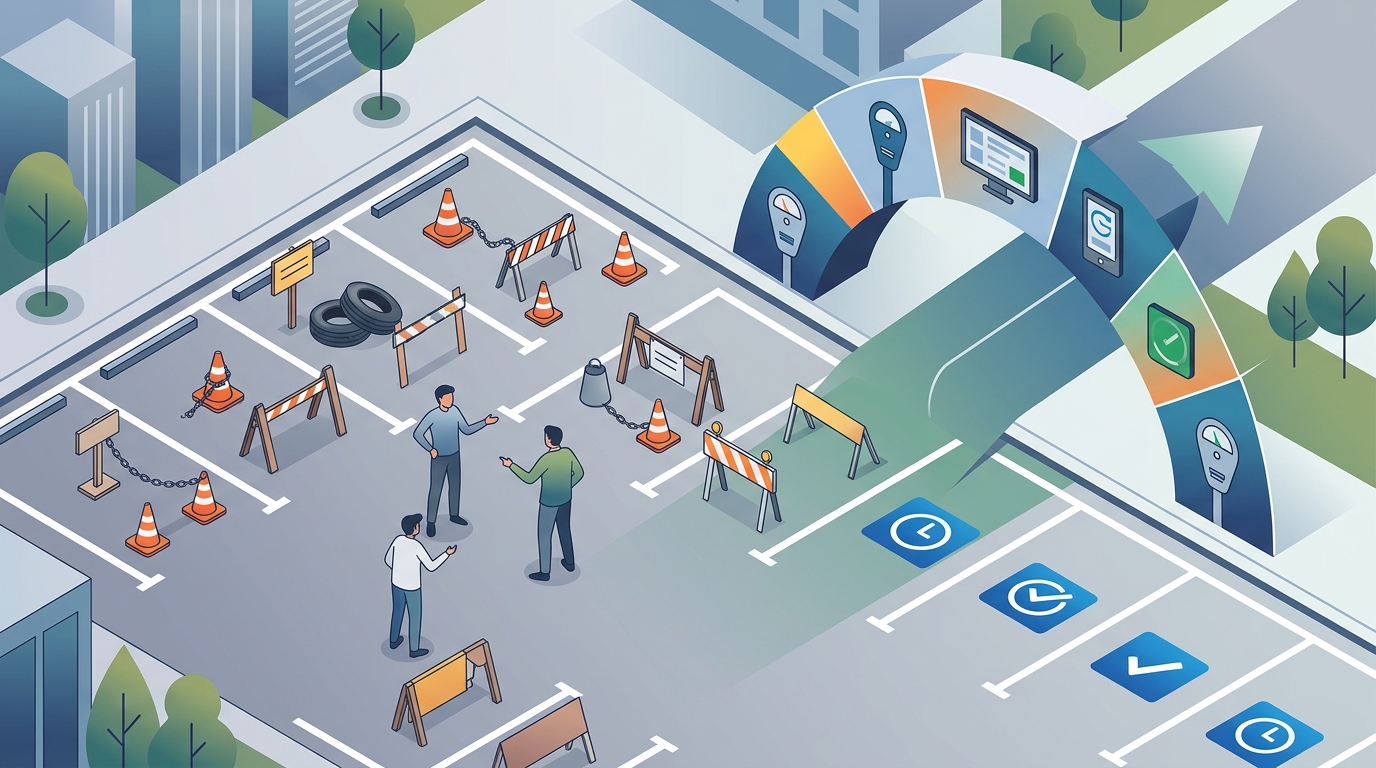
A survey reveals divided opinions on reserving public parking: some see it as necessary for privacy or business, while others view it as illegal encroachment. Experts call for clearer regulations.
The phenomenon of reserving public parking spaces in front of homes and shops using barriers, vehicles, or bumpers has sparked renewed debate in society, amid increasing complaints about practices some see as encroachments on public facilities, while others view them as a way to protect their home privacy or facilitate their businesses.
Between these views, opinions vary on the limits of the right to use public parking, and the role of relevant authorities in regulating them to ensure smooth traffic and preserve everyone's rights.
Related News
In a survey conducted by 'Al-Youm', individuals expressed their opinions on the issue.
Unacceptable Behaviors
Ahmed Suleiman Al-Tayeh affirmed that seizing public parking or damaging others' vehicles due to parking in front of homes is unacceptable behavior, contradicting Islamic teachings and societal values. He explained that respecting neighbor's rights is a principle urged by the Prophet (peace be upon him), noting that one should be tolerant and open-minded, especially when there are guests or congestion forcing some to park in public areas.
Ahmed Suleiman Al-Tayeh
He added that some actions, such as damaging tires or tampering with vehicles due to parking, have no connection to Islamic law or ethics and values, stressing his absolute rejection of these practices. He pointed out that streets and public parking are a right for everyone, not owned by anyone, calling for adherence to morals, chivalry, and magnanimity, and following the Prophet's teachings on good neighborliness. He concluded by affirming that the Kingdom, as an Islamic country and the cradle of Islam's message, should be a model in applying values of coexistence and mutual respect among members of society.
Parking Regulation
Ahmed Ali Al-Shawaf stressed that any person has the right to use public parking unless it is officially designated or rented by the competent authority, noting that reserving parking by placing barriers or vehicles to prevent others from using it is an illegal act. He explained that streets and public parking belong to the municipality, and no individual has the right to seize or allocate them for themselves, pointing out that some people deliberately reserve more than one spot using vehicles or barriers, which is unacceptable.
Ahmed Ali Al-Shawaf
He proposed organizing parking in markets through a subscription system by the hour or month, with clear designation of parking spots, so that each spot is allocated to one vehicle, helping to regulate traffic and reduce violations. He added that residential neighborhoods also need regulation to prevent reserving public parking in front of homes, stressing that homeowners do not have the right to prevent others from parking in public spots or placing barriers or any means to reserve them, because they are public property subject to regulation by the competent authorities.
Encroachments on Rights
Jassim Mohammed Busaeed affirmed his rejection of the practice of reserving public parking or placing barriers to prevent others from parking, noting that this behavior does not reflect the spirit of cooperation and good neighborliness. He explained that many parking instances are temporary, lasting only a few minutes, calling for mercy and understanding, as the person might be entering for a quick errand or waiting for a family member. He added that some neighbors react with excessive anger towards parking in front of their homes, to the extent that some may threaten to damage vehicles, which is unacceptable and inconsistent with social and ethical values.
Jassim Mohammed Al-Busaeed
Busaeed stressed the importance of spreading a culture of tolerance and respect for others, affirming that public parking should remain available to everyone within a framework of mutual respect and good neighborly relations. Hajem Ahmed Abdullah said: 'I really do not know the reason behind this phenomenon; for instance, if someone puts a barrier in front of their home to reserve a parking spot, that is unjustified. In the end, these are public properties belonging to the municipality, and I legally have no right to place anything in front of my home and say this spot is for my car.'
Hajem Ahmed Abdullah
Saad Al-Shammari said: 'If placing bumpers or warning and guidance signs obstructs traffic or affects traffic flow, that is a big problem. On the other hand, some residents, especially those near vital locations such as mosques, complexes, or commercial activities, suffer from road users' lack of respect for home privacy, as they may park in front of entrances, hindering vehicle entry or exit, and this is also a real problem.'
Visual Distortion
Moreover, placing bumpers or barriers randomly is a visual distortion and may cause problems for homeowners, as it may constitute an encroachment on traffic flow, while also being linked to preserving home privacy. Therefore, this matter must be clearly regulated by the competent authorities, such as the region's municipality and urban planning bodies, after conducting studies that consider the number of lanes, traffic flow, and road usage density.
Saad Al-Shammari
It is not logical for a busy street with heavy traffic to have its flow narrowed or obstructed by these practices, as that causes many problems. In general, this issue remains thorny with multiple dimensions; homeowners believe they have the right to protect their home entrances, while road users see placing barriers as an overstepping of property boundaries and exploitation of public facilities. We hope the coming period will see clearer regulation of this file to achieve a balance between everyone's rights.' Salman Ahmed Al-Amer said: 'From my perspective, it is important to have better regulation of parking, taking into account the needs of all parties. As shop owners, we already suffer from this problem, but we are not demanding to reserve a large number of spots or to take them over entirely. All we need is to allocate two spots in front of some commercial activities that require it.'
Salman Ahmed Al-Amer
For example, shops selling furniture, furnishings, and bedroom sets sell large and heavy products, which requires a designated parking spot for loading goods, in addition to another spot for customer service. This is the main hardship we face. He continued: 'True, current regulations do not grant us the right to reserve public parking, but we hope for a regulation that allows allocating a limited number of spots for certain commercial activities, achieving a balance between public interest and limiting the commercial harm that may befall the owners of these shops.'
Original source: Al-Yaum



Comments (0)
Be the first to comment.