Raising Acceptance of Students with Disabilities to 40% in Private and International Schools
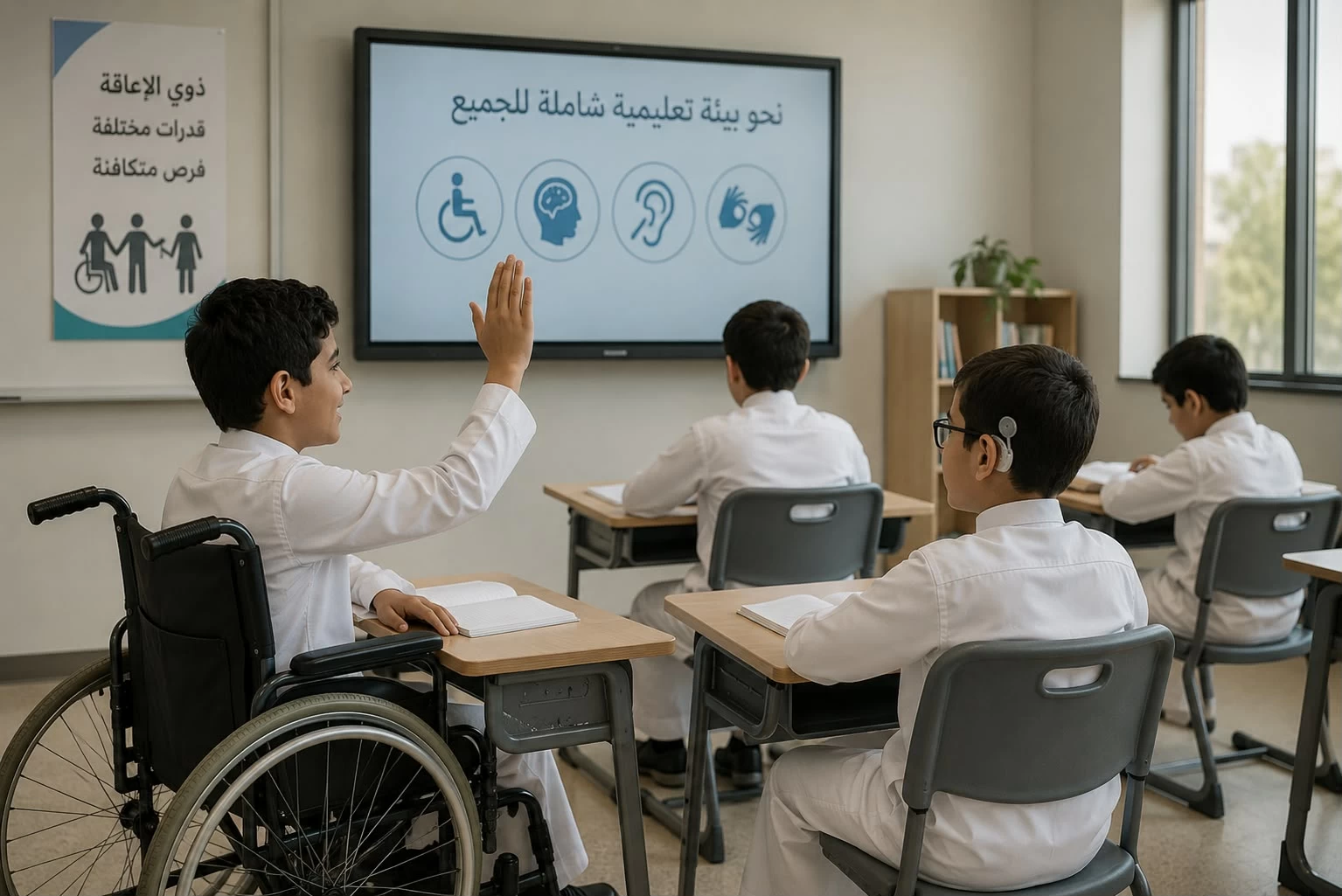
The Ministry of Education has allowed private and international schools, on an optional and gradual basis, to raise the acceptance rate of students with disabilities in full integration classes from 25% to 40%, provided that quality standards and school accreditation are met, and high levels are achieved in special education indicators, along with the provision of specialized staff.
The organizational guide for programs for students with disabilities includes new regulations for organizing integration, most notably determining the appropriate educational setting for each student according to their type of disability and abilities, integrating those who can benefit from general education, and allocating specialized institutes or classes for cases that require more specialized programs.
The guide also sets a ceiling for the number of students in integration classes and mandates the preparation of an individual educational program for each student, along with providing supportive services, regular follow-up, measuring progress levels, and involving the family and the multidisciplinary team in planning the educational process.
The guide emphasizes the continued provision of educational services for students with disabilities even if they are unable to attend school or are hospitalized, while preparing the school environment, especially for students with physical and health disabilities.
These regulations will be implemented within the disability programs for the new academic year, aiming to enhance the quality of integration services, expand opportunities for enrollment in education, and ensure that every student receives the program and educational services that meet their needs.
The Ministry of Education has allowed private and international schools, on an optional and gradual basis, to raise the acceptance rate of students with disabilities in full integration classes from 25% to 40%, provided that quality standards and school accreditation are met, and high levels are achieved in special education indicators, along with the provision of specialized staff.
The organizational guide for programs for students with disabilities includes new regulations for organizing integration, most notably determining the appropriate educational setting for each student according to their type of disability and abilities, integrating those who can benefit from general education, and allocating specialized institutes or classes for cases that require more specialized programs.
The guide also sets a ceiling for the number of students in integration classes and mandates the preparation of an individual educational program for each student, along with providing supportive services, regular follow-up, measuring progress levels, and involving the family and the multidisciplinary team in planning the educational process.
The guide emphasizes the continued provision of educational services for students with disabilities even if they are unable to attend school or are hospitalized, while preparing the school environment, especially for students with physical and health disabilities.
These regulations will be implemented within the disability programs for the new academic year, aiming to enhance the quality of integration services, expand opportunities for enrollment in education, and ensure that every student receives the program and educational services that meet their needs.
Original source: Okaz





Comments (0)
Be the first to comment.