When Morality is the Reference for Leadership: King Salman as a Model

Mohammed Shaye Al-Shaye
When Morality is the Reference for Leadership: King Salman as a Model
21 July 2026 - 00:00 | Last updated 21 July 2026 - 00:00
Follow Okaz channel on WhatsApp
In lessons of learning values, history records stories and masterpieces, and moments that shape the memory of nations, preserving the values upon which established civilizations are built. Systems and regulations are necessary for managing states, but they alone do not create inspiring leadership, nor do they earn decisions the respect of people. What gives a decision its value and earns leadership its status is the moral reference that governs behavior before it governs authority. When morality becomes part of the leader's character, it reflects on his management style, his relationship with people, and his approach to responsibility.
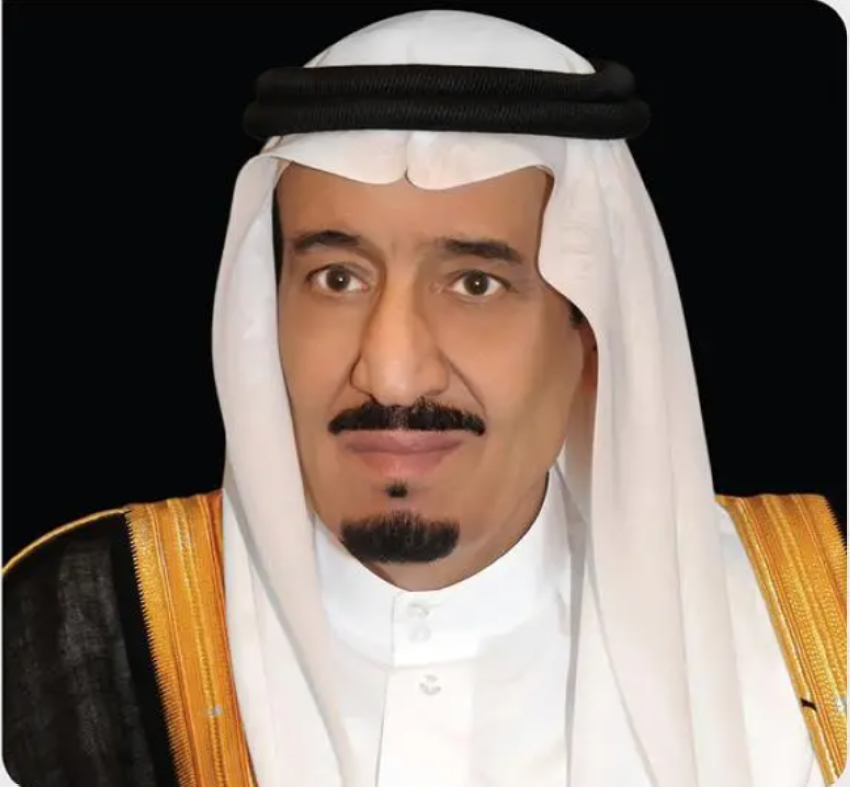
Perhaps one of the most telling evidences of this is what was known about the Custodian of the Two Holy Mosques, King Salman bin Abdulaziz, may God protect him, when he accompanied Prince Sultan bin Abdulaziz, may God have mercy on him, during his final illness while receiving treatment abroad. The place was not only filled with medical equipment, but also with the files of the Emirate of Riyadh and the responsibilities entrusted to Prince Salman. There, the emir's office was no longer a fixed location, but issues were studied and decisions were made wherever the person responsible was.
Prince Salman, with his composure, mercy, love, and loyalty to his brother, would enter to check on his health, then turn to the affairs of the emirate as a prince, reading files, studying issues, making decisions, and following up on the emirate's matters, then return to comfort his brother and alleviate the burden of illness. In that wing, the weight of official responsibility met the warmth of brotherhood and sincere feelings, in a rare image embodying that true leadership sees no conflict between official duty and human duty, but rather makes both two sides of a single responsibility.
That scene was not an exception in King Salman's character, but rather an extension of a career linked to the modern history of Riyadh. Over the decades of his emirate, the capital became a model in planning and development, enhancing its scientific, cultural, and economic presence, until it became one of the most prominent capitals in the region. His interest in urban development was not separate from his interest in people; his emirate council was a meeting place for intellectuals, writers, entrepreneurs, and initiative owners, out of a belief that dialogue and knowledge are partners in making development, and that man is the primary goal of any development project.
In contrast, Prince Sultan bin Abdulaziz, may God have mercy on him, wrote another page in the building of the state and its responsibilities. Over decades of leading the Ministry of Defense, his name was associated with developing the armed forces, establishing military colleges and institutes, building integrated military cities, airports, bases, and facilities, in a project that extended from the north of the country to its south, and from its east to its west. The title 'Sultan of Goodness' was not a passing nickname, but a certificate awarded by people to a man they knew to be close to them whenever they needed him, generous in his giving, who saw that serving people is part of the state's responsibility, and that the position is a duty to give before being an honor.
When a man who spent his life building the capital meets a man who dedicated his life to building the nation's strength at a sickbed, the image transcends the bounds of brotherhood to become a lesson in leadership, where achievement meets morality, and the state meets the human being.
Then came another scene no less impactful, when the Custodian of the Two Holy Mosques, King Abdullah bin Abdulaziz, may God have mercy on him, despite his health condition, left his treatment location to be at the forefront of those receiving the body of his brother Prince Sultan, aware of his worth and the wisdom, affection, generosity, and love he possessed. The noble king received him, bid him farewell, and kissed his body, in a gesture that remained a testament that loyalty in this family was not a slogan raised, but a character trait practiced when tribulation intensifies.
When such evidences and situations recur over the decades, they do not appear as scattered events, but rather reflect a school of leadership, whose roots can be traced back to the will of the founding king, Abdulaziz bin Abdulrahman Al Saud, may God have mercy on him, when he said: 'You must unite, you must be sincere, and do not differ; for your disagreement is the cause of your failure.' Those words were not merely a family will, but a deep vision in state-building, realizing that the strength of nations begins with the unity of its leadership, and that sincerity, loyalty, and morality are not only personal virtues, but foundations for good governance, decision-making, and building trust between leadership and society. Perhaps the greatest aspect of this will is that it did not remain just words to be narrated, but turned into behavior translated by reality in situations before words. Values are not known by what is written about them, but by what people see of them when days test them.
History has preserved what these leaders achieved in terms of urban development, institutions, and the strength of the state, but it also preserved for them what is more lasting than achievements: their morality, respect for people, and loyalty to their responsibilities, families, and nation. Achievements build the present, but values shape the future and give achievement its meaning and continuity. Hence, what the Kingdom of Saudi Arabia enjoys of stability, trust, prosperity, and respect among the nations of the world is not based solely on the strength of its institutions and achievements, but on a system of values that made morality a reference for leadership, man a focus of responsibility, and example a foundation in the exercise of authority. And this is the lesson that remains needed at all times: that a leader may succeed by his decisions, but he is immortalized in the memory of nations only by his morality.
Original source: Okaz



Comments (0)
Be the first to comment.