After a death sentence... What do we know about Hemedti and his rise in Sudan?
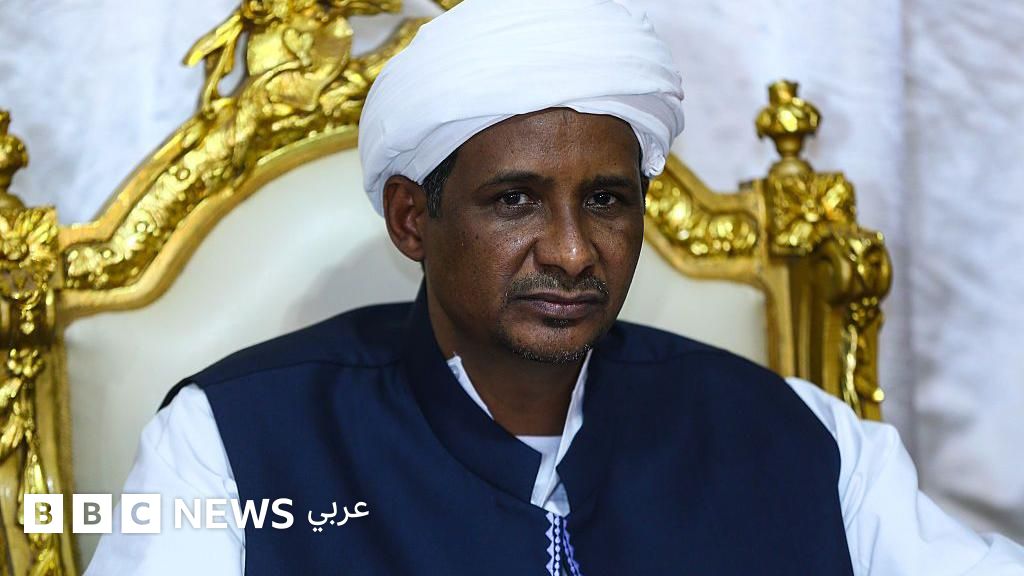
After the absentee death sentence, Hemedti returned to the forefront as the leader of the Rapid Support Forces, with an unusual path of ascent in Sudanese politics outside the traditional army and parties.
After a death sentence... What do we know about Hemedti and his rise in Sudan?
Image caption, Rapid Support Forces commander Mohamed Hamdan Dagalo, known as Hemedti
Published 5 November 2025
Last updated 13 minutes ago
Reading time: 6 minutes
A Sudanese court issued an absentee death sentence on Sunday, July 12, 2026, against Rapid Support Forces commander Mohamed Hamdan Dagalo, known as "Hemedti", and 15 others, including his brother Abdel Rahim Hamdan Dagalo, deputy commander of the forces, in the case of the killing of former West Darfur governor Khamis Abdullah Abkar.
The verdict was issued by the Anti-Terrorism and Crimes Against the State Court in Port Sudan, the first judicial ruling against Hemedti since the outbreak of war in Sudan in April 2023 between the army, led by Sovereign Council head Abdel Fattah al-Burhan, and the Rapid Support Forces led by Hemedti.
Khamis Abkar was killed in June 2023 in the city of El Geneina, capital of West Darfur state, during a wave of widespread violence that accompanied the fighting between the Sudanese army and the Rapid Support Forces.
The Rapid Support Forces later took control of large parts of West Darfur, amid accusations of committing serious violations targeting especially the Masalit community, to which Abkar belonged. The United States had concluded that "the Rapid Support Forces and allied militias committed genocide in Darfur," and imposed sanctions on Hemedti and his brother Abdel Rahim, while the European Union imposed sanctions on Abdel Rahim Dagalo over allegations of widespread violations.
In contrast, the Sudanese army faces increasing US pressure, after Washington said the Sudanese government used chemical weapons in 2024, an allegation the army denied, and threatened to impose new measures on the authorities in Port Sudan.
The Rapid Support Forces have not officially commented on the absentee death sentence against their leader, but advisors to them described the trials as political and said the forces are not concerned with their decisions.
So what do we know about Mohamed Hamdan Dagalo, and his military and political rise in Sudan?
Loss of 2.7 tons of Sudan's gold due to war
Skip most read and continue reading
Iran announces continuation of consultations with mediators to 'de-escalate' after mutual attacks with Washington
Why do mosquitoes bite some people more than others?
Syria gives Trump a means to bypass the Strait of Hormuz – article in The Telegraph
Popular celebration for the Egyptian national team after controversy over its reception in the city of El Alamein
From camel trader to powerful militia leader
Skip podcast and continue reading
Worth paying attention
In-depth explanation of the most important events and topics, to help you understand the key changes around you and their impact on your life
Episodes
Podcast end
Hemedti's rise to the forefront of the Sudanese scene appeared an unusual path. He did not come from the traditional path of the Sudanese army, nor did he rise through the major political parties, but from the heart of the conflict in Darfur, before turning into one of the most prominent faces of power after the fall of Omar al-Bashir.
Dagalo belongs to the Rizeigat Arab tribe in western Sudan. Published biographies say he left school at an early age and worked in his youth in the camel trade across border areas between Sudan, Libya and Chad, in a complex tribal and security environment.
With the outbreak of the Darfur war in 2003, al-Bashir's government used local armed groups to confront rebel movements in the region, which accused Khartoum of marginalizing Darfur politically and economically. The conflict quickly turned into a widespread war that left, according to UN estimates, about 300,000 dead and millions displaced.
In that phase, the groups known as the "Janjaweed" emerged, and their name later became associated with widespread accusations of committing serious violations against civilians. Musa Hilal, the leader of the Mahamid clan, was one of the most prominent leaders of those groups at the beginning of the war.
But Hemedti, who was moving in the same circle, later began expanding his influence through fighters from the Mahariya and other groups, before becoming a key figure in al-Bashir's calculations, especially after the latter's relationship with Hilal deteriorated.
Official legitimacy
In 2013, al-Bashir gave this force official cover under the name "Rapid Support Forces." Thus, it transitioned from a force linked to the Darfur war to a powerful paramilitary formation operating outside the traditional path of the Sudanese army.
The Rapid Support Forces remained linked to the National Intelligence and Security Service until 2017, before a special law gave them official military status as a force supporting the armed forces and other government forces. However, this status kept them a force with a special structure and leadership, and did not make them a normal part of the traditional army hierarchy.
Al-Bashir relied on the Rapid Support Forces as a balancing force within his system, given his wariness of other power centers in the army and security agencies. Hence came the description associated with Hemedti at that stage, as "Hemeiti", meaning the man who provides protection for the president.
In 2014, Sudanese authorities arrested Sadiq al-Mahdi, leader of the Umma Party, after he criticized violations he attributed to the Rapid Support Forces, which were fighting alongside the government in Darfur. The authorities then accused him of undermining the state's prestige, defaming its forces, and threatening public peace.
Sudan crisis: Are foreign forces exploiting the situation in the country?
Gold and funding influence
Image caption, Musa Hilal (right) and Hemedti
Hemedti's influence was not only military. The competition between him and Musa Hilal intensified after the discovery of gold in Jebel Amer in North Darfur state in 2012, at a time when Sudan was facing a severe economic crisis following the secession of South Sudan, which took with it most of the oil production.
Gold opened a new door for conflict over influence and resources in Darfur. Forces loyal to Hilal took control of the Jebel Amer area, amid accusations of committing widespread violations against the Beni Hussein tribe, which lived in the area. Reports indicated hundreds were killed during the waves of violence that accompanied the conflict over the mines.
In subsequent years, gold became one of the most important sources of hard currency in Sudan, constituting about 40 percent of the country's exports in 2021. The Dagalo family had interests in this sector through the company "Al-Junaid," whose name was associated with gold mining and trading.
The turning point came when the dispute between al-Bashir and Musa Hilal re-emerged, after the latter challenged the government's authority and prevented it from accessing the Jebel Amer mines. In November 2017, the Rapid Support Forces arrested Hilal and took control of important sites in the area.
Since then, Hemedti's influence in the gold sector has expanded, providing him with funding sources that strengthened the power of the Rapid Support Forces and their position within the Sudanese equation.
How did British military equipment reach the Rapid Support Forces? - The Guardian
From Darfur to the transitional authority
After the army ousted al-Bashir on April 11, 2019, following months of mass protests, Hemedti emerged as one of the most controversial figures in the new authority.
On April 13, 2019, Hemedti was promoted to the rank of First Lieutenant General, and was appointed deputy head of the Transitional Military Council, headed by First Lieutenant General Abdel Fattah al-Burhan. This came hours after Hemedti announced his refusal to participate in the council "until the demands of the people are met and implemented."
Original source: BBC Arabic
Comments (0)
Be the first to comment.