Algerian police determine cause of orphanage fire
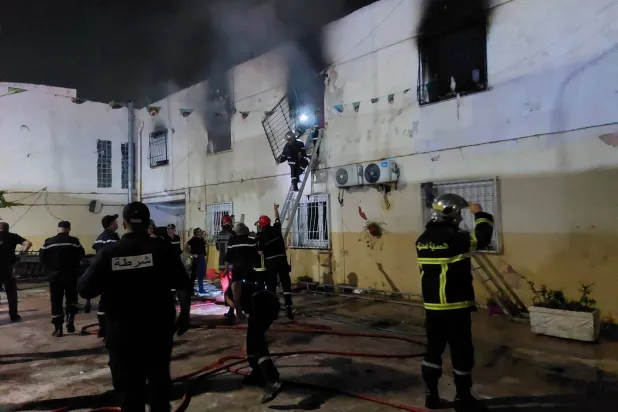
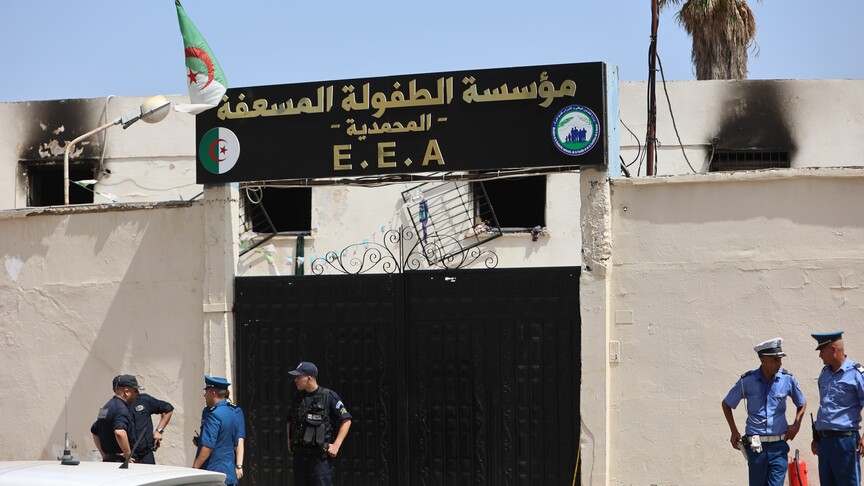
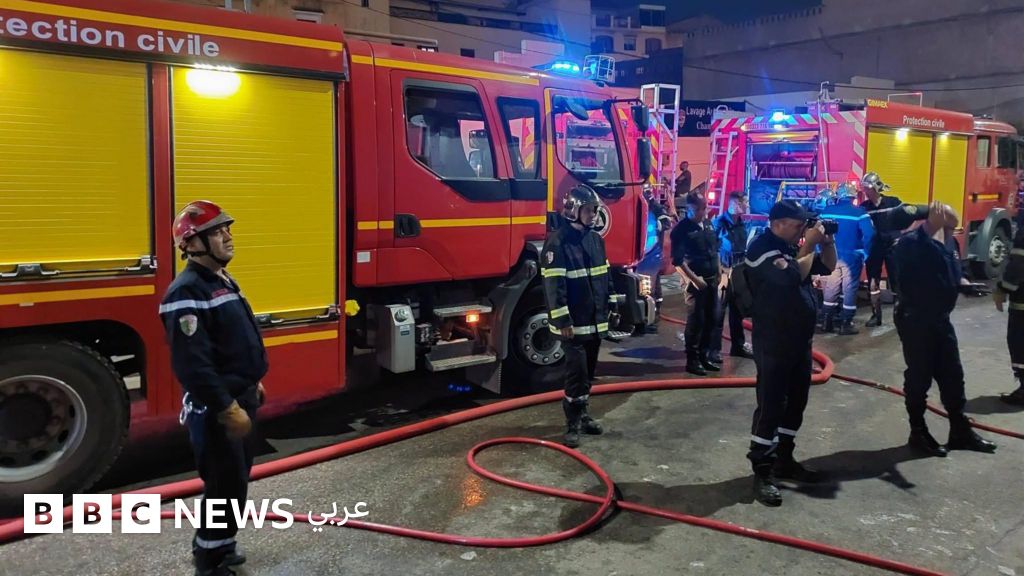
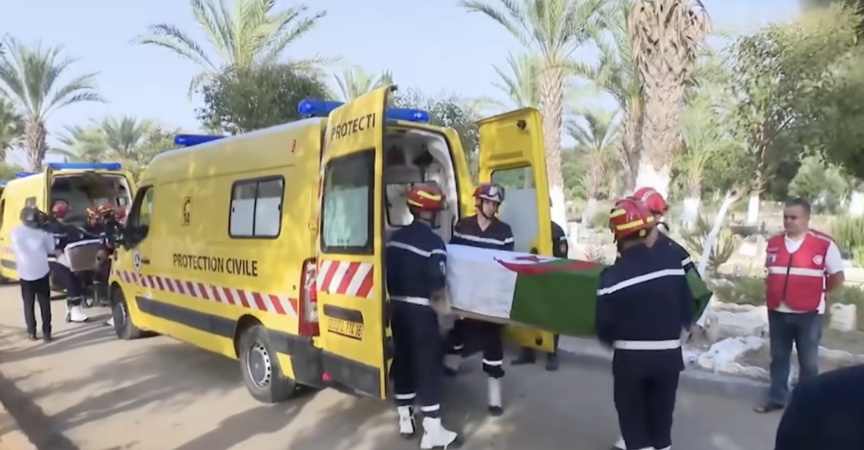
Algerian police said an electrical spark caused the fire that broke out in an orphanage in the town of Mohammadia yesterday (Thursday), resulting in the deaths of 11 people.
The military operation launched by the Libyan National Army (LNA) in the middle of this week against 'rebels' of a group led by militant Mohamed Wardugu, commander of what is known as the 'Southern Liberation Operations Room,' continues in a new escalation reflecting challenges posed by the fragile security situation in the far south, amid conflicting accounts regarding the nature of this group and its sources of support.
A security patrol affiliated with the National Army sweeps the southern borders last February (Libyan National Army General Staff)
The operation came days after the room announced last Sunday its control of the ‘Arandiga’ checkpoint belonging to the army, and its claim of advancing towards the ‘Al-Wigh’ airbase, along with publishing video clips it said were of prisoners from the army forces, without official comment from the army's leadership, and amid questions about the supporters of this group.
At a time when a prominent military official in the National Army, speaking to Al-Sharq Al-Awsat on condition of anonymity, accused the Government of National Unity of being behind the movements of this room's elements, a minister close to the government denied, in a brief written statement, 'any connection of his government' to these accusations, also refusing to reveal his identity.
Since last February, questions have been recurring from activists and bloggers about the entity behind this room, with some suggesting a relationship between Wardugu and the Government of National Unity, especially with the repeated operations the room started, the first of which was the attack on the Al-Tum border crossing with Niger.
Commander of the Southern Liberation Operations Room Mohamed Wardugu (from pages close to him)
The Libyan Center for Security and Military Studies, through its director Ashraf Bouferda, monitors these repeated accusations and links them to rumors that the Southern Liberation Operations Room received alleged support from entities linked to the Ministry of Defense of the Government of National Unity, but the latter denies this.
According to research sources concerned with following developments in southern Libya, the video recordings that the Southern Liberation Operations Room has been publishing suggest it possesses logistical and financial capabilities that are not limited, whether in terms of the quality of equipment used or the ability to carry out long-distance movements across the southern desert.
Bouferda added, explaining to Al-Sharq Al-Awsat, that one of the most prominent sources of funding that the group is believed to rely on is the 'smuggling networks active in the south, whether human or drug smuggling,' considering that its movements are also linked to maintaining its influence in those illicit routes. He believed that armed formations not subject to state authority, as well as groups that include 'mercenaries,' often operate with a logic of 'gains and spoils' and seek to adopt revolutionary, national, or liberationist slogans in order to attract more supporters.
The 'room's' rebels have long adopted a discourse that seeks to attract popular support from components of southern Libya, through talk opposing the National Army and what is said to be exclusion and marginalization suffered by the south.
Commander of the Libyan National Army, Field Marshal Khalifa Haftar (official page of the General Command)
As the National Army's military operation, known in the media as 'Scorpion Hunt,' continues, units of the '604 Brigade' are conducting sweeping and pursuit operations in border areas. A local channel quoted an unnamed military source as saying that 'the forces managed to eliminate a number of elements of armed foreign groups in direct confrontations on the southern border strip' on Thursday morning.
The source added that the operation 'is still ongoing until achieving all its objectives,' without providing further details.
The Deputy General Commander of the National Army, Lieutenant General Saddam Haftar, announced during a meeting last Monday with military leaders in Sabha, the pursuit of 'criminal gangs and outlaws' in the south, stressing that they 'will not find a place or shelter' inside Libyan territory, without reference to the latest operation that army affiliates have said targeted an abandoned gate.
In contrast, the room continued to deny suffering major losses or the occurrence of large-scale clashes, and said that the burned vehicles shown in video clips belong to the other side's forces, and also announced its seizure of weapons and vehicles during its recent operations, while republishing recordings it said were of prisoners from the National Army forces, claims that the army's General Command has not confirmed.
The renewed confrontations reflect the continued competition over areas of influence in southern Libya, which represents a strategically important region due to its borders with Chad, Niger, and Sudan, and its hosting of wealth including gold, in addition to being a major corridor for irregular migration and smuggling of fuel, weapons, and goods.
Amid the ongoing debate and official silence, politicians and activists have called for the issuance of a clearer official account of what is happening in the south. Political activist Khaled Al-Hijazi said that leaving social media as the main source of information opens the door to rumors and polarization, and increases the state of division.
Al-Hijazi concluded by saying that the nature of the group facing the National Army forces requires an official clarification from state institutions, whether it represents an aggression by foreign forces, armed groups supported from abroad, or outlaw groups, stressing that it is the public's right to know the legal and political characterization of what is happening, and the procedures taken by the competent authorities.
These confrontations bring back security tension to the strip stretching approximately 340 kilometers, starting from the tripoint with Algeria in the west, near the 'Salvador Corridor', and ending at the tripoint with Chad in the east.
Original source: Asharq Al-Awsat


Comments (0)
Be the first to comment.