United States and Iran: What are the Gulf states' options amid continued Iranian attacks?
United States and Iran: What are the Gulf states' options amid continued Iranian attacks?
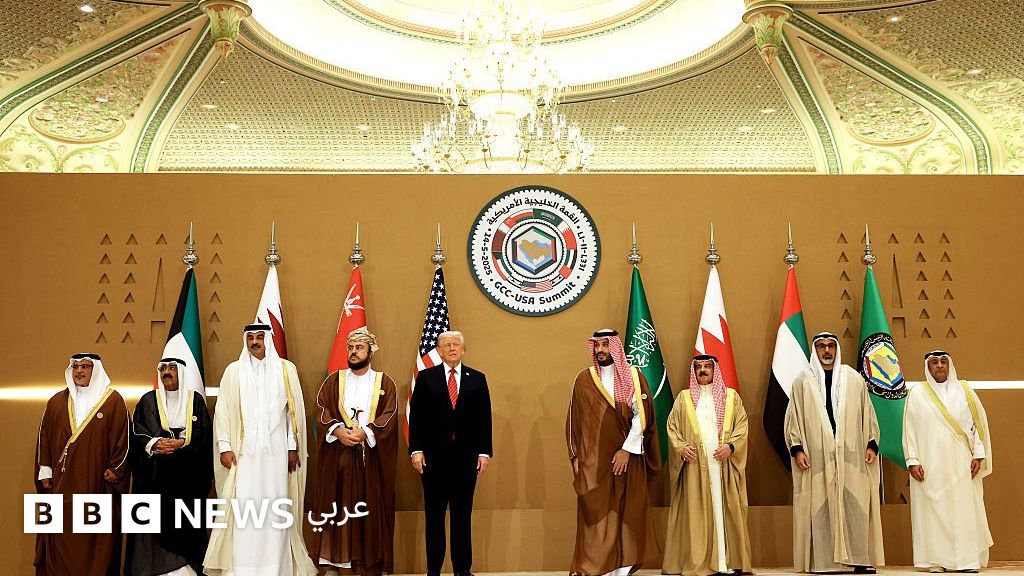
Caption: Gulf states assert that their territory is not used to launch attacks on Iran.
Published 5 hours ago
Reading time: 3 minutes
Iran announced on Sunday, July 12, that it targeted what it described as US military facilities in several countries in the region, following US military strikes inside Iran.
The Iranian Revolutionary Guard said in a statement that the Iranian attacks targeted a US radar site in Kuwait, US military installations in Qatar, support and supply and refueling platforms in Oman, as well as command and control centers and facilities associated with drones in Jordan.
Tehran confirmed that its attacks came in response to a US attack that targeted its territory.
For its part, the Qatari Ministry of Interior reported in an official statement that three people, including a child, were injured as a result of shrapnel from the interception of Iranian missiles.
In response to the Iranian attacks, the Secretary-General of the Gulf Cooperation Council, Jassem Al-Budaiwi, condemned the Iranian attacks on the Gulf states, criticizing what he called "Iran's continued behavior that destabilizes the security and stability of the region."
The countries of Qatar, Kuwait, Bahrain, Oman, Saudi Arabia, and the UAE also condemned the Iranian attacks.
The latest Iranian attacks came days after other Iranian strikes targeted sites in Bahrain and Kuwait.
In addition to the direct human and material damage incurred by the Gulf states as a result of the Iranian attacks, these attacks cause significant damage to the oil, tourism, investment, and aviation sectors in those countries.
Skip most read and continue reading
Breaking: US military announces start of new wave of strikes against Iran, explosions heard in southern Iran
Qatar announces death of former Emir Sheikh Hamad bin Khalifa Al Thani
Why do mosquitoes bite some people more than others?
Popular celebration for Egypt's national team after controversy over its reception in the city of El Alamein
Skip podcast and continue reading
Worth paying attention to
In-depth explanation of the most important events and topics, to help you understand the key changes around you and their impact on your life
Episodes
Podcast end
These countries are also forced to operate air defense systems intensively, raise the state of alert, and protect airports, ports, and oil facilities, which imposes high financial and military costs, in addition to causing anxiety among the population.
The repeated Iranian attacks put the Gulf states in a difficult equation. These countries host US forces or military installations and have security and defense agreements with Washington.
Despite the Gulf states' affirmation that their territory is not used to launch attacks on Iran, and that targeting them constitutes a direct violation of their sovereignty, regardless of the nature of the US military presence in them, Iran continues to target the territory of the Gulf states in its response to US attacks that target Iranian territory.
Tehran asserts that its operations target the US military presence, not the Gulf states, and that they come in response to US strikes on its territory.
The latest Iranian attacks came after the US Central Command announced the execution of strikes on about "140 military targets inside Iran," including "sites for launching missiles and drones, ammunition depots, and communications facilities."
The US Central Command said the aim of the strikes was to "weaken Iran's ability to threaten civilian sailors and commercial ships" in the Strait of Hormuz.
Iranian media reported that the latest US strikes resulted in the death of an Iranian army officer.
Iran accuses the United States of breaching the agreement signed between them, targeting its territory, and attempting to impose a unilateral agreement.
In this context, Iranian parliament speaker and chief negotiator Mohammad Baqer Qalibaf said in a post on Sunday, July 12, addressing the Americans: "The era of unilateral agreements is over, and we have demanded that you fulfill your promises and commitments, otherwise you will pay the price; now you must face reality."
US President Donald Trump had announced on Wednesday, July 8, the "termination" of the memorandum of understanding signed with Iran, adding that he did not want to continue dealing with Tehran. But he returned on July 10 to say that the United States "agreed to an Iranian request to continue talks."
The United States and Iran had signed, on June 17, 2026, a memorandum of understanding to extend the ceasefire between them for 60 days, which was supposed to lead to a halt in mutual strikes between the two parties, as well as the reopening of the Strait of Hormuz and the resumption of negotiations.
Each party blames the other for the return of attacks, accusing it of not respecting the signed memorandum of understanding.
The Gulf states are united in condemning the Iranian attacks that target their territory, with Qatar and Oman calling on Iran to stop its attacks and continue dialogue.
So far, the Gulf states appear keen to avoid slipping into an all-out confrontation with Iran.
In your opinion,
What are the options for the Arab Gulf states in dealing with the successive Iranian attacks?
How do the Gulf states balance protecting their national security and avoiding military escalation?
How do the Iranian attacks affect economic stability and energy security in the region?
What are the possible scenarios if the attacks continue or escalate?
Have the Gulf states become an arena for settling scores between Iran and the United States?
We discuss these and other topics in Monday's episode, July 13.
Phone lines open half an hour before the program starts at 00442038752989.
If you would like to participate via audio and video through Zoom, or by text message, please contact us via the program's WhatsApp number: 00447590001533
You can also send phone numbers to our Facebook page via private message
You can also participate with your opinion in the discussions published on the same page, at: https://www.facebook.com/NuqtatHewarBBC
Or via X platform with the hashtag @Nuqtat_Hewar
You can watch episodes of the program through this link on YouTube here.
Skip short clips and continue reading
Short clips
Short clips end
Original source: BBC Arabic



Comments (0)
Be the first to comment.