Arab League Condemns Iranian Attacks and Calls on Tehran to Immediately Stop Escalation
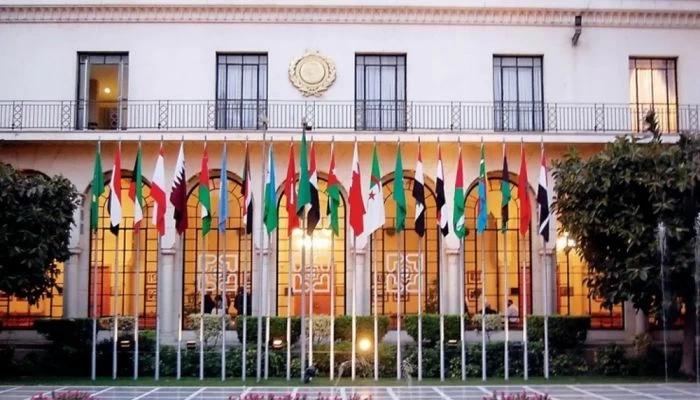
Arab League Secretary-General Nabil Fahmy warned of the severe danger of the 'criminal and reckless' Iranian attacks on several Arab countries, particularly in the Gulf region, considering that these attacks represent an attempt to expand the circle of conflict in the region and threaten regional security and stability. Fahmy said in a statement that the Arab League completely rejects the unjustified Iranian attacks, pointing out that the attacks targeting the Kingdom of Bahrain, the Hashemite Kingdom of Jordan, the State of Qatar, and the State of Kuwait, which affected infrastructure and vital facilities, in addition to...
Arab League Secretary-General Nabil Fahmy warned of the severe danger of the 'criminal and reckless' Iranian attacks on several Arab countries, particularly in the Gulf region, considering that these attacks represent an attempt to expand the circle of conflict in the region and threaten regional security and stability.
Fahmy stated in a statement that the Arab League completely rejects the unjustified Iranian attacks, pointing out that the attacks targeting the Kingdom of Bahrain, the Hashemite Kingdom of Jordan, the State of Qatar, and the State of Kuwait, which affected infrastructure and vital facilities, in addition to the repeated assaults on the Kurdistan region of Iraq, reflect an escalating approach that would increase tensions in the region, emphasizing that this approach 'cannot be ignored or accepted.'
The Secretary-General of the Arab League confirmed that these attacks indicate Tehran's insistence on pursuing policies based on incorrect calculations and a distorted reading of reality, asserting that these assaults represent a blatant violation of the sovereignty of Arab states and a breach of international law and the principles of good neighborliness, stressing that their continuation threatens regional security and undermines the chances of reaching political solutions to the ongoing crises.
The Secretary-General emphasized that any attack targeting an Arab state is considered an attack on the entire Arab national security, calling on Iran to de-escalate, immediately cease the attacks, refrain from any steps that would exacerbate tensions or threaten maritime security in the region, and return to the diplomatic path while adhering to international law.
Fahmy also reiterated the full solidarity of the Arab League with the Arab countries that have been subjected to these attacks, confirming the League's support for the measures taken by those countries to maintain their security, sovereignty, and stability.
The Middle East region has witnessed a rise in the intensity of security and military tensions in recent months, amid ongoing confrontations and exchanges of strikes between regional parties, and the expansion of crises to include more than one arena, which has raised increasing fears of the region slipping into a broader confrontation.
The Arab League emphasizes in its statements and successive ministerial meetings the necessity of respecting the sovereignty of Arab states and the unity of their territories, rejecting any external interventions in their internal affairs, while calling for prioritizing political and diplomatic solutions to resolve regional crises, in a manner that preserves the security and stability of the region and spares its peoples further escalation.
The Secretary-General of the Arab League, Nabil Fahmy, warned of the severe danger of the "criminal and reckless" Iranian attacks on several Arab countries, particularly in the Gulf region, considering that these attacks represent an attempt to expand the circle of conflict in the region and threaten regional security and stability.
Fahmy stated in a statement that the Arab League completely rejects the unjustified Iranian attacks, pointing out that the attacks targeting the Kingdom of Bahrain, the Hashemite Kingdom of Jordan, the State of Qatar, and the State of Kuwait, which affected infrastructure and vital facilities, in addition to the repeated assaults on the Kurdistan region of Iraq, reflect an escalating approach that would increase tensions in the region, emphasizing that this approach "cannot be ignored or accepted."
The Secretary-General of the Arab League confirmed that these attacks indicate Tehran's insistence on pursuing policies based on incorrect calculations and a distorted reading of reality, asserting that these assaults represent a blatant violation of the sovereignty of Arab states and a breach of international law and the principles of good neighborliness, stressing that their continuation threatens regional security and undermines the chances of reaching political solutions to the ongoing crises.
The Secretary-General emphasized that any attack targeting an Arab state is considered an attack on the entire Arab national security, calling on Iran to de-escalate, immediately cease the attacks, refrain from any steps that would exacerbate tensions or threaten maritime security in the region, and return to the diplomatic path while adhering to international law.
Fahmy also reiterated the full solidarity of the Arab League with the Arab countries that have been subjected to these attacks, confirming the League's support for the measures taken by those countries to maintain their security, sovereignty, and stability.
The Middle East region has witnessed a rise in the intensity of security and military tensions in recent months, amid ongoing confrontations and exchanges of strikes between regional parties, and the expansion of crises to include more than one arena, which has raised increasing fears of the region slipping into a broader confrontation.
The Arab League emphasizes in its statements and successive ministerial meetings the necessity of respecting the sovereignty of Arab states and the unity of their territories, rejecting any external interventions in their internal affairs, while calling for prioritizing political and diplomatic solutions to resolve regional crises, in a manner that preserves the security and stability of the region and spares its peoples further escalation.
Original source: Okaz



Comments (0)
Be the first to comment.