Enlisting Women in Kuwait... From Fatwa to Volunteering
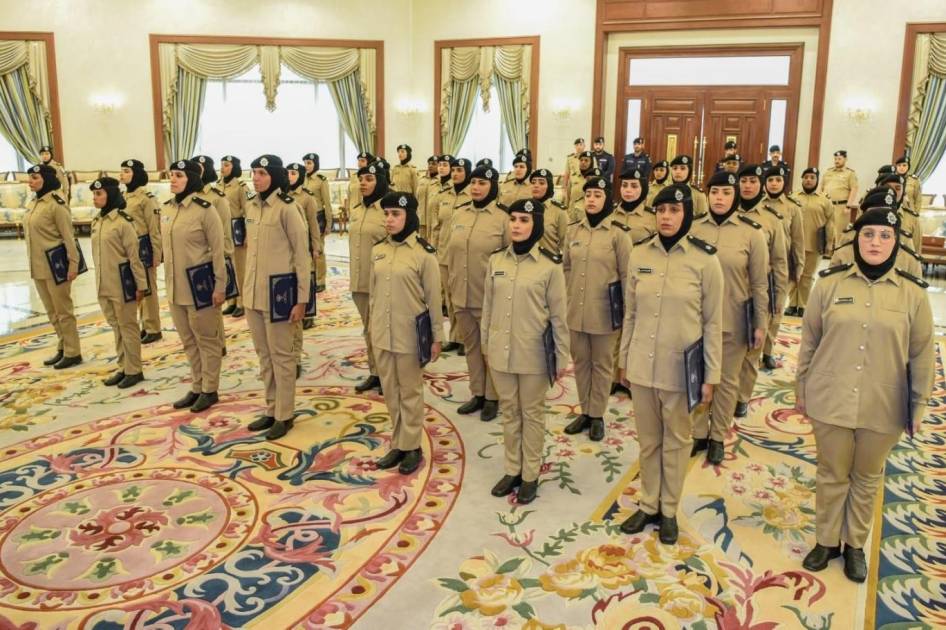
SummaryThe roots of the issue date back to December 2017, when then-Kuwaiti Defense Minister Sheikh Nasser Sabah Al-Ahmad Al-Sabah called for a study on the possibility of enlisting women in the army alongside men, but the decision remained hostage to political and religious debates.
Kuwait has closed one of its most controversial files by announcing the opening of voluntary service for women in the military, thus ending years of political and religious debate that began with a parliamentary interrogation of the idea's proponent and the resignation of the defense minister, and ended with a fatwa from religious scholars.
The General Staff of the Kuwaiti Army issued a statement specifying the targeted categories of holders of university degrees, diplomas, high school certificates and their equivalents, and stipulated that applicants must be Kuwaiti nationals aged between 21 and 26, with no criminal record involving honor or trust.
The roots of the issue go back to December 2017, when then-Kuwaiti Defense Minister Sheikh Nasser Sabah Al-Ahmad Al-Sabah called for a study on the possibility of enlisting women in the army alongside men, but the idea remained confined to discussion for years without becoming an actual decision.
However, in October 2021, the subsequent Defense Minister Sheikh Hamad Jaber Al-Ali Al-Sabah took a step considered the first of its kind in Kuwait's history by issuing a decision allowing Kuwaiti women to join military service, but restricting their work to 'civilian specialties' only, i.e., medical services and supporting military services, without any combat or field role.
The minister defended his decision at the time by pointing out that about 466 women were already working in the army in a civilian capacity, and that the decision was merely a conversion of their status to official military status, ensuring their rights and entitled allowances.
He also cited the approval of 34 Islamic countries for women joining military service, including Gulf states, considering that this negates any conflict with Islamic legal controls.
But those arguments were not convincing to parliamentarians, whose voices of objection rose at the time.
Decision Linked to 'Fatwa'
The General Staff indeed began opening registration for those wishing to join as non-commissioned officers and individuals on December 19, 2021, with registration closing in early January 2022, but the applicants did not receive any actual training until a 'formal fatwa' was issued to settle the religious debate.
In the face of the wave of controversy sparked by the decision, the Defense Minister took the initiative to receive a group of scholars and religious figures in Kuwait, who stressed the need to observe certain religious controls in women's work in some military jobs, and saw the necessity of referring to the 'Fatwa Authority' in the Ministry of Awqaf and Islamic Affairs to settle the matter.
In January 2022, then-Kuwaiti Defense Minister Sheikh Hamad Jaber Al-Ali met with religious scholars to discuss the file of women's enlistment (KUNA)
Following this meeting, the minister directed the relevant authorities to postpone holding any training course until the official response of the Fatwa Authority was received, to later consider the rulings and conditions contained in its fatwa to be complied with.
Sexual Harassment
The controversy did not stop there, as the decision to 'drag women into the military corps,' as opponents described it, topped the list of five axes around which the questioning of the Defense Minister revolved in a parliamentary session on Tuesday, January 18, 2022.
MP Hamdan Al-Azmi was the most prominent name among the opponents, as he cited incidents of sexual assault targeting women in the US Army during the session, considering them sufficient to justify reversing the decision to protect Kuwaiti women, an argument that was met with criticism from those who deemed the comparison impermissible.
The minister defended his position, affirming that he had not introduced anything new, and that women's work would remain confined to medical and support services without bearing arms.
The session ended with a date set for a vote of confidence in the minister the following Wednesday, after 10 MPs signed the interrogation request.
Read more
Will the 'quota' system prevail for Kuwaiti women?
The National Assembly rekindles conflict with the government through 'enlisting Kuwaiti women'
Kuwaitis ask 'Google' about the ruling on enlisting women
Although some Kuwaitis considered the parliamentary accountability a healthy 'democratic manifestation,' others criticized directing the questioning to this particular file instead of issues they deemed more worthy of attention at that stage, and the Kuwait Trade Union Federation described the confidence vote as a deviation from national priorities.
Survival of vote then resignation
Although the Defense Minister survived the confidence vote on January 26, 2022, the accumulated political crisis over several files prompted him less than a month later, on February 16, 2022, to submit his resignation, attributing it to what he described as 'arbitrary use of constitutional tools.'
From controversy to implementation
Since then, the file remained practically frozen for years, until Kuwait, in its era of decisiveness, began to resolve several files, including this one, when it announced on June 16, 2025, putting the final touches on integrating women into the military corps, preceded by opening initial registration for female volunteers.
Today, approximately five years after the first controversial decision, the General Staff officially announces the opening of actual volunteer service for Kuwaiti women to join the military, in a step that concludes one of the longest stories of social, political, and religious controversy that Kuwait has witnessed in the last decade.
It is noted that the decision came less than two years after an emiri decree on May 10, 2024, dissolving the National Assembly and suspending articles of the constitution for four years.
In a famous speech, the Amir of the country, Sheikh Mishal Al-Ahmad, said, 'I will never allow democracy to be exploited to destroy the state,' and described the period as having witnessed an 'unhealthy atmosphere,' which necessitated decisive decisions.
Original source: Independent Arabia

Comments (0)
Be the first to comment.