US Strikes Iran Again as Revolutionary Guards Hit Targets in Gulf
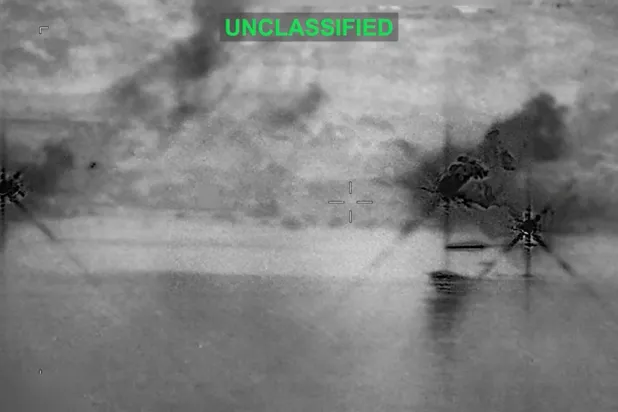
The United States launched new strikes on Iran overnight aimed at weakening its control over the Strait of Hormuz, while Iran's Revolutionary Guards responded on Thursday, announcing attacks on US bases in Kuwait and Bahrain.
Tehran insists it has the right to impose fees on ships in the Strait of Hormuz, which Washington rejects, and it threatens ships that take a route other than the single path it has designated along its coast. On Tuesday, it targeted at least three commercial vessels, according to the US military, as reported by AFP.
US President Donald Trump said in a post on Truth Social: 'This is retaliation for the strikes Iran launched against ships yesterday. If it happens again, it will become much worse!'
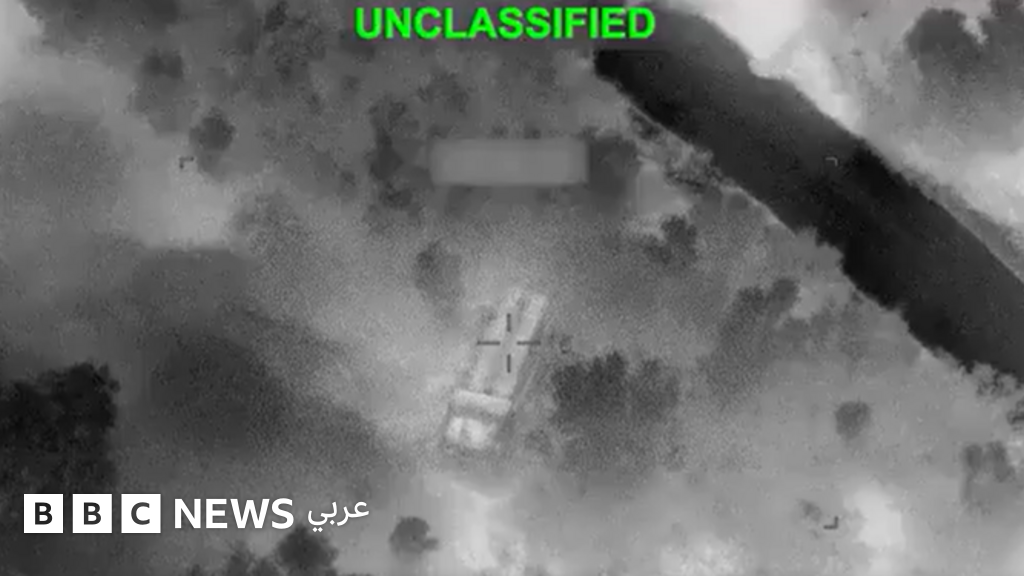
The US military said in a post on X that it targeted about 90 Iranian military targets, including air defense systems, coastal surveillance facilities, and missile and drone storage sites on Iran's southern coast.
It explained that the goal of these strikes was 'to further undermine Iran's ability to attack commercial shipping and innocent civilian sailors in the Strait of Hormuz.'
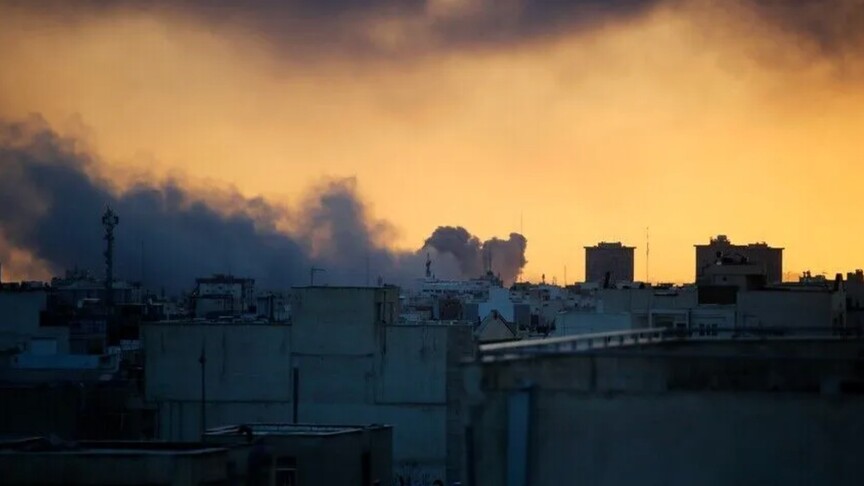
Official Iranian media reported hearing explosions in the cities of Bandar Abbas (south), Konarak (east), and Chabahar (east).
In Bushehr (southwest), where Iran's only civilian nuclear plant is located, a military base was bombed, according to a local official. A railway bridge in Golestan province in the north of the country was also targeted, according to several media outlets.
In Khuzestan province (west), three people were killed and others injured in the US strikes, according to local authorities.
The US strikes also led to the suspension of the railway line between the capital Tehran and the city of Mashhad in northeastern Iran, according to state television.
In response to these strikes, Iran's Revolutionary Guards announced missile and drone attacks on the US bases of Camp Arifjan and Camp Ali Al Salem in Kuwait, and the bases of Juffair and Sheikh Isa in Bahrain. They also threatened to expand the response to include other bases in the region if Washington carries out new strikes, according to a statement broadcast by state television.
In Kuwait, the army said it intercepted missiles and drones, while in Bahrain, several explosions were heard, and air raid sirens were sounded twice.
In Qatar, residents also received a brief security alert.
Amid this major escalation, the Speaker of the Iranian Parliament and chief nuclear negotiator Mohammad Bagher Qalibaf said the Strait of Hormuz would only be opened under 'Iranian arrangements.'
He added in a post on X: 'The United States has not yet learned that intimidation and breach of promises no longer go unpunished.' He added: 'To be clear: if you strike, you will be struck.'
America has not yet learned that bullying and breaking promises are no longer cost-free. To put it bluntly: if you strike, you will be struck. Don't struggle in vain, you will sink deeper: the Strait of Hormuz will only open with 'Iranian arrangements,' not American threats.
— Mohammad Bagher Qalibaf | MB Ghalibaf (@mb_ghalibaf) July 9, 2026
'Legitimate target'
Donald Trump had considered on Wednesday that the ceasefire agreement was no longer valid, after the exchange of strikes. But he simultaneously stressed that the new confrontations would stop quickly, keeping the door open for continued diplomatic negotiations with Tehran.
He said on Wednesday evening upon his return from the NATO summit in Turkey that the Iranians 'called a short while ago' and that they 'strongly want to reach an agreement.'
0 seconds of 0 secondsVolume 90%
Press shift question mark to access a list of keyboard shortcuts
00:00
00:00
00:00
While Trump did not provide further details, he questioned the feasibility of any potential agreement between the two sides, describing the Iranians as 'a little crazy.'
Washington had responded to the attacks attributed to Tehran on three commercial vessels with strikes inside Iran, overnight Tuesday to Wednesday, according to the US military. Iranian state television reported the deaths of eight Iranian soldiers. Tehran later responded by announcing strikes on facilities inside US military bases in Kuwait and Bahrain.
0 seconds of 0 secondsVolume 90%
Press shift question mark to access a list of keyboard shortcuts
00:00
00:00
00:00
Both Qatar and Pakistan called for respecting the memorandum of understanding signed on June 17 mediated by them, and working to de-escalate.
The exchange of strikes led to a rise in oil prices on Wednesday, with Brent crude jumping more than 7%. The increase continued on Thursday in Asia by more than 1% to reach $78.85 per barrel.
On Tuesday, Washington reimposed sanctions on Iranian oil after they were lifted under the memorandum of understanding.
This new escalation comes at the same time as the funeral ceremonies for Supreme Leader Ali Khamenei, who was killed on the first day of the war, with the burial ceremonies scheduled for Thursday in the city of Mashhad in northeastern Iran.
Original source: Asharq Al-Awsat


Comments (0)
Be the first to comment.