Israeli Army Radio: Collapse of Reserve Forces and Tank Shortage
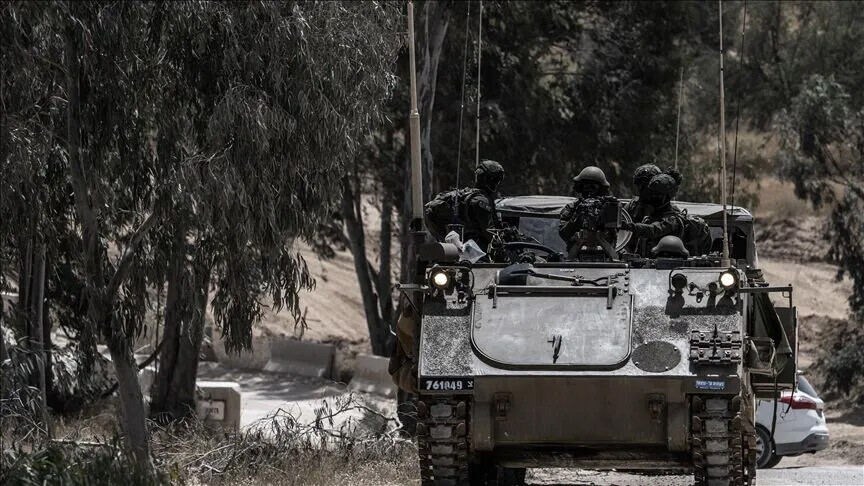
The radio quoted a reserve formation commander as saying that some reserve formations are empty and in a state of "actual collapse"
Jerusalem / Anadolu
- It said the army no longer has a sufficient number of battle-ready tanks, after many were damaged in combat
The Israeli army radio revealed on Tuesday a shortage in the number of personnel and tanks capable of fighting, and said that some reserve force formations are in a state of "actual collapse".
Under the title "Army warning of collapse of reserve forces," the radio said: "Here is what the situation looks like from the inside: empty brigades and battalions, insufficient tanks, and attendance rates that do not reflect reality."
It added: "In recent days, a reserve armored brigade was deployed to take over an important operational sector in the security zone in Lebanon, but in reality, the testimonies of commanders and soldiers tell a different story from what decision-makers tell. These are not full brigades; they are far from it."
It explained that the army no longer has a sufficient number of battle-ready tanks, after many were damaged in combat and taken out of service, which "forced reserve tank companies to operate with fewer tanks."
Since October 2023, the Israeli army has been waging aggression on multiple fronts, most notably the Gaza Strip and Lebanon, along with mutual attacks with Iran and the Houthi group in Yemen, in addition to repeated assaults on Syria alongside the escalation of its military operations in the occupied West Bank.
The radio said that the army is recalculating reserve force attendance rates in a way that makes them appear relatively high, by calling up fewer soldiers in the first place, while some of those called up attend only for limited periods.
It added: "Consequently, even units with attendance rates between 50 and 70 percent are actually in a much worse state at any given time."
Quoting a reserve formation commander, without naming him, the radio reported him saying: "Reserve units today are empty. A battalion is not a full battalion, and a company is not a company in the true sense."
He continued: "The public and decision-makers hear about full brigades in Lebanon, but in reality, it is a much smaller unit. The number of soldiers, tanks, and vehicles is much lower."
He added: "Some reserve formations are in a state of actual collapse. Some units are in better shape and others worse, and everyone is doing their best, but it is hard to continue in this situation."
The army radio gave another example from the field, saying: "A reserve company recently finished its operational mission in Lebanon, and only one officer remained: the company commander was relieved, and there is no first sergeant. (...) There is no chain of command in the company; it is managed haphazardly."
The Israeli army does not specify the number of its forces deployed in Lebanon, the West Bank, the Gaza Strip, or Syria.
These developments come as the Hebrew newspaper Yedioth Ahronoth reported on July 10 that the Israeli army began a broad reduction in reserve soldier call-ups, linking that to what it described as 'the ebbing of wars on multiple fronts.'
But the newspaper Israel Hayom reported on July 5 that the army is preparing to discharge thousands of reserve soldiers by the end of the month, amid a financial crisis facing the military establishment.
The Israeli military establishment is facing a severe funding crisis following an unprecedented rise in operational expenses, leading to a deficit estimated at tens of billions of shekels (the dollar is worth about 3 shekels).
This coincided with deep disagreements between the Defense and Finance Ministries over the size of the defense budget, as the military establishment demands raising it to record levels to cover multi-front challenges, while the Finance Ministry opposes that for fear of worsening the deficit.
According to reports, a temporary compromise was reached stipulating conditional additional funding, in exchange for reducing reliance on reserve forces and cutting operational expenses.
Original source: Anadolu Agency



Comments (0)
Be the first to comment.