China announces successful missile test in Pacific Ocean
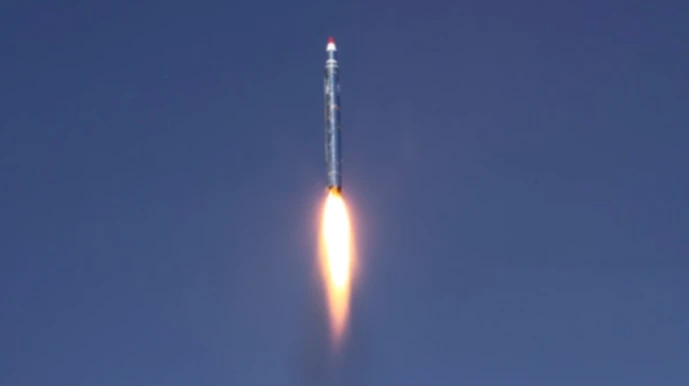
China successfully test-launched a strategic missile from a nuclear submarine in the Pacific Ocean, part of routine annual military exercises, sparking concerns and warnings from Australia and Japan over regional security implications.
China announced the successful launch of a strategic missile from a nuclear submarine in the Pacific Ocean, emphasizing that the operation is part of routine annual military exercises, a move that sparked concerns and warnings from Australia and Japan about its security implications for the region.
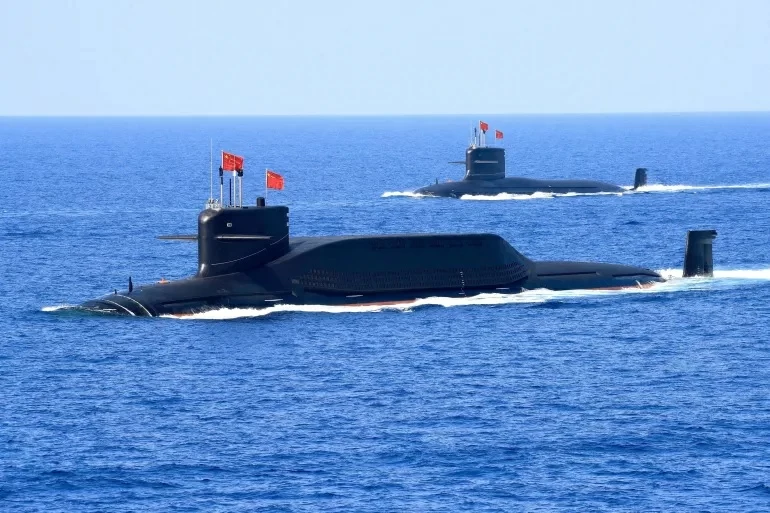
Chinese Navy spokesperson Wang Xue Meng stated that a strategic nuclear submarine of the People's Liberation Army Navy launched a strategic missile with a training warhead toward the high seas of the Pacific Ocean on Monday, noting that the missile accurately fell into the pre-designated sea area.
The test is part of the Chinese armed forces' annual military training program.
The spokesperson confirmed that the test is part of the annual military training program of the Chinese armed forces, adding that Beijing notified relevant countries in advance of the launch time in accordance with standard procedures for such tests.
The test came on the same day that China and Russia began their annual joint naval exercises off the coast of Qingdao in eastern China, one of China's major naval bases on the Yellow Sea, fueling speculation about a link between the test and the ongoing military drills, though no official confirmation was given.
Papua New Guinea's Foreign Minister Justin Tkatchenko revealed that his country received prior notice from China about the test via the Chinese ambassador, while a New Zealand government source confirmed that Wellington was also informed of Beijing's intention to conduct a test of an intercontinental ballistic missile capable of carrying nuclear warheads.
China did not disclose the type or range of the missile used in the test, but the announcement drew widespread interest due to China's growing missile capabilities in recent years, especially in intercontinental ballistic missiles and nuclear-powered missile submarines.
The test recalled a similar one conducted by China in September 2024, when it launched a training warhead into the Pacific Ocean near French Polynesia, the first publicly announced long-range missile launch over international waters in over 40 years. Military analysts at the time speculated that the missile was a Dongfeng-31, one of China's prominent missiles capable of carrying thermonuclear warheads over intercontinental distances.
These tests are particularly significant amid the intensifying strategic competition between China and the United States and its allies in the Indo-Pacific region, as Beijing seeks to bolster its deterrence capabilities and expand its naval military presence in the area.
Australian Foreign Minister Penny Wong considered the launch of a long-range missile in the South Pacific a step that could destabilize the region, stressing that Canberra has formally conveyed its position to Beijing. The Australian statement came hours after signing a new defense cooperation agreement with Fiji, part of Australia's efforts to enhance its security influence in Pacific island nations.
Japan announced that it strongly urged China to reconsider the test before its execution, emphasizing the need to ensure that the missile did not pass through Japanese airspace or endanger the country's security. Tokyo stated that it closely monitored developments in coordination with relevant security and military authorities.
In a related context, the New Zealand Defence Force warned in a recent internal assessment that Chinese naval activities and ballistic missile tests in the Pacific Ocean are likely to become more routine in the coming years, potentially posing new security challenges for regional states.
Original source: Akhbaar24


Comments (0)
Be the first to comment.