GCC: Iran Undermines Global Stability, Security Council Urged to Act
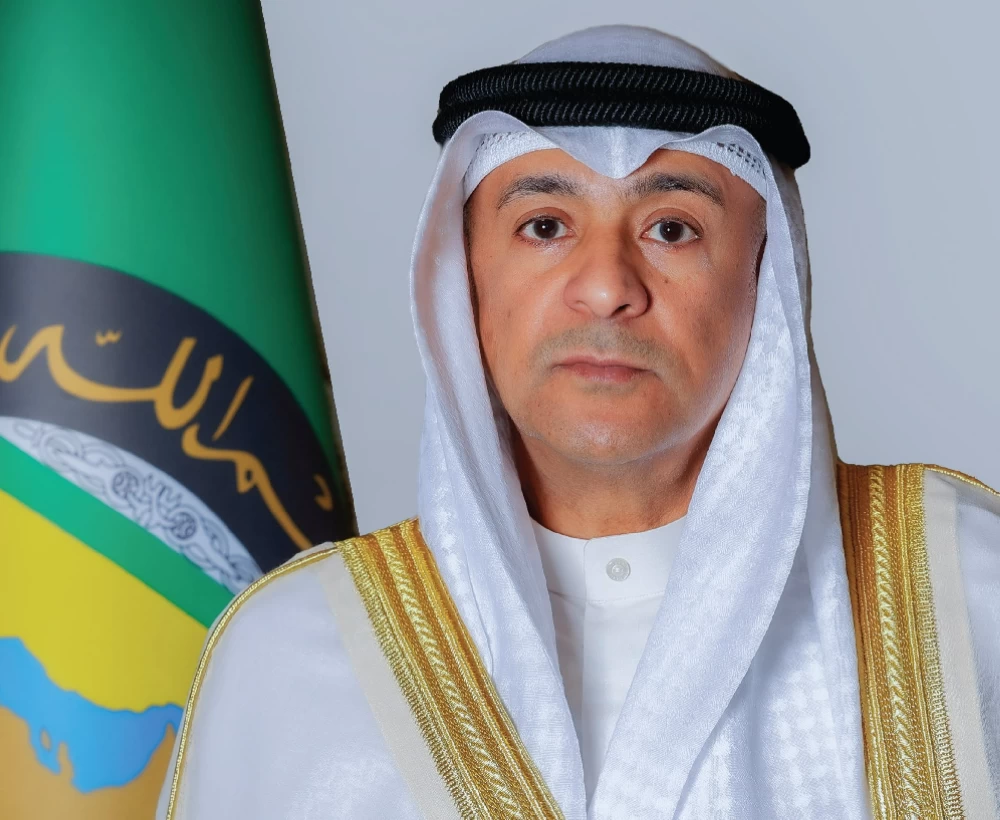
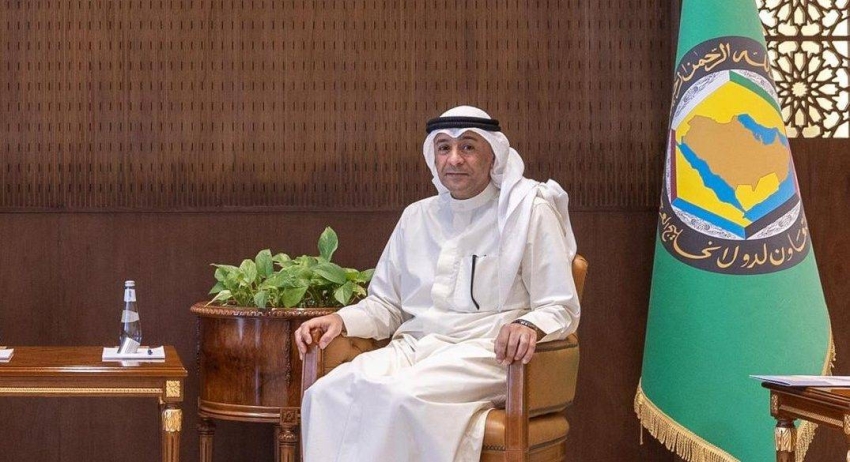
The Secretary-General of the Gulf Cooperation Council, Jasem Al-Budaiwi, confirmed today (Wednesday) that Iran's behavior undermines international efforts to achieve stability, while calling on the United Nations Security Council to put an end to Iranian aggressions.
Al-Budaiwi explained during his speech before the UN Security Council today that the continuation of Iranian aggressions would expose the global economy to grave danger, indicating that Iran's practices in the Strait of Hormuz have affected global trade movement.
The GCC Secretary-General condemned in the strongest terms the 'Houthi claims against Saudi Arabia,' saying: 'The irresponsible hostile statements issued by the Houthi militia, including false allegations against the Kingdom of Saudi Arabia and the threat to close the Bab el-Mandeb Strait, are a dangerous escalation that constitutes a flagrant violation of international law, a direct threat to international navigation freedom, and to the safety of one of the world's most important strategic maritime passages. Such threats affect the security and stability of the entire region and undermine international efforts aimed at protecting global supply chains and ensuring the flow of international trade and energy supplies.'
Al-Budaiwi called for a firm international stance against the Houthi threats to navigation, stressing the need not to allow any party to use international maritime passages as a tool for extortion or a means to undermine international peace and security.
Al-Budaiwi said: 'We in the GCC stand united with the measures taken by the Kingdom of Saudi Arabia to protect its security, territorial integrity, and vital interests.'
He pointed out that the treacherous Iranian aggressions against GCC states and the Houthi group's threat to close the Bab el-Mandeb Strait are acts that require immediate accountability and a firm international stance that ensures respect for the rules of international law, guarantees freedom of navigation, and protects vital infrastructure related to energy and natural resources.
He noted that Iran continues to launch attacks using ballistic missiles and drones against GCC states and other countries, without any legitimate justification, and in flagrant violation of the principles of international law, the UN Charter, and rules of good neighborliness. These ongoing attacks still pose a grave danger to the GCC states and the regional and international community, disrupt the path of development and stability, and expose the global economy to serious risks.
He stressed the need for the international community, led by the UN Security Council, to assume its legal responsibilities to put an end to these aggressions and deter Iran from continuing its aggressive policies, in order to preserve international peace and security and protect the sovereignty and territorial integrity of states.
He indicated that these attacks not only target the victim states but also represent an extension of an approach that harms the Iranian people themselves, who are burdened by a regime that squanders the country's resources on escalation and conflict policies instead of directing them towards development, prosperity, improving the living standards of its citizens, and securing their future.
Al-Budaiwi said: 'This Iranian behavior represents an unacceptable conduct that contradicts the UN Charter, undermines international efforts to achieve peace, security, and prosperity, and underscores the need for a firm international stance that ensures respect for the rules of international law, guarantees freedom of navigation, and protects vital infrastructure related to energy and natural resources.'
The Secretary-General of the Gulf Cooperation Council pointed out that the dangerous Iranian practices that targeted freedom of navigation in the Strait of Hormuz, including targeting commercial vessels, laying naval mines, attempts to impose mandatory routes within Iranian territorial waters, explicit threats to prevent passage, in addition to repeated announcements of closing the strait—these practices constitute a violation of international law and undermine confidence in the security of one of the world's most important maritime passages. These practices have also resulted in human losses and humanitarian suffering affecting more than 20,000 sailors of various nationalities, in addition to their direct impact on international trade and supply chains. This calls for full support for the efforts of the International Maritime Organization to address this crisis and ensure navigational safety and civilian protection.
The Secretary-General of the Gulf Cooperation Council, Jasem Al-Budaiwi, confirmed today (Wednesday) that Iran's behavior undermines international efforts to achieve stability, while also calling on the United Nations Security Council to put an end to Iranian aggressions.
Al-Budaiwi explained that the continuation of Iranian aggressions will pose a serious threat to the global economy, indicating that Iran's practices in the Strait of Hormuz have affected global trade movement.
He condemned the Secretary-General of the Gulf Cooperation Council - in the strongest terms - the "Houthi claims against Saudi Arabia," affirming that the Houthi threats undermine navigation in the Red Sea.
Al-Budaiwi called for a firm international stance against the Houthi threats to navigation.
Original source: Okaz
Comments (0)
Be the first to comment.