Trump Declares US ‘Locked and Loaded’ Amid Iran Diplomatic Push

President Trump maintains a combative posture toward Iran even as his administration signals willingness for negotiations, while violence escalates in the West Bank and UNESCO adds contested sites to its heritage list.
Live updates,
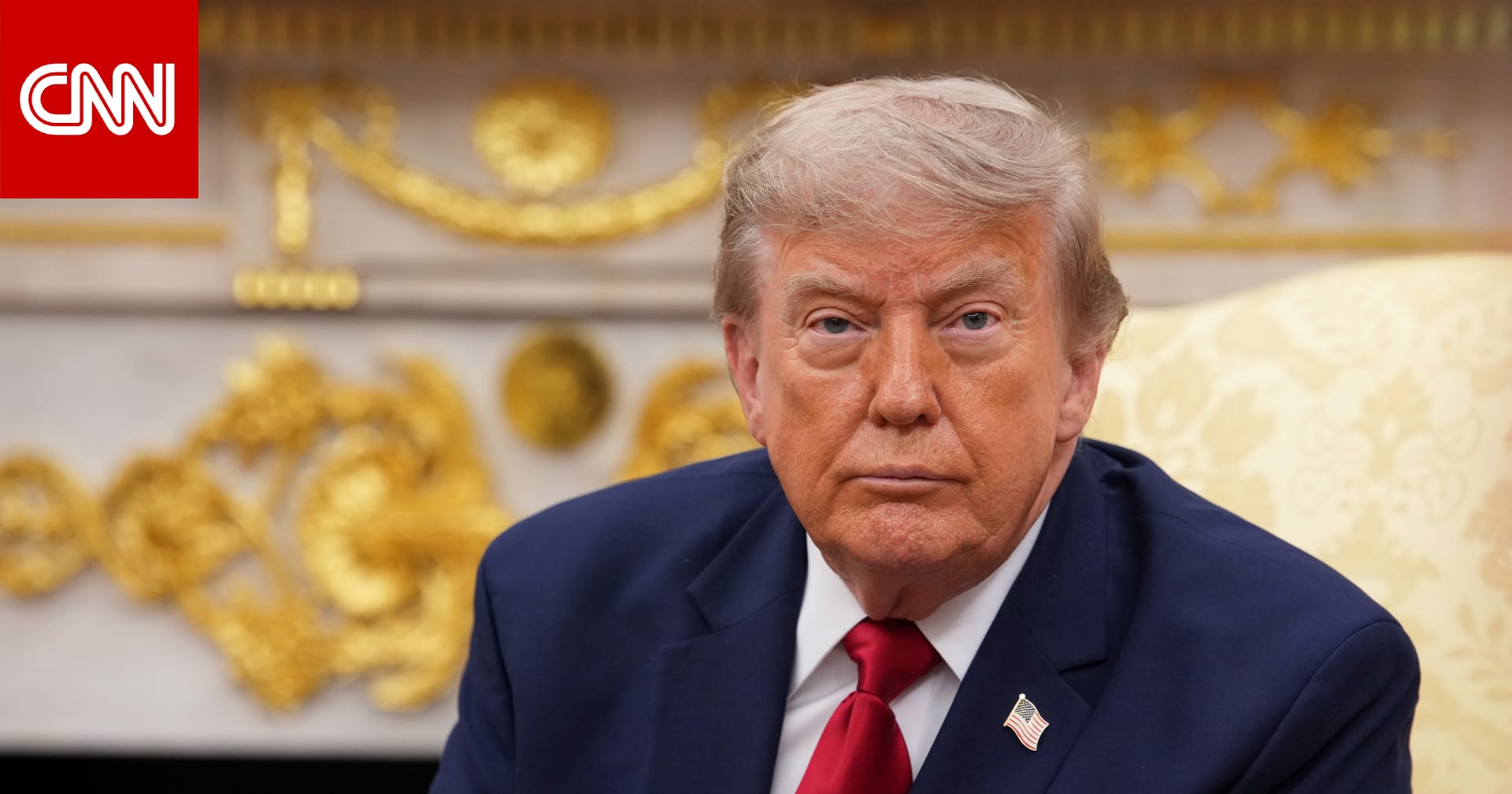
President Donald Trump declared that the United States remains 'locked and loaded' even as it pursues diplomatic engagement with Tehran, after reports of attacks on American military installations in Kuwait, Bahrain, and Jordan.
Tensions between Washington and Tehran have fluctuated between threats and offers of dialogue in recent months, with no breakthrough in nuclear talks.
Published On 25 Jul 2026
- US President Donald Trump says dialogue between Washington and Tehran continues, and that a threatened “massive” attack may be unnecessary, although the United States remains “locked and loaded”.
- Iranian Foreign Minister Abbas Araghchi says Tehran does not fear threats or succumb to pressure.
18 Updates
3m ago
(03:00 GMT)
WATCH: Israeli settler violence in West Bank village leaves Palestinians and Israelis dead
Israeli military forces have broadened their operations across the occupied West Bank following a violent settler attack on Palestinians near Nablus that left casualties.
Palestinian residents report a spike in settler-led violence as military raids, road closures, and unrest continue.
Watch the video below:
Video Duration 1 minutes 45 seconds
1:45
Israeli settler violence in West Bank village leaves Palestinians and Israelis dead 18m ago
(02:45 GMT)
33m ago
(02:30 GMT)
UNESCO lists West Bank, Lebanon sites over Israel’s objections
The UN’s cultural agency has placed a prominent archaeological site in the West Bank and a set of fortresses in southern Lebanon on its World Heritage list, despite Israeli objections, according to the Associated Press.
The decision, at a UNESCO meeting in South Korea on Friday, came days after Israel’s Foreign Ministry urged the committee to reject the bids, the news agency reported.
Undeterred, the committee decided to place the West Bank town of Sebastia and five castles in Lebanon’s Mount Amel area on both the World Heritage List and the List of World Heritage in Danger after reviewing the nominations on an emergency basis, citing ongoing conflicts in the Middle East.
Of the Sebastia site, near Nablus in the occupied West Bank, UNESCO said it preserves archaeological records of successive occupations from different civilisations dating back at least to the ninth century BCE.
It said the castles in Lebanon date from the medieval period to the 19th century and “illustrate successive phases of occupation and adaptation by Crusader, Ayyubid, Mamluk, Ottoman, and local feudal rulers”.

The ruins of Beaufort Castle, known in Arabic as Qala’at al-Shaqif, are seen near the southern Lebanese village of Arnoun on July 22, 2018 [File: Jamal Saidi/Reuters] 48m ago
(02:15 GMT)
HRW warns that settler violence surge threatens mass atrocities
Human Rights Watch has said that international action is needed to end the Israeli government’s role in escalating reprisals across the occupied West Bank, following deadly settler attacks on the village of Tal near Nablus on Friday.
“The Israeli government didn’t prevent the settler attacks on Tal village, so now it needs to stop settler reprisals and escalating military action that will make a bad situation worse,” Sarah Sanbar, HRW Israel and Palestine researcher, said in a statement.
“Years of lawlessness and impunity for attacks has turned the West Bank into a powder keg waiting to explode, and decisive action is urgently needed,” Sanbar added.
“The settler violence against Tal is a reminder that if the violence is not stopped and those responsible are not held to account, escalation and further atrocities are inevitable,” Sanbar said.
“Governments need to act urgently so that the Israeli government does not continue to act as if it has a green light to commit further atrocities.”

Palestinians mourn during the funeral of people killed in a shooting near the village of Tal, west of Nablus in the Israeli-occupied West Bank, on July 25, 2026 [Mohammed Torokman/Reuters] 1h ago
(02:02 GMT)

Saudi civil defence says danger has passed in Yanbu governorate
The Directorate of Saudi Civil Defense has said that the danger has now passed in Yanbu Governorate.
1h ago
(02:00 GMT)
Acute hunger in Gaza set to rise as UN warns of aid shortfalls
The UN World Food Programme (WFP) is warning of deep cuts to its aid to Gaza, where it supports the vast majority of the population, without additional funding.
“Without sufficient funding, we will be forced to scale back assistance for people who depend on it for survival,” Ross Smith, the programme’s director of emergency preparedness and response, told reporters on Friday, according to the Reuters news agency.
Without the additional funds, Smith added, the WFP will have to make “very significant cuts” by October, the Anadolu news agency reported.
A recent food security survey found that the number of people facing acute hunger in Gaza is expected to rise from 1.2 million in June to 1.4 million, or 67 percent of the population, by December, due to declining assistance.
1h ago
(01:59 GMT)
Saudi Arabia issues alert of a potential danger in Yanbu Governorate
The directorate of Saudi Civil Defense has issued an alert of a potential danger in the Yanbu Governorate.
People are advised to remain calm and follow official instructions, the directorate said.
A warning has been issued by the National Early Warning Platform in the Yanbu Governorate to alert of a potential danger. Please follow the instructions below: pic.twitter.com/GhUxuTONzE
— الدفاع المدني السعودي (@SaudiDCD) July 25, 2026
1h ago
(01:51 GMT)
Israeli forces raid town east of Nablus
Israeli occupation forces have raided the town of Beit Furik, east of Nablus in the occupied West Bank, and stormed several homes, according to an Al Jazeera correspondent on the ground.
We will bring you more as soon as we have it.
Sign up for Al Jazeera
Americas Coverage Newsletter
1h ago
(01:45 GMT)
Israeli settlers open fire on village near Bethlehem
The Palestinian Wafa news agency is reporting that Israeli settlers stormed the village of Abu Njeim, southeast of Bethlehem in the occupied West Bank, and opened fire on Palestinian vehicles.
No injuries were reported, but settlers closed a street and vandalised a vehicle, Wafa added.
As we’ve been reporting, several people were killed and others injured as escalating Israeli settler violence spiked in the occupied West Bank on Friday.
1h ago
(01:30 GMT)
Iran blames US ‘breach’ of agreement for Hormuz tensions in meeting with China
Iran’s IRNA news agency reports that Foreign Minister Abbas Araghchi has condemned the “brutal attacks” on Iran’s vital infrastructure and the “war crimes” committed by the US during a meeting with Chinese Foreign Minister Wang Yi in Kazakhstan.
Araghchi said that “the existing insecurity in the Strait of Hormuz and the region is exclusively caused by US breach of the agreement and disruption in the process of implementing Iran’s commitments in accordance with the provisions of Article 5 of the Islamabad Agreement”.
He emphasised Iran’s resolve to defend its national sovereignty and territorial integrity against US military aggression, calling on all nations to reject the normalisation of force in international relations, the report added.
1h ago
(01:15 GMT)
UN chief ‘deeply alarmed’ by Houthi Red Sea attacks
UN Secretary-General Antonio Guterres is “deeply alarmed” that Houthis have resumed attacks on commercial vessels in the Red Sea, UN spokesperson Stephane Dujarric has said.
The attacks could “draw Yemen deeper into the regional conflict” and undermine “prospects for peace”, causing “serious economic, humanitarian and environmental consequences”, Dujarric added.
“International navigational rights and freedoms in and around Bab al-Mandeb must be fully restored,” he added.
Guterres called for “immediate de-escalation”, Dujarric added in remarks to reporters on Friday in New York.

A ship transits the Suez Canal towards the Red Sea [File: Sayed Hassan/Getty Images] 2h ago
(01:00 GMT)
US disables tanker near Iran amid growing signs of ‘expanding’ conflict
Reporting from Wahington DC
We have a statement that was provided to Al Jazeera by the US Central Command.
I’m going to attribute it to US Navy Captain Tim Hawkins, the spokesman for CENTCOM, who tells us: “We disabled the tanker after the crew attempted to run the blockade at least four times prior; the crew was repeatedly warned, didn’t comply, and US forces on scene disabled the ship after firing into its engine room. The ship is no longer transiting to Iran.”
Now, the broader significance of this, perhaps we could point to, is that the United States is no longer limiting its campaign to the borders within Iran; the Pentagon will likely be framing this as an instance where US military forces are enforcing the US blockade, but it could also be seen as evidence, perhaps, that the conflict itself is expanding beyond the limits of Iran itself.
So, that in itself is something that the United States, as well as US allies and partners in the Gulf region and the broader Middle East, have been trying to avoid, which is the scenario that could risk a spillover effect that could sort of drag the rest of the region into a broader regional conflict.
2h ago
(00:45 GMT)

US, Saudi Arabia won’t tolerate Houthi blockade of Bab al-Mandeb
Further military strikes against Houthi targets are likely to follow to try and persuade the Yemeni group to stop its blockade of the Bab al-Mandeb Strait, says Thomas Warrick, a non-resident senior fellow at the Atlantic Council.
“The question really is what will it take to persuade the Houthis to stop shooting at ships in the Red Sea and the Bab al-Mandeb. This is a political decision for them, and I expect that we will see further military efforts by Saudi Arabia, by the United States and perhaps by other countries to try to persuade the Houthis to stop,” he said.
Warrick said the Houthis have effectively ended the ceasefire it agreed with the United States last year, promising not to fire on merchant ships passing through the strait.
“President Trump does have military assets that could be used to try to change the Houthi approach. I don’t see the United States or Saudi Arabia or other countries tolerating a blockade of the Bab al-Mandeb for very long. So, I think it’s only a question of how much force will be required to change the Houthi position and get them to stop shooting at merchant ships,” he said.
2h ago
(00:30 GMT)
Traffic through Strait of Hormuz ‘remains uneven’, tracking firm says
Maritime traffic monitor Kpler says shipping through the Strait of Hormuz “remains uneven” in its latest update, with six confirmed crossings on Thursday, down 60 percent from the day before.
At the same time, it says traffic through Bab al-Mandeb increased to 49 confirmed crossings.
“The data points to a cautious but selective return to transit activity as operators continue to assess security conditions,” it said.

A vessel in the Strait of Hormuz, as seen from Musandam, Oman, July 23, 2026 [Stringer/Reuters] 2h ago
(00:15 GMT)
Trump says Washington is talking to Tehran
Reporting from the White House, Washington DC
This was a meeting that President Trump convened, where he said he had big announcements to make related to nuclear innovation.
But the topic and the interest, at least from reporters who were present in the Oval Office today, quickly shifted towards Iran.
President Trump was asked specifically about his remarks regarding what he was more or less considering would be a “massive attack” on Iran; he responded by saying that “we’re talking to them”, and he was asked about what that meant.
He said that there are talks currently taking place, which in many ways contradicts much of the signalling that we’ve been hearing from US officials over the course of the week, that suggested that diplomacy had essentially lost momentum, that the focus was on kinetic movements related to military actions when it comes to Tehran.
President Trump was also asked specifically about his exit strategy.
He says that from his point of view, he thinks that there are many exit strategies, though he did not elaborate on what those would be.
He says that the US is talking to Iran, and says, “Iran is getting very serious, and they should be.”
In that same breath, he also said that the United States remains “locked and loaded”.
He pointed to members of his cabinet, such as Secretary of State Marco Rubio, as well as Vice President JD Vance, being involved in these talks.
But again, repeating that Iran cannot have a nuclear weapon, saying that he’s not in a hurry to make a deal.
2h ago
(00:07 GMT)
WATCH: ‘We fear no one,’ Iran’s Abbas Araghchi says
Iranian Foreign Minister Abbas Araghchi said Iran does not fear threats or ‘succumb to pressures’ while he was attending a meeting in Kyrgyzstan.
Watch the video below:
3h ago
(00:03 GMT)
A recap of recent developments
- Trump said Washington is talking to Tehran “as we speak”, and while the US may not need to carry out a “massive” attack on Iran, it remains “locked and loaded”.
- Air raid sirens sounded in Bahrain. Iran earlier said it was continuing to target US bases in Bahrain, Kuwait and Jordan.
- The Saudi-led Coalition Joint Forces Command said it targeted Houthi sites in Yemen’s Hodeidah, but that it did not hit the port there.
- Houthi media reported that the attacks targeted telecommunications and port facilities in Hodeidah and that a woman was injured on Kamaran Island.
- Israeli settler violence escalated in the occupied West Bank after a shootout triggered by Israeli settlers left four Palestinians and two Israeli soldiers dead.
- Twenty Israeli rights groups appealed to the international community to take immediate action to stop escalating violence by settler militias and the Israeli military in the occupied West Bank.
3h ago
(00:00 GMT)
Welcome
Hello, and welcome to our live coverage of the United States and Israel’s war on Iran.
Stay with us for the latest news and analysis from across the Middle East and beyond.
You can find our updates from Friday, July 24, here.
The UNESCO inscriptions highlight the cultural stakes in the ongoing Israeli-Palestinian conflict. The decision to place the sites on the World Heritage in Danger list reflects the committee’s concern over the impact of regional conflicts. Meanwhile, the surge in settler violence and Israeli military operations in the West Bank underscores the deteriorating security situation on the ground. These developments occur against the backdrop of broader instability across the Middle East, including the US-Iran standoff.
Original source: Al Jazeera



Comments (0)
Be the first to comment.