Lebanese Prime Minister: We will continue to mobilize efforts to secure a full Israeli withdrawal from the south

أكد رئيس الحكومة اللبنانية نواف سلام من زوطر الغربية عزم بلاده على تكثيف المساعي لتحقيق الانسحاب الإسرائيلي الكامل، تزامنا مع خطوات انتشار الجيش اللبناني.
Lebanese Prime Minister: We will continue to mobilize efforts to secure a full Israeli withdrawal from the south
Lebanese soldiers patrol at the entrance of the village of Zawtar al-Gharbiya after the army deployed in the southern village (AFP)
Lebanese Prime Minister Nawaf Salam confirmed on Wednesday from the town of Zawtar al-Gharbiya, a day after the Lebanese army deployed there, that Beirut will continue to 'mobilize' all efforts to secure a full Israeli withdrawal from the south of the country, under the framework agreement signed by the two countries.
This came a day after President Joseph Aoun, during his meeting with his American counterpart Donald Trump at the White House, stressed 'the urgent need for a full Israeli withdrawal from Lebanese territory,' affirming that this 'constitutes an essential step to consolidate stability and enable the Lebanese state to extend its full sovereignty through its own forces.'
Salam said after planting the Lebanese flag in Zawtar al-Gharbiya square, which he reached in the morning escorted by the army, 'We will continue to mobilize all our political and diplomatic efforts to secure a full withdrawal from all Lebanese territory.'
The Lebanese army began deploying on Tuesday in Zawtar al-Gharbiya, one of the 'experimental zones,' under the framework agreement signed by Lebanon and Israel under American sponsorship last month.
The Israeli army had been stationed on the outskirts of the town located in the Nabatieh area, and it still keeps its forces in several neighboring towns.
The Lebanese army denounced the Israeli forces opening fire near its personnel during their deployment, while the Israeli army said it fired 'warning shots in the air' after Lebanese soldiers entered an area that was not 'part of the experimental zone.'
Under the framework agreement, the Lebanese army, after its deployment in the 'experimental zones,' is supposed to disarm Hezbollah there and ban any military presence of any group outside government forces, with this serving as a test for a gradual Israeli withdrawal from other areas.
Following the war that Hezbollah started on March 2, in support of its backer Iran, Israel responded with a devastating bombing campaign and occupied large areas in the south of the country, repeatedly stating its intention to keep its forces there and preventing residents from returning.
Salam explained in his speech from Zawtar al-Gharbiya that 'in parallel with the completion of the army's deployment, we will continue to open roads, remove rubble, and provide basic services, enabling our people to return safely and with dignity to their homes and villages.'
Heads held high
The war caused widespread destruction, particularly in southern Lebanon, where the pace of violence has significantly decreased since the signing of the memorandum of understanding between the United States and Iran last month, coinciding with the continuation of negotiations between Lebanon and Israel.
More than 700,000 displaced people, according to the United Nations, have returned to their homes in recent weeks, out of a total of over one million who fled their areas after the outbreak of war between Hezbollah and Israel.
On Wednesday morning, dozens of displaced residents waited at the outskirts of Zawtar al-Gharbiya to be allowed entry, according to an AFP photographer.
Abbas Yaghi (73 years old) said, 'Thank God, we will enter it with heads held high, with the presence of the Lebanese army that we are proud of.'
The army called on residents on Tuesday not to head to it 'until the security situation stabilizes.'
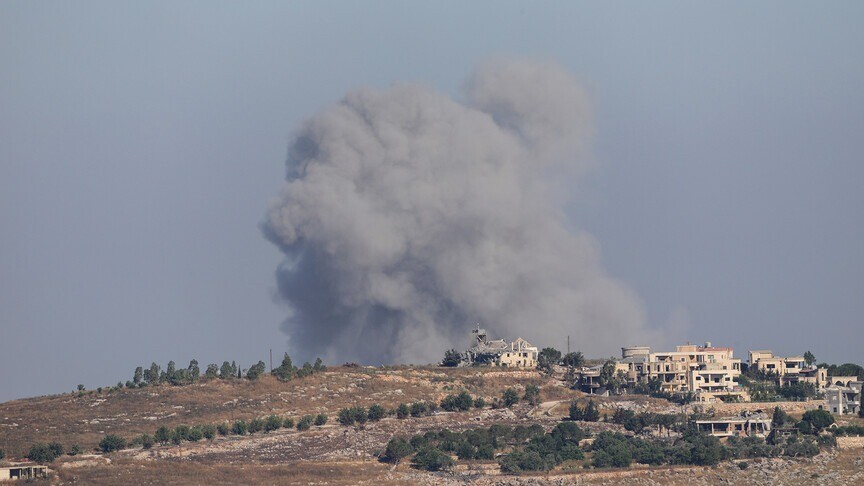
The army is combing the town, which geographically overlaps with Zawtar al-Sharqiya, where Israeli forces are deployed. Israeli airstrikes hit neighboring areas, with the latest on Wednesday hitting the town of Nabatieh al-Fawqa.
Mustafa Ammar (60 years old), a displaced person from Zawtar al-Sharqiya, said, 'We will follow the army if it gives us permission to enter,' hoping that the implementation of the framework agreement would apply to other towns, including his village.
Wafa Ismail (64 years old) came since the morning, hoping to enter Zawtar al-Gharbiya, which faces her town.
She expressed her displeasure at the prime minister entering alone, adding, 'He was supposed to bring people in behind him to record a victory.'
Original source: Al-Riyadh



Comments (0)
Be the first to comment.