What is driving Iran to war again?
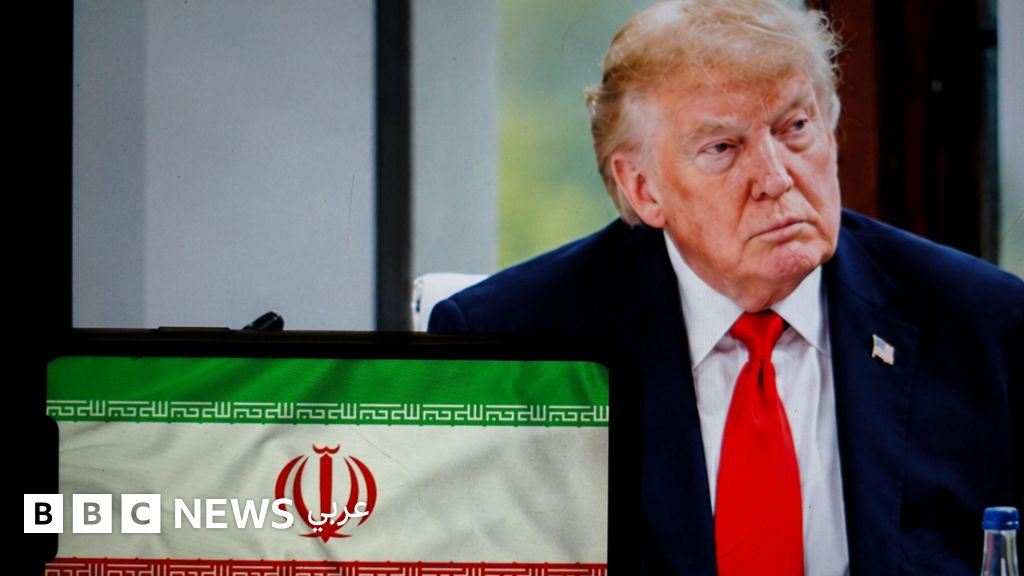
The press roundup discusses the return of war between Iran and the United States, the future of the Falkland Islands, and the reasons for the accelerating rise in Earth's temperatures.
What is driving Iran to war again? - In the Financial Times
Published 13 minutes ago
Reading time: 6 minutes
In today's press roundup, we cover the reasons for the return of war between Iran and the United States, their struggle over the balance of power and the Strait of Hormuz, a discussion on the future of the Falkland Islands and the possibility of them remaining under British sovereignty, and the reasons for the accelerated rise in Earth's temperatures and the role of the decline of 'global dimming' in exacerbating warming.
We start with the Financial Times and an article by researcher Vali Nasr, a professor of international relations at Johns Hopkins University, who believes that the return of the United States and Iran to war is not primarily due to a misunderstanding of the memorandum of understanding that ended the first phase of the conflict, but rather that it was based on stabilizing the balance of power at the time of its signing; a balance that Washington sought to change, while Tehran insisted on maintaining it.
Nasr says the war that the United States began in February, aiming to overthrow the Iranian regime or force it to accept American conditions restricting its nuclear program and regional role, ended by granting Tehran a position of strength represented in imposing its control over the Strait of Hormuz.
According to the writer, this outcome pushed Washington to agree to the memorandum of understanding, but the Iranian leadership treated it as a temporary American retreat aimed at alleviating pressure on the global economy and preparing for a new round of war.
He adds that several developments reinforced this belief in Tehran, including the failure to release frozen Iranian assets, ignoring Iranian demands in the US-brokered agreement between Israel and Lebanon, the arrival of more US military equipment to the Gulf, as well as encouraging commercial ships to cross the Strait of Hormuz without coordinating with Iranian authorities.
Nasr believes that these steps, although each individually did not constitute a major violation of the memorandum of understanding, collectively reflected an American attempt to undermine the influence Iran gained during the war.
According to the writer, the Iranian leadership believes that showing restraint will only lead to more American pressure, and therefore sees that escalation may be necessary to deter Washington and push it to seriously negotiate an end to the war and reach a broader nuclear agreement.
Image caption: A man watches live broadcast on his mobile phone of an Iranian official reading a message from Supreme Leader Ayatollah Mojtaba Khamenei to the public at the mausoleum of the late Supreme Leader Ayatollah Ruhollah Khomeini in Tehran on June 4, 2026.
He points out that Tehran refuses to give up its control of the Strait of Hormuz, because it considers it its most important card in any future negotiations, and a guarantee of the United States' commitment to any future agreement.
Skip most read and continue reading
Iran intensifies its attacks in the region and warns of a 'more destructive' response to US strikes
Messi vs. Lamine Yamal: 'A real miracle made by fate'
Andy Burnham: Why is the new British Prime Minister a mystery to everyone?
Why do mosquitoes bite some people more than others?
Nasr links this perception to the Iranian attack on two tankers off the Omani coast, saying that Tehran aimed through it to thwart US efforts to reopen the strait, but the attack, according to the writer, prompted a broad American response targeting Iranian missile batteries and drones on the Gulf coast, as well as military and civilian facilities across the country.
The writer concludes that Iran will seek to absorb the US strikes and expand its attacks on military targets, energy facilities, and civilian infrastructure in the Gulf, to show that Washington will not be able to determine the level of war alone.
Tehran also bets that the pressure on the global economy resulting from the closure of the Strait of Hormuz, and possibly the Bab el-Mandeb and the Red Sea, will force US President Donald Trump to retreat first.
"The Falkland Islands cannot remain British forever"
Skip podcast and continue reading
Worth noting
In-depth explanation of the most important events and topics, to help you understand the most important changes around you and their impact on your life
Episodes
Podcast end
From The Guardian, we move to an article by writer Simon Jenkins, who argues that the dispute between London and Buenos Aires over the Falkland Islands, which Argentina calls the 'Malvinas', has lasted longer than it should, and that the islands remaining under British sovereignty forever is not realistic.
Jenkins starts from the World Cup semi-final match that ended with a heavy defeat for England against Argentina, and brought the Falklands/Malvinas issue back to the forefront through a banner raised on the pitch.
The writer wonders whether the match, and the hug between Lionel Messi and Harry Kane, could pave the way for negotiations similar to those that led to the agreement on Gibraltar.
The writer believes that none of the remaining British territories from the imperial era has an eternal right to maintain its current status, especially when defending it costs British taxpayers more than £60 million annually.
He points out that before the 1982 war, British governments were negotiating with Argentina over the transfer of sovereignty of the islands, following an agreement reached in 1971 that allowed their residents to trade and travel to the Argentine mainland and benefit from its hospitals, shops, and schools.
He adds that the negotiations later considered a formula under which sovereignty would be transferred to Argentina, while the administration of the islands would remain in British hands, their self-rule would continue, and a security guarantee would be provided under UN supervision, but the Argentine military invasion in 1982 led to the collapse of talks.
Image caption: Argentine players raised a banner reading 'The Falkland Islands are Argentine' after the World Cup semi-final match against England on July 15, 2026.
Jenkins describes the invasion as a disastrous act, but says the war does not justify freezing any discussion on the sovereignty of the islands for more than four decades.
He also believes that the 2013 referendum, in which 99.8 percent of 1,517 voters voted in favor of maintaining the status quo, should not be considered the end of the debate.
The writer believes that the remaining colonial territories will, sooner or later, become part of the continents they are in, because they cannot rely indefinitely on a European power to protect them, at a time when Argentina will not give up its claim to the islands.
Jenkins concludes that the continuation of the status quo turns the Falklands into an isolated military fortress far from Britain, expressing his belief that a British government will eventually have to have the courage to resume negotiations with Argentina.
Will oil continue to rise after the current jump?
Strait of Hormuz: Are alternative routes sufficient for exporting Gulf oil and gas?
"Extremely hot weather": How does 'global dimming' affect it?
From The Economist, we move to an article discussing the accelerated rise in Earth's temperatures, and says that the surface temperature of the oceans in tropical and mid-latitude regions recorded unprecedented levels in modern records during July.
This has been accompanied by repeated heatwaves in Europe and a 'heat dome' in the United States and hurricanes and wildfires intensified by rising sea temperatures.
Original source: BBC Arabic



Comments (0)
Be the first to comment.