"Mount Axe"... The Iranian Nuclear Fortress Trump Threatened to Destroy
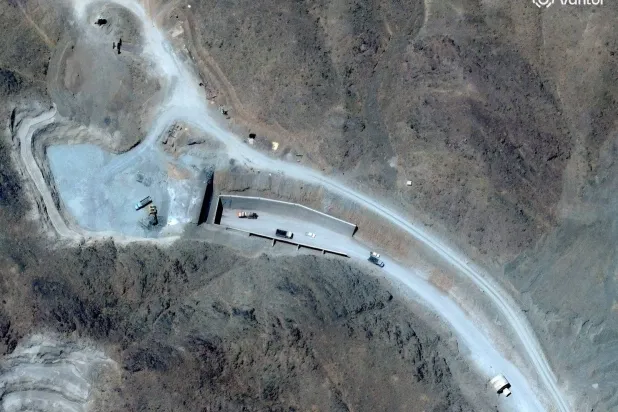
U.S. President Donald Trump threatened yesterday to destroy "Mount Axe," raising questions about the importance of this site, which is described as one of Iran's most fortified nuclear facilities.
U.S. President Donald Trump said on Tuesday that the Strait of Hormuz is open to the movement of all ships except those associated with Iran. He backtracked on imposing a 20 percent tariff, announcing instead a "total blockade" on ships heading to or departing from Iranian ports, as well as ships carrying cargo linked to Tehran.
Tehran stated on Tuesday that it would not relinquish its right to manage the Strait of Hormuz and rejected any U.S. role in determining the future of the waterway, even as Washington moved to reimpose a naval blockade on Iran and President Donald Trump proposed tariffs on transiting cargo in exchange for U.S. protection.
Trump wrote on the "Truth Social" platform that the flow of oil is continuing "like never before" thanks to what he described as the tremendous power of the U.S. military, praising Secretary of War Pete Hegseth, Chairman of the Joint Chiefs of Staff Dan Kane, and Commander of U.S. Central Command Admiral Brad Cooper.
He stated that the "deceitful, violent, and malicious" Iranian leadership is leading the country toward "total destruction," emphasizing that the blockade will be limited to ships dealing with Iranian ports and cargo.
Trump announced his reversal of the plan to impose a 20 percent U.S. tariff on cargo transiting the strait, saying that after "very productive talks" with leaders in the Middle East, he decided to replace the tariffs with trade and investment agreements with regional countries.
He added that these investments would be "massive" and would lead to an influx of factories, facilities, and equipment to the United States, providing millions of high-paying American jobs.
Trump said that "America is winning again," accusing Iran of killing hundreds of thousands, including 52,000 protesters, and vowed again that Tehran "will never possess a nuclear weapon."
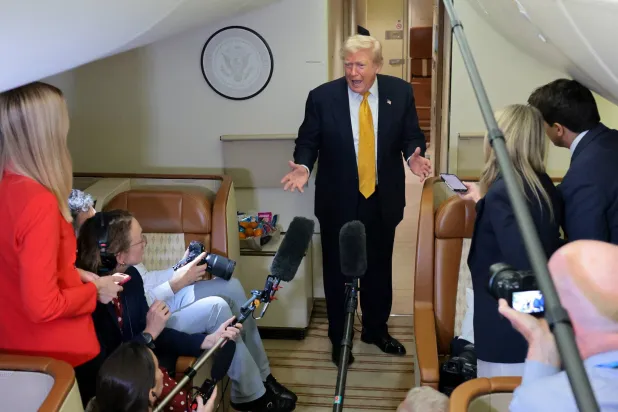
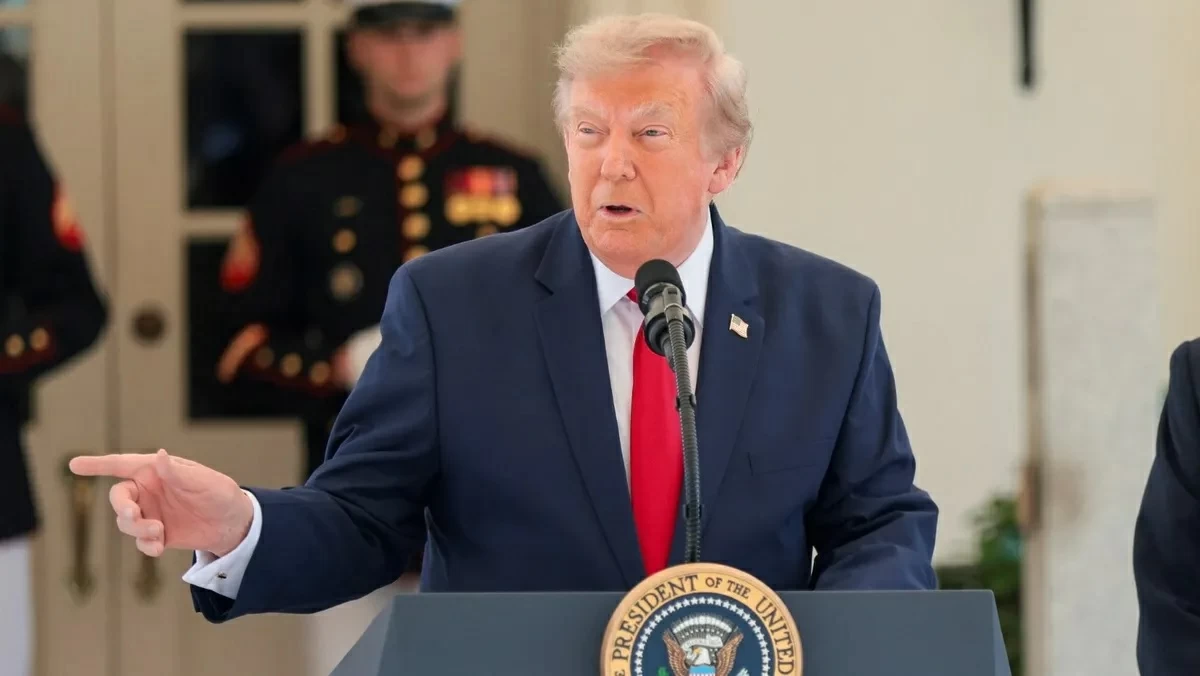
Trump speaking to reporters during the signing of an executive order in the Oval Office on Monday (EPA).
Briefing to Congress: Trump formally notified Congress that the United States resumed hostilities against Iran on July 7, in a letter his administration believes triggers a new 60-day period for the use of military force without additional consent from lawmakers.
In the letter, Trump said he issued directives for operations as part of his responsibility to protect Americans, national security, and foreign policy interests, and accused Iran of violating the memorandum of understanding by attacking commercial ships in the Strait of Hormuz.
Trump had announced on Monday the reimposition of a naval blockade on Iran, saying the Strait of Hormuz would remain open to other countries, while Iranian ships or ships dealing with Tehran would be prohibited from entering or leaving Iranian ports.
Trump wrote on "Truth Social": "The Strait of Hormuz is open, and will remain open, with or without Iran. We are reimposing the blockade on Iran."
He added that the United States would henceforth be known as the "Guardian of the Strait of Hormuz" and would charge a fee equivalent to 20 percent of the value of all cargo passing through the corridor.
He said the fees would be used to compensate Washington for the costs of providing security and safety, and that all other nations would enjoy "fair and open" use of the strait.
In remarks to reporters in the Oval Office, Trump said the United States is targeting "Iranian capabilities related to the Strait of Hormuz," and that the strikes aim to eliminate Tehran's ability to attack commercial vessels.
Trump said in other remarks that Iran would be subjected to "very powerful" attacks, adding: "We will hit them hard tomorrow, and there is nothing they can do about it." However, he stated that the possibility of reaching an agreement with Iran remains despite the mutual strikes.
Tehran has maintained a direct role in managing vessel traffic and transit arrangements. Iran insists that arrangements for the strait are part of the memorandum of understanding signed with the United States and that Washington reneged on its commitments when it supported the creation of a shipping route not subject to Tehran's approval.
It stated: "The Iranian Joint Chiefs of Staff operations" said the United States has no role in determining the future of the strait, and that Tehran will not allow Washington to interfere in its management.
The Iranian army spokesperson, Brigadier General Mohammad Akrami Nia, also warned that the strait will not be opened through military pressure, confirming that the armed forces "will not retreat one iota" from Iran's rights there.
Akrami Nia said that "respecting the rights of the Iranian people is the only way to reopen the Strait of Hormuz," and that the armed forces have informed Washington that any action in the strait outside the arrangements stipulated in the memorandum of understanding will be met with a "decisive Iranian response."
He added that the United States accepted, under the memorandum of understanding to end the war, Iranian arrangements regarding the strait, but later sought, as he put it, to establish a new transit route "through deception."
He said: "The Strait of Hormuz will never be opened through American war, evil, and aggression," confirming that the Iranian armed forces will stand "until the last breath" in defending the country's rights to the corridor.
Trump's proposal to impose a 20 percent tariff was met with objection from the UN's International Maritime Organization, which stated there is no legal basis for imposing mandatory fees on ships transiting straits used for international navigation.
Before the outbreak of the war, about one-fifth of global oil and gas trade passed through the Strait of Hormuz daily, amounting to over 15 million barrels of fuel, with a value of about $1.2 billion.
A 20 percent fee, if applied to the total value of the cargo, could generate about $240 million per day.
Brent crude prices rose to their highest levels in four weeks, exceeding $87 per barrel during Tuesday's trading, amid concerns over the impact of the blockade and the exchange of attacks on energy supplies.
"Guardian" of the Strait: Iranian Foreign Minister Abbas Araghchi said that Tehran "was and will remain the guardian of the Strait of Hormuz," in response to Trump's announcement that the U.S. would henceforth be known as the "guardian" of the waterway.
Araghchi wrote on the "X" platform: "The U.S. President is absolutely right. Everyone who guarantees the safe passage of commercial vessels through the Strait of Hormuz should be compensated." He added, with a sarcastic tone: "Obviously, 20 percent is an exaggeration. We will be fair."
Iranian Foreign Ministry spokesperson Esmail Baghaei had said that the memorandum of understanding has entered a "crisis phase," warning that his country will not abide by its commitments if the United States does not fulfill its obligations.
Baghaei said that Iran continues its consultations with Qatar, Pakistan, and the Sultanate of Oman to prevent further escalation, but maintains that navigation arrangements in the strait cannot be imposed on it unilaterally.
The Iranian parliament also entered the conflict over the strait, after the head of the National Security Committee, Ebrahim Azizi, announced the submission of a draft law titled "Strategic Action for Security and Sustainable Development of the Strait of Hormuz and the Arabian Gulf."
Azizi said the draft was officially submitted to parliament and that lawmakers are "steadfast in defending the red lines," especially regarding the management of the Strait of Hormuz.
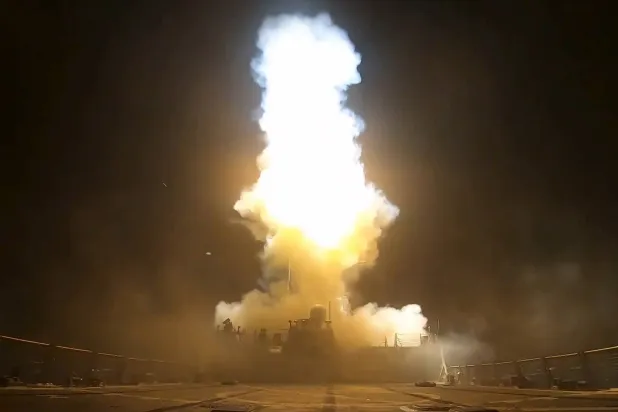
A shot taken from a video clip showing U.S. strikes on an anchor in Bandar Abbas, southern Iran (CENTCOM).
Original source: Asharq Al-Awsat

Comments (0)
Be the first to comment.