Salam: Israeli Withdrawal is a Beginning of a Path We are Working to Complete from All Lebanon
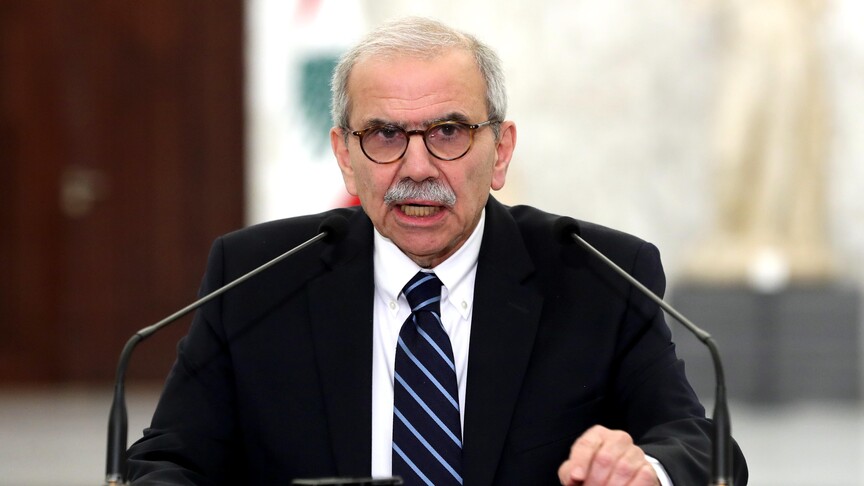
During his inspection of the town of Zouqtar al-Gharbiyeh in southern Lebanon, the day after the start of the deployment of Lebanese army units..
BEIRUT / Wassim Seif Eddine / Anadolu
Lebanese Prime Minister Nawaf Salam said Wednesday that the start of the Israeli withdrawal from his country's territory represents 'the beginning of a path' that the state will continue working to complete, leading to a full withdrawal from all Lebanese territory.
This came in a speech delivered by Salam during a visit to the town of Zouqtar al-Gharbiyeh in the Nabatieh district in southern Lebanon, to inspect the town a day after the start of the deployment of Lebanese army units there as part of the first phase of implementing the 'Framework Agreement'.
Accompanying Salam on the visit were Defense Minister Michel Mounsi, Chief of Staff Hassan Odeh, Secretary-General of the Supreme Defense Council Mohammad Mustafa, President of the Council for Development and Reconstruction Mohammad Qabbani, President of the Council of the South Hashem Haidar, and Director of the Central Operations Room at the Presidency of the Council of Ministers Zahy Shahine, according to a statement from the Presidency of the Council of Ministers.
Salam added that his presence in the south 'carries great political and moral dimensions,' stressing that the goal from the beginning was 'the complete Israeli withdrawal from all Lebanese territory.'
During the visit, Salam raised the Lebanese flag in the town square.
He indicated that what the south is witnessing today 'is only a beginning,' affirming that the Lebanese government is 'determined and steadfast' in continuing to mobilize political and diplomatic efforts to ensure the completion of the Israeli withdrawal from all Lebanese territory.
The Lebanese prime minister addressed a message to the people of the south, affirming that the state has begun harnessing its capabilities to accompany the return of residents to their villages and towns.
He noted that Lebanese army personnel and security forces are present 'to protect our returning people.'
He explained that the next phase will witness, in parallel with the army's deployment, work to open roads, remove rubble, and secure basic services, allowing the residents to return 'safely and with dignity' to their homes.
He indicated that the government has begun preparations to restore vital services, including water, electricity, and telecommunications, in addition to securing ready housing and all necessary requirements for the transitional phase.
Salam concluded his speech by affirming that 'the return of life to the south is not just a slogan, but a national goal that the state is committed to,' considering that the return of residents to their land represents 'the truest expression of Lebanon's unity and sovereignty.'
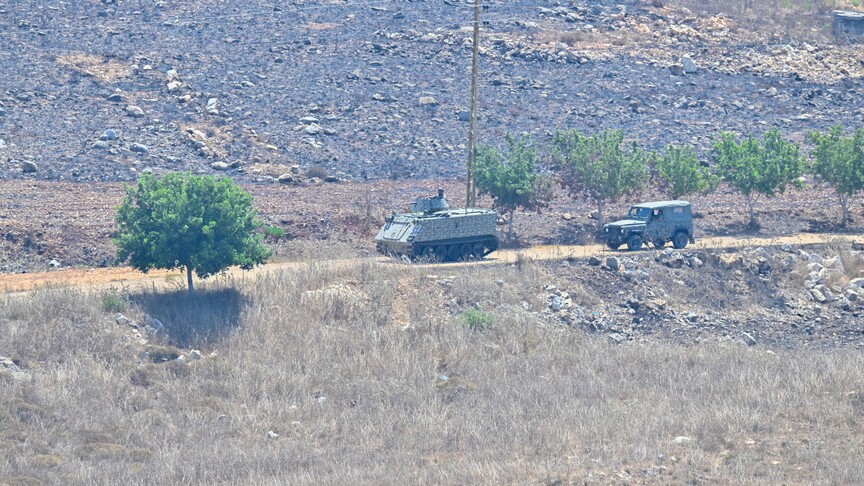
The Lebanese army announced Tuesday the start of the deployment of its military units in the town of Zouqtar al-Gharbiyeh, as part of implementing the first phase of the 'Framework Agreement,' according to the mechanism stemming from the trilateral understanding between Lebanon, the United States, and Israel, which was reached in Rome.
Zouqtar al-Gharbiyeh is located south of the Litani River and is among the pilot areas included in the first phase of the agreement signed on June 26 of last year.
The agreement stipulates a gradual Israeli withdrawal from occupied Lebanese territory, starting with the application of a model in pilot areas, with the Lebanese army assuming security responsibility in areas from which Israeli forces withdraw, along with the disarmament of armed groups, in reference to Hezbollah.
On Monday, the U.S. State Department announced the start of operations in the pilot area in the villages of Froun, Sarifa, and Zouqtar al-Gharbiyeh, according to the trilateral framework and under the auspices of the Special Military Coordination Group for Lebanon.
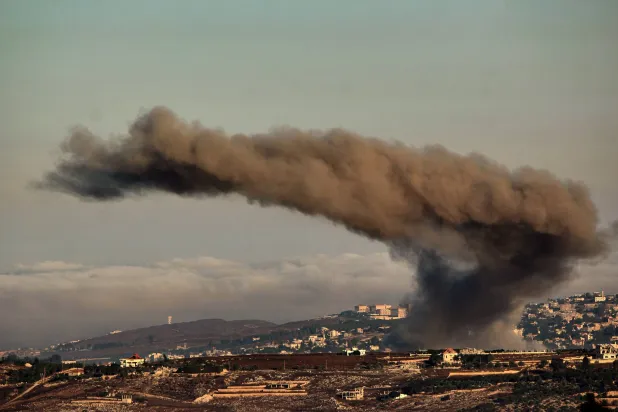
Despite the start of the agreement's implementation, the Israeli army continues its violations, as it carried out explosions at dawn Tuesday in the vicinity of the towns of Beit Yahoun and Kounine, without any injuries reported, according to an Anadolu correspondent.
Since March 2, 2026, Israel has continued its aggression on Lebanon, resulting in 4,328 deaths and 12,230 injuries, according to the Lebanese Ministry of Health.
Israel occupies areas in southern Lebanon, some for decades, others since the confrontations between 2023 and 2024, and it also advanced more than 10 kilometers inside Lebanese territory during the current aggression.
Original source: Anadolu Agency


Comments (0)
Be the first to comment.