Signs of coordination between the Houthis and Somalia's Al-Shabaab to control the Bab el-Mandeb Strait
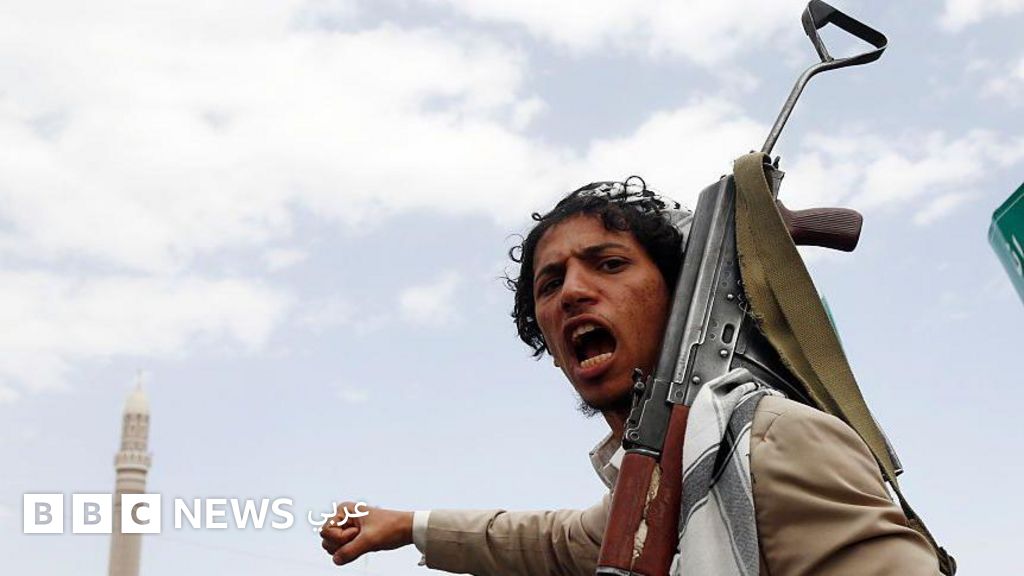
Signs of coordination between the Houthis and Somalia's Al-Shabaab to control the Bab el-Mandeb Strait – in The Telegraph.
Published 4 hours ago.
Reading time: 5 minutes.
In today’s tour of the newspapers, we look at a scenario of 'unprecedented' escalation in the war with Iran, before The Guardian explains the 'reasons' behind Trump’s reservations about Lula da Silva’s administration in Brazil, and finally, we reveal the secret behind why many Britons do not feel the heat despite weather reports consistently recording high temperatures.
We begin the tour with the British newspaper The Telegraph and a report titled 'Houthis plan to open a new front in Iran's war and close a second strait,' by Akhtar Makoii, the newspaper's foreign correspondent.
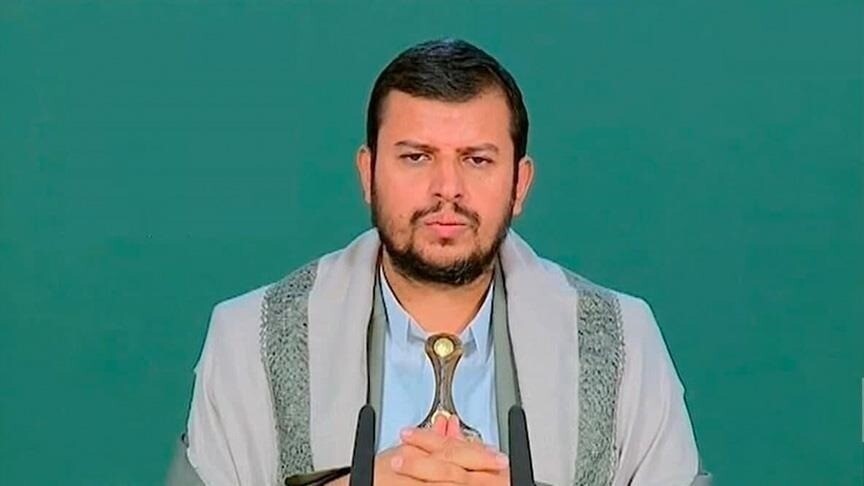
The writer says that the Houthis, who have now become Iran's most powerful regional proxy, are preparing to close the Bab el-Mandeb Strait on behalf of Iran, with the aim of intensifying pressure on US President Donald Trump by causing further damage to the global economy.
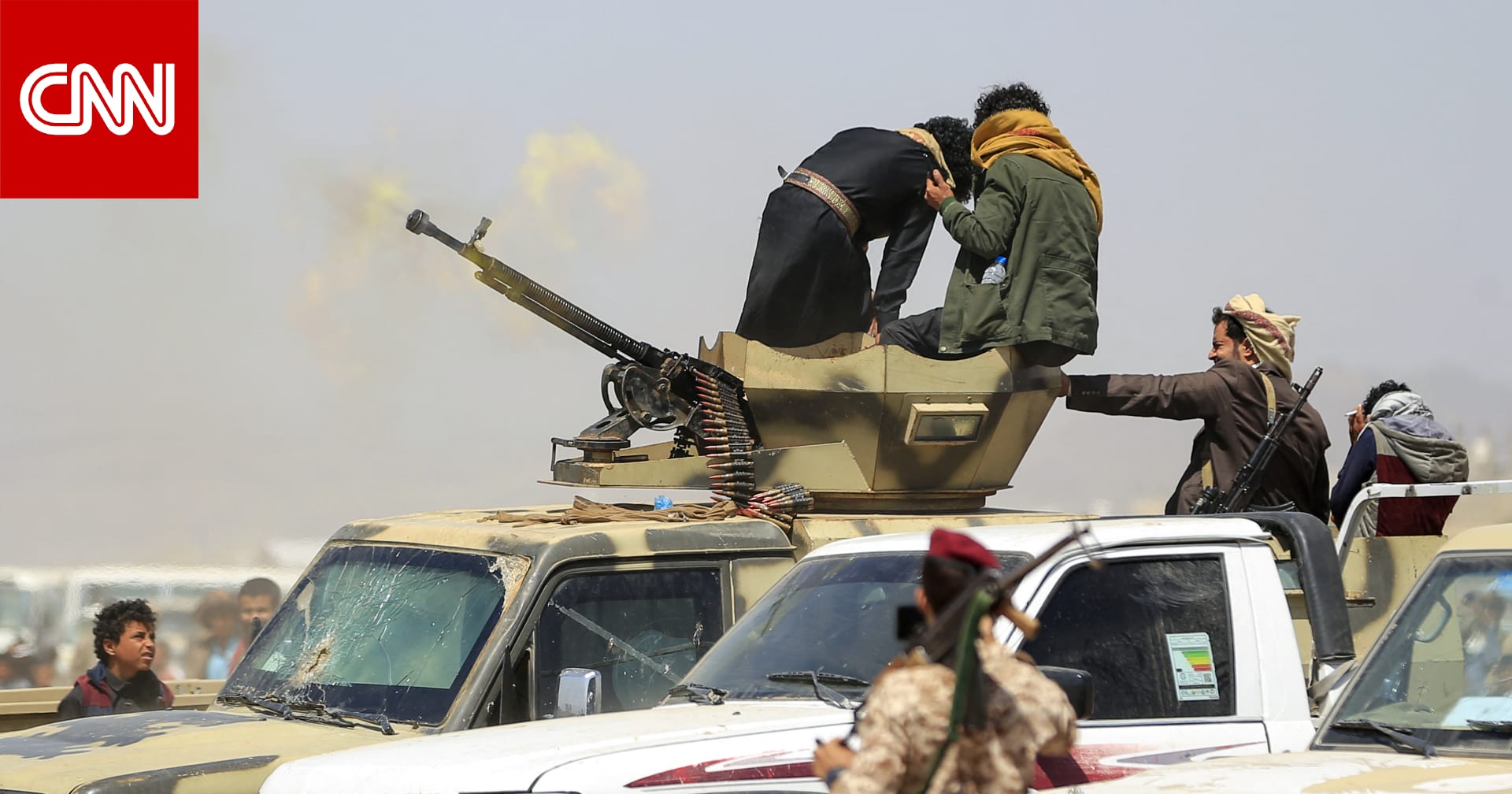
According to the article, there is cooperation between the Houthis and the Somali Al-Shabaab group aimed at controlling both sides of the Bab el-Mandeb and closing it whenever Iran decides.
He cited an informed source saying that the Houthis are transferring Iranian drone technology to the Somali group under the guidance of Tehran, which seeks to create a situation at the Bab el-Mandeb Strait similar to the one that exists at the Strait of Hormuz.
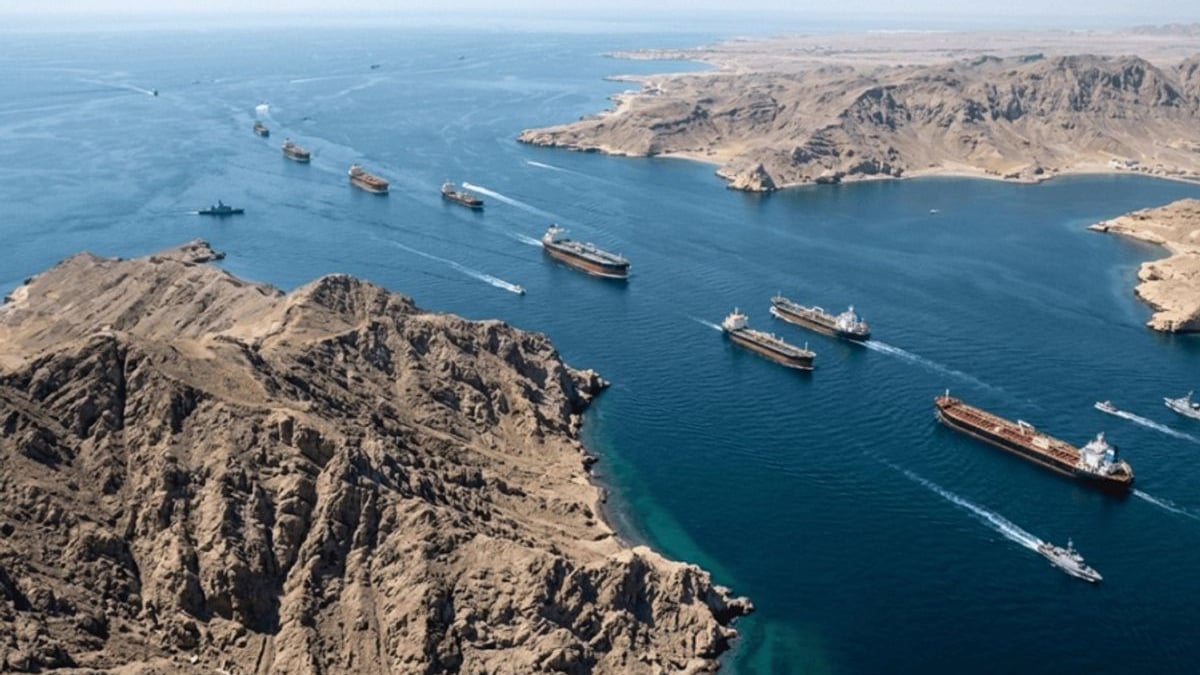
The writer warned that about 10 to 12 percent of global trade passes through the Bab el-Mandeb Strait, which in turn leads to the Suez Canal, warning that closing this route means ships would be forced to take a longer route by weeks around the southern tip of the African continent, resulting in higher costs.
The US military launches a new wave of strikes against Iran, and reports of Tehran threatening to close the Bab el-Mandeb Strait.
Among them Hormuz and the Suez Canal: The most prominent straits and waterways in the world.
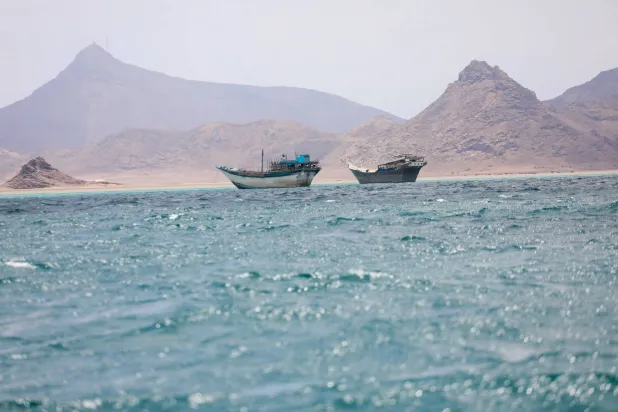
Caption: Two boats off the Yemeni coast overlooking the Bab el-Mandeb Strait.
The two straits—Hormuz and Bab el-Mandeb—have never been closed at the same time, according to the writer, who noted that the Houthis have already demonstrated the ability to close Bab el-Mandeb during the Gaza war when they targeted commercial ships in the Red Sea for months, forcing them to take other routes, despite the deployment of a US-led maritime coalition to the region.
The writer believes that closing the Bab el-Mandeb serves Tehran and enables the Houthis to punish Saudi Arabia, their old enemy, while boosting the Yemeni group's ambitions in the region, which could mean the Houthis acting in their own interest even if it conflicts with Iran's calculations.
Skip 'Most Read' and continue reading.
Protests in Ukraine against Zelensky's dismissal of the Defense Minister.
Tehran 'asked the Houthis to close the Bab el-Mandeb Strait' if Washington attacks the Iranian power grid.
Lionel Messi: 'That’s why he is the King'.
11 people killed and 19 injured in an orphanage fire in Algeria.
Here the writer notes that the Houthis' goals are not perfectly aligned with Iran's goals, warning that 'the Houthis are partners to the Iranians and not puppets in their hands,' as he put it.
The writer said that the Houthis have made preparations to fight a protracted war, and they have learned lessons from the Iranian war regarding the assassination of leaders, so they have appointed more than one deputy for each current leader, in the style of 'shadow leaders,' according to the article.
'The da Silva charge'.
Skip podcast and continue reading.
Worth paying attention to.
In-depth explanation of the most prominent events and topics to help you understand the most important variables around you and their impact on your life.
Episodes.
Podcast end.
On to the British newspaper The Guardian, where we read an article titled 'Brazil’s Sovereignty: Trump views the exercise of independence as a trade violation,' written by the newspaper's editorial board.
The Guardian monitored a decision issued by the Supreme Court in Brazil last month that compels social media platforms such as X and Meta to remove any content that promotes hatred and opposes democracy in the country, after the court held these platforms responsible for fueling what it described as a failed coup attempt in Brazil in 2023 by spreading 'online lies'.
A month later, Donald Trump proposed imposing a 25 percent tariff on Brazilian imports, criticizing what he considered the forcing of judges on American technology companies to delete 'political' content.
The Guardian noted the Trump administration's preference for Flavio Bolsonaro, the son of former Brazilian President Jair Bolsonaro, who is currently serving a prison sentence, and that Flavio Bolsonaro is preparing to run for president in the elections scheduled for next October as an opposition candidate, while his message to Washington was that the United States' problem with what it describes as Brazil's unfair trade practices goes back to the 'anti-American' President Lula da Silva.
'The Brazilian Trump' takes office.
The newspaper pointed to the lead of President Lula da Silva in the polls, as one of the most successful politicians of this century, noting his career over the course of his nearly eighty-year life, from worker to union leader to party founder to the presidency.
But US President Trump, according to The Guardian, opposes Lula da Silva's approach for his country regarding independence, as the Brazilian president looks forward to his country's government being able to confront the spread of anti-democratic disinformation, while Trump believes that the United States should have jurisdiction over Brazil's information space, according to the newspaper.
The newspaper adds that there is another arena in which the US administration is seeking to compete with the Brazilian government for influence, which is the country's financial system, and whether any 'state-run public financial payment infrastructure' can succeed in Latin America without 'US control'.
The British newspaper noted that Brazil, like India, has launched digital public infrastructure designed to reduce dependence on foreign-controlled payment networks and to protect domestic payments from any external pressure or sanctions.
The Telegraph believed that these financial systems have proven a real ability to threaten American payment systems such as Visa and Mastercard.
The newspaper pointed out that payments are essentially data, and the process of breaching them via external networks could become a tool for surveillance and pressure that harms the independence of countries.
Therefore, the real violation that Trump accuses his Brazilian counterpart of—according to the newspaper—is nothing but maintaining 'his country's independence'.
'This is crazy! I feel cold in the middle of summer'.
Concluding our tour with the British Daily Mail, and a report titled 'The time the body needs to adapt to temperatures,' by Shefali Best, the newspaper's science and technology editor.
The writer wonders about the secret behind why many people no longer feel the intensity of the heat in the United Kingdom despite the high temperatures recorded by measurement systems.
She cites Alex Lloyd, a researcher at Loughborough University in the UK, saying that the reason for this feeling is the body's adaptation to extreme heat, as it takes about two weeks (of regular, gradual exposure) before bodies get used to the heat.
Deadly heatwave hits European cities.
Original source: BBC Arabic

Comments (0)
Be the first to comment.