Sudanese Army Announces Downing of Third Strategic Drone in Two Weeks
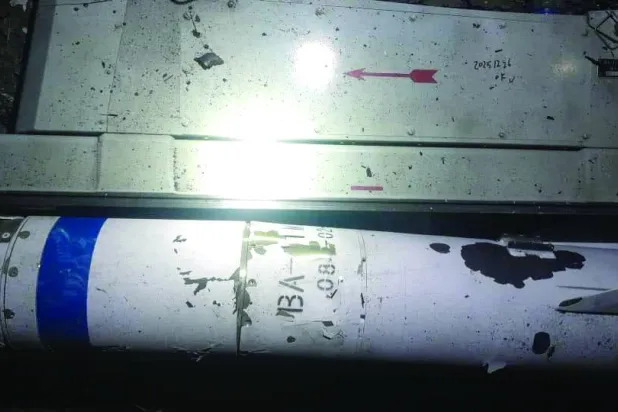
The Sudanese army announced it shot down a strategic drone in North Kordofan, while the Emergency Lawyers group reported that 15 civilians were killed in drone strikes in two towns in North Kordofan state.
On Tuesday, the Sudanese army announced it shot down a strategic drone it said was an enemy FH-95, Chinese-made, in North Kordofan state. Simultaneously, an independent rights group reported that 15 civilians were killed in two separate drone strikes targeting civilian vehicles in areas under the control of the Rapid Support Forces (RSF).
The official spokesman for the armed forces (the army) said in a statement that ground defenses shot down a strategic drone at noon on Tuesday north of the Al-Andaraba area on the export road linking the city of El Obeid and Omdurman.
On the other hand, the Emergency Lawyers group said in a statement that a drone targeted a civilian vehicle carrying residents on their way to a wedding in the town of Al-Sha'atout in eastern Jabrat al-Sheikh locality in North Kordofan state on Monday, killing 13 people, including 5 women.
It added that another drone targeted a civilian vehicle transporting water near a water source in the Hamrat al-Sheikh area on Tuesday morning, killing two people.
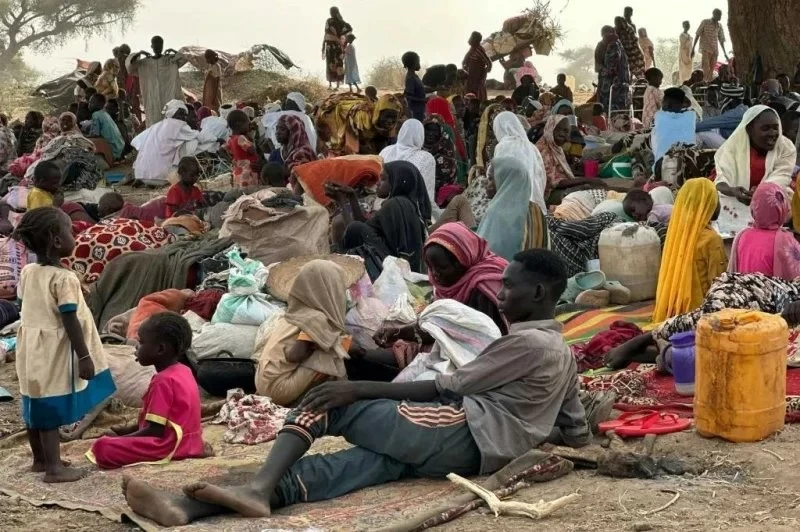
A drone targeted the Al-Hamidiyah camp for displaced people in central Darfur, according to the Displaced and Refugees Coordination.
The areas of Al-Sha'atout and Hamrat al-Sheikh are within territories controlled by the Rapid Support Forces since the early stages of the war. The rights group did not specify the party that carried out the two attacks, and neither the Rapid Support Forces nor the army have commented on the operations. It was not possible to independently verify the circumstances of the two incidents.
The group considered the targeting of civilian vehicles, water sources, and population gatherings an escalation in drone attacks, and called for an independent investigation, accountability for those responsible, and an end to targeting civilians and civilian objects.
The third drone
Tuesday's announcement is the third by the Sudanese army of shooting down an FH-95 drone in about two weeks, following its announcement on June 23 of shooting down a similar drone north of the town of Al-Tawisha in North Darfur state, and on July 2 of shooting down another drone over the city of Tandalti in White Nile state. Despite the army publishing wreckage believed to be from the drone, independent verification was not possible.
The FH-95 drone is a long-range strategic drone, Chinese-made, designed for reconnaissance and attack missions. It is characterized by its ability to fly for long hours, carry guided munitions and advanced sensors, and execute precision strikes from long distances, in addition to gathering intelligence.
The announcement of the downing of the third drone comes at a time when drones have become one of the most prominent tools of combat in the Sudanese war, with their use expanding by both sides of the conflict to carry out long-range strikes, target military sites and service facilities, and intercept enemy drones.
Lt. Gen. Al-Atta, Chief of Staff of the Sudanese Army, speaks at Wadi Sidna base (Sovereign Council via Telegram)
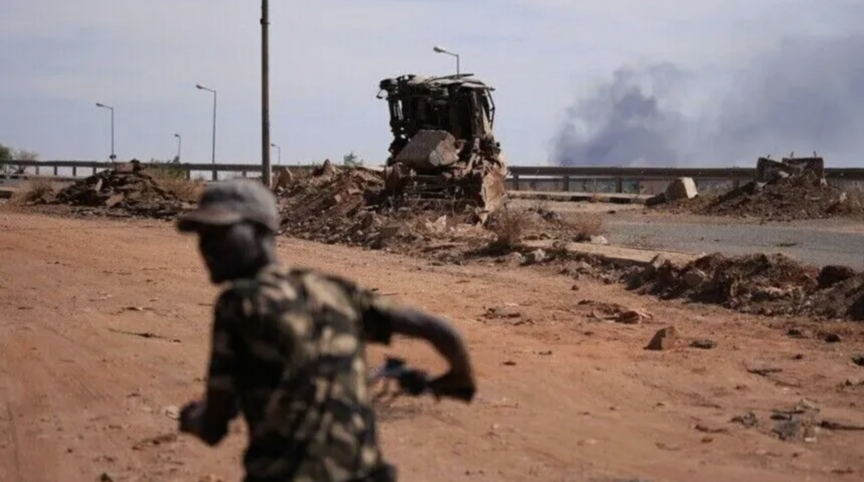
In recent months, the city of El Obeid and the states of North and West Kordofan and the Darfur region, along with other combat axes, have witnessed a notable escalation in drone attacks, with the confrontation shifting from ground clashes to increasing use of remote aerial capabilities.
Observers consider this development a complication for both the military and humanitarian scenes, as the raids target populated areas or areas near population centers, while the forces of both sides are deployed in civilian areas or have headquarters nearby, increasing the likelihood of civilian casualties during attacks.
The nature of the war makes it difficult to ascertain the actual scale of military and civilian losses, given the rarity of either side announcing its human or material losses. Information is usually revealed through testimonies from residents and local and rights organizations.
While no official information emerges about losses among military personnel or civilians, loss information remains undisclosed and cannot be independently verified, or it is inflated for war propaganda purposes.
Original source: Asharq Al-Awsat

Comments (0)
Be the first to comment.