Syrian Courts Suspend for Two Hours on Sunday in Mourning for Victims of Blast Near Justice Palace
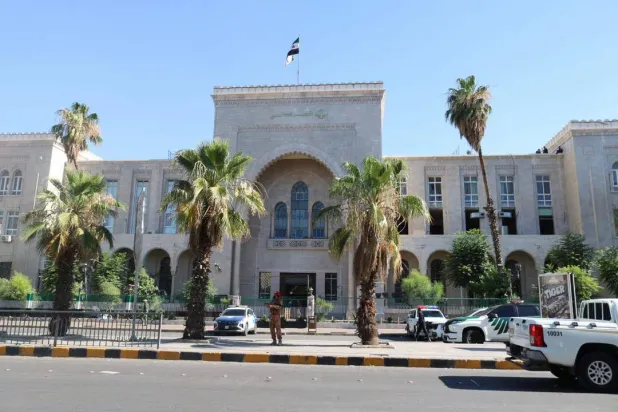
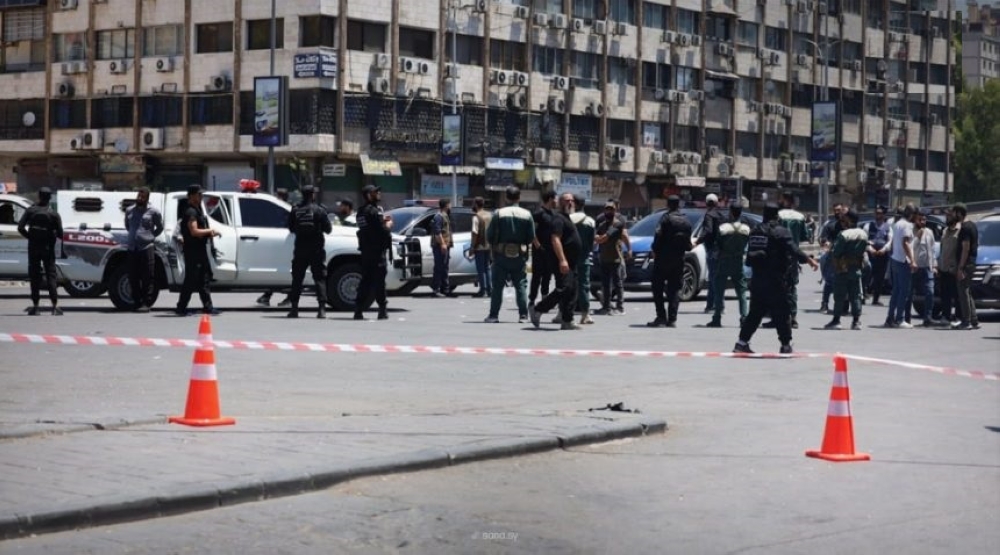
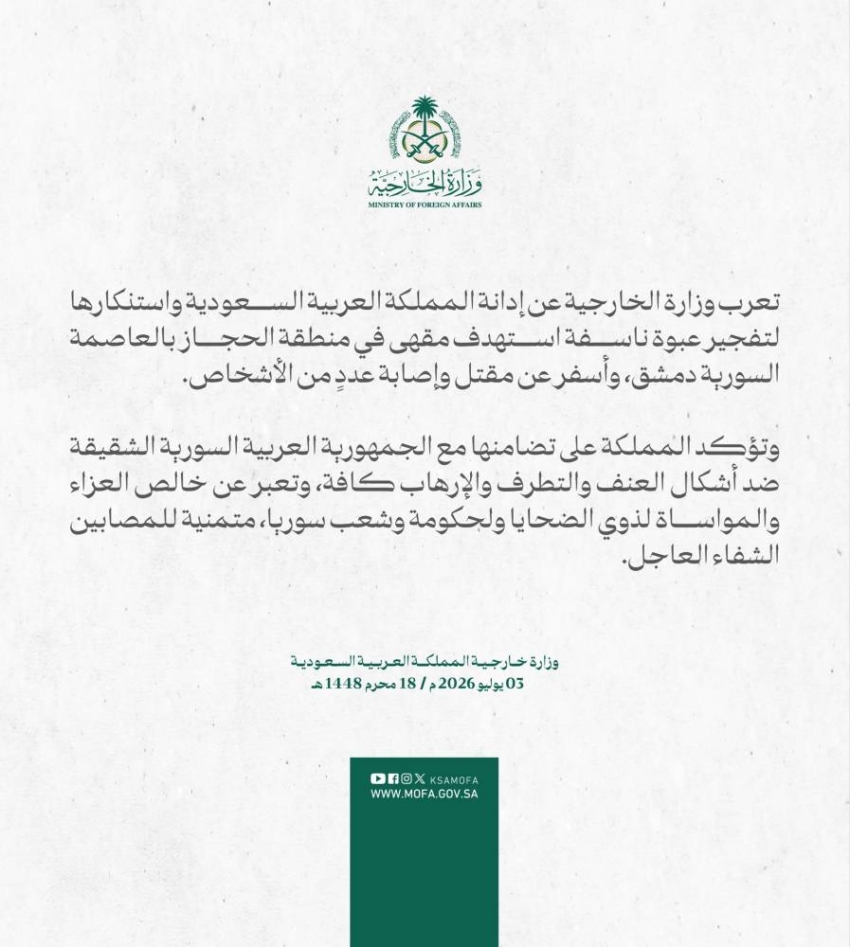
Court proceedings will be suspended for two hours on Sunday morning in all Syrian courts, in mourning for the victims of the blast that occurred near the Justice Palace and in solidarity with lawyers.
Recent UN data has shown notable indicators of improvement in the situation in several Yemeni governorates under the control of the internationally recognized government, with the return of more than two million displaced people to their original areas, a development that reflects a relative decline in waves of internal displacement, but at the same time highlights major challenges related to reintegrating returnees, securing basic services, and ensuring they are not forced to flee again.
The International Organization for Migration, in a field assessment conducted during April and May of last year, revealed the return of about 2.105 million Yemeni displaced people, representing nearly 298,000 families, to accessible areas in governorates under the control of the legitimate government, confirming that this return is one of the largest internal population movements the country has witnessed in recent years.
The report showed that Taiz governorate (southwest) received the largest share of returnees, hosting about 783,000 people, equivalent to 37.2 percent of the total returnees, reflecting the scale of displacement the governorate experienced during the war years, as well as the desire of many families to return after a relative improvement in security and service conditions.
The temporary Yemeni capital Aden (south) ranked second, receiving about 647,000 returnees, or about 31 percent of the total, while Al-Dhale governorate (south) ranked third with about 151,000 returnees, followed by Shabwa with more than 118,000, then Lahj (south) with about 115,000, while about 268,000 people were distributed across the other governorates covered by the assessment.
84% of Yemeni displaced people returned to their areas due to improved conditions (United Nations)
The survey results showed that 84 percent of Yemeni returnees, about 1.77 million people, confirmed that improved conditions in their original areas were the main reason for the decision to return, reflecting the impact of the relative improvement in security stability and the availability of minimum living conditions in encouraging families to leave displacement sites.
In contrast, about 293,000 Yemeni displaced people, representing 14 percent of the total returnees, explained that the deterioration of economic and service conditions in their displacement areas prompted them to return, even if their original areas still suffer from major challenges. The report also recorded other motives for return, albeit in limited proportions, including the desire to reunite the family or being expelled from displacement sites.
Despite these positive indicators, the International Organization for Migration stressed that the majority of returnees still need urgent humanitarian assistance, along with early recovery programs and rehabilitation of basic services, to ensure their stability and prevent renewed waves of displacement in the future.
Post-Return Challenges
Relief organizations believe that the success of the return is not measured only by the number of returnees from the displaced, but by the ability of the receiving areas to absorb them and provide the minimum essentials of life, including job opportunities, health care, education, and infrastructure repair, especially in Yemeni governorates that have suffered extensive damage during the years of conflict.
As the school year approaches, parents in #Al-Khawkhah #Yemen are preparing for their children's return to school✏️These #CashPlus cash assistance will help families cover basic school needs and prepare children for school. Thanks to the support from @ECHO_MiddleEast https://t.co/7AisaZyqIC
— UNICEF Yemen (@UNICEF_Yemen) July 2, 2026
Humanitarian workers confirm that many returning families face difficult living conditions due to damage to their homes or loss of income sources, which makes continued international support an essential factor to ensure that the return turns into lasting stability, rather than being a temporary stop before a new wave of displacement.
These data also indicate a gradual shift in the nature of the humanitarian response, from focusing on displacement management to supporting recovery and rebuilding local communities, which requires greater coordination between the government, international organizations, and donors.
UN Program to Support Children's Education
In the context of efforts to support the stability of returning families, the United Nations Children's Fund (UNICEF) announced the completion of the first phase of a new program aimed at enhancing educational opportunities for more than 10,000 children in Al-Khawkhah district of Hodeidah governorate, through direct cash assistance to families, along with a package of educational interventions and social protection.
The organization explained that it disbursed the first batch of cash assistance to about 1,967 families during the last two weeks of last June, as part of a project funded by the European Civil Protection and Humanitarian Aid Operations, aimed at reducing school dropout and encouraging children to continue their education.
Rehabilitation of schools and distribution of school bags under a UN program in Yemen (United Nations)
The program runs for 10 months, benefiting 10,250 children from the most needy groups, through compensatory education, providing alternative educational opportunities, implementing back-to-school campaigns, as well as awareness activities aimed at encouraging families to ensure their children continue their education.
The program also includes rehabilitating school buildings, training teachers, providing bags and school supplies, in addition to child protection services and social support, which alleviates the economic burden on families and removes the most prominent obstacles preventing children from regularly attending school.
UNICEF confirmed that it is preparing to implement a second round of cash assistance before the start of the new school year next September, to include about 2,100 families, including those who benefited from the first batch, in addition to new families whose children will enroll in the first grade of primary school for the first time.
Read also
Danger looms over Yemenis due to rising displacement and food shortages
A heavy holiday experienced by the displaced in Houthi-controlled areas
Original source: Asharq Al-Awsat



Comments (0)
Be the first to comment.