Saudi and Yemeni Moves and UN Warning After Houthis Announce Navigation Ban
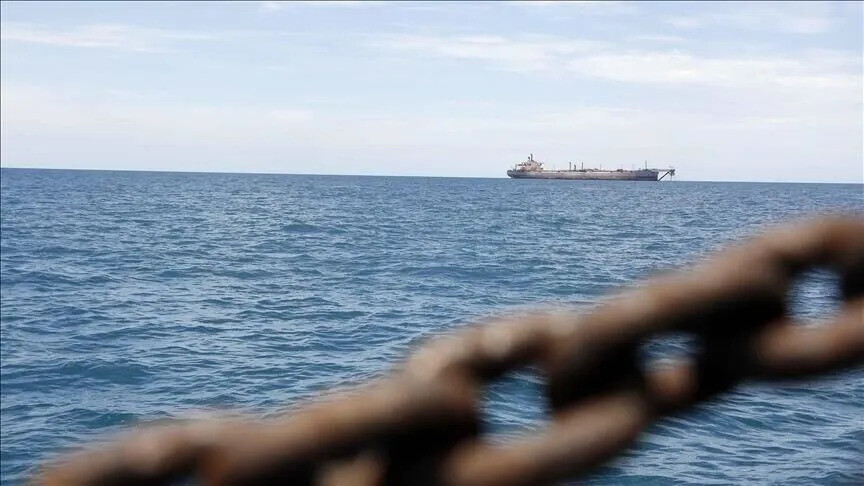
The Yemeni government discussed the readiness of its forces to respond to the escalation, while Riyadh announced measures to protect its ships, the coalition vowed to respond, and the UN warned against the expansion of the escalation..
Yemen / Anadolu
The Houthi group's Monday announcement of a ban on maritime navigation to Saudi Arabia was met with condemnations from the Kingdom, moves by the Yemeni government, and a UN warning against the widening of the escalation, while the Coalition to Support Legitimacy vowed to respond to the group's threats.
The group's military spokesman, Yahya Saree, had earlier on Monday announced in a video statement a "ban on maritime navigation" to Saudi Arabia, in response to what it says is a blockade imposed by Riyadh, adding that the decision "enters into effect from the moment of this statement's announcement," according to the group's Al-Masirah channel.
**Saudi Arabia's Position
The Saudi Foreign Ministry, in a statement, condemned "in the strongest terms" what was mentioned by the Houthi group regarding the ban on maritime navigation to the Kingdom.
It affirmed that the Kingdom's position aims to achieve peace and end the suffering of Yemenis, pointing to its support for the UN roadmap that the Yemeni government agreed to, while the Houthis refused to accept it.
The ministry also stressed that the Kingdom will take "all necessary measures to protect its ships" in accordance with international law and the UN Convention on the Law of the Sea.
** Legitimacy Coalition
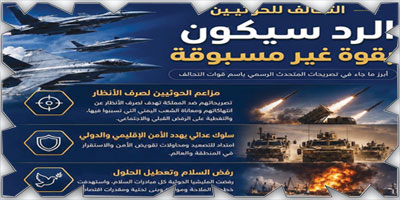
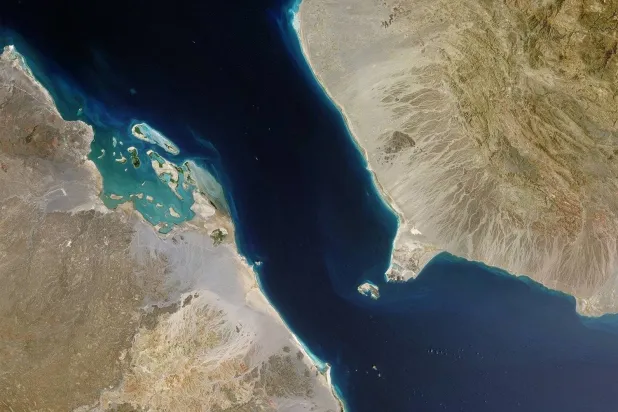
Following that, the Saudi-led Coalition to Support Legitimacy in Yemen vowed to respond "with all firmness and strength" to Houthi threats against ships crossing the Bab al-Mandab Strait, announcing the start of implementing measures to protect its ships.
Coalition spokesman Turki Al-Maliki said in a statement posted on the American company X platform that "the Joint Forces Command of the Coalition has begun implementing measures to protect Coalition ships in the Bab al-Mandab Strait."
He affirmed that Houthi threats to maritime navigation represent "a clear violation of international law" and fall under "acts of maritime piracy."
He added that the coalition is taking all necessary operational measures to protect its naval ships, in accordance with international law and the 1982 UN Convention on the Law of the Sea.
In a related context, Al-Maliki considered that what he described as Houthi claims about the closure of Yemeni ports and airports fall within "fallacies and escalation" against the Yemeni government and neighboring countries.
He pointed out that more than 300 commercial ships entered the ports of Hodeidah, Salif, and Ras Isa, which are under Houthi control, during the first half of 2026, loaded with foodstuffs, goods, fuel, and construction materials.
Al-Maliki accused the Houthis of causing the closure of Sanaa International Airport and destroying Yemenia Airways aircraft, and rejecting initiatives aimed at resuming flights to and from the airport.
** Government Move
Following the Houthi announcement, the Yemeni National Defense Council held an emergency meeting in the capital Riyadh, chaired by Presidential Leadership Council President Rashad Al-Alimi.
The meeting discussed "the readiness of the armed forces and all military formations to deter the escalation of the terrorist Houthi militias, and to mobilize all capabilities for the battle to restore state institutions and end the coup," according to the official Yemeni news agency (Saba).
The council also heard military and security reports on coordinated measures at all levels to deal with what it described as the "Houthi threat" and to confront attempts to impose any fait accompli outside the exclusive powers of the state.
The council stressed that "restoring state institutions, protecting national sovereignty and the republican system represent a national priority that cannot be postponed," calling on Yemenis to rally around the armed forces and security agencies and support them in performing their duties.
** Parliamentary Response
For his part, Yemeni Speaker of Parliament Sultan Al-Burkani, in a post on the American company X platform, considered the Houthi announcement "conclusive evidence that this group is living its most difficult moments," considering that closing an international waterway "puts it in confrontation with the world."
He added that the Houthis "know that the consequences of madness are severe, and they will be confronted with ground force they cannot withstand, crawling upon them from every side, and a popular uprising from within shaking their foundations in every area under their control."
He considered that what was stated in the Houthi statement are "false claims and an attempt to blackmail the Kingdom of Saudi Arabia, which was waiting for this gang to open the Saudi coffers to get money under different names, but that did not happen."
Al-Burkani said that Saudi Arabia "has exerted all its efforts to engage in the peace process," accusing the Houthi group, which he said its decision is "dependent on Iran," of dropping peace options and moving towards escalation.
** UN Warning
For its part, the United Nations expressed concern over Houthi threats against Saudi Arabia and freedom of navigation, warning that they "portend the risk of a wider regional escalation."
UN spokesman Stephane Dujarric said during a press conference in New York that the organization calls for an "immediate de-escalation," and urged all parties to settle their differences through dialogue and diplomacy, according to the UN website.
He also stressed "the need for full compliance with Security Council Resolution 2722 (2024) and subsequent resolutions regarding Houthi attacks on commercial ships."
On January 10, 2024, the UN Security Council adopted Resolution 2722, which condemns "in the strongest terms" Houthi attacks on commercial and cargo ships since November 19, 2023.
The resolution, which was approved by 11 members with four abstentions, affirmed "the necessity of respecting the exercise by commercial and cargo ships of navigational rights and freedoms and granting member states the right to defend their ships against attacks, including those that undermine those rights."
Despite intermittent confrontations, Yemen has witnessed since April 2022 a truce in a war that began more than 11 years ago between government forces backed by a coalition led by neighboring Saudi Arabia, and the Iran-backed Houthi group, which has controlled provinces and cities including Sanaa since September 21, 2014.
On July 13 of this month, the Yemeni Defense Ministry announced that its forces targeted the runway of Sanaa International Airport to prevent an Iranian plane from landing, while the Houthi group accused Saudi Arabia of carrying out the attack, considering it marks the end of de-escalation.
In recent days, clashes have renewed between government forces and the Houthis in several provinces, including Al-Jawf, Al-Dhale, and Taiz, amid mutual threats between the two sides, in a country facing one of the worst humanitarian and economic crises in the world.
Original source: Anadolu Agency


Comments (0)
Be the first to comment.