US Military Delegation to Beirut to Determine Mechanism for Implementing Buffer Zones
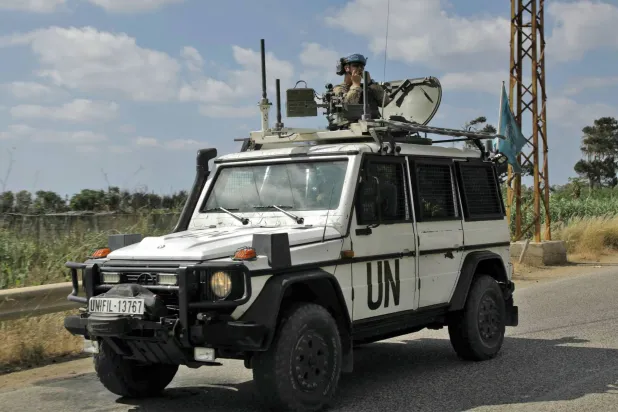
A US military delegation will soon arrive in Beirut to coordinate with the Lebanese army and determine the mechanism for implementing buffer zones on the ground, amid US-Israeli differences over the withdrawal of the Israeli army from occupied Lebanese territories, a demand that Lebanese President Joseph Aoun will carry to Washington during his meeting with US President Donald Trump.
Aoun discussed with US Ambassador to Beirut Michel Aissa, on Thursday, his official visit to the United States at the invitation of President Donald Trump, as well as the current situation in Lebanon and the region.
President Joseph Aoun received US Ambassador to Beirut Michel Aissa and discussed with him the official visit that President Aoun will make to the United States at the invitation of US President Donald Trump, in addition to the current situation in Lebanon and the region. During the meeting, President Aoun stressed the need to consolidate the ceasefire... pic.twitter.com/3OcxxjDJWF
— Lebanese Presidency (@LBpresidency) July 9, 2026
During the meeting, Aoun stressed the need to consolidate the ceasefire in the south and pressure Israel to halt military operations and comply with the framework formula announced at the end of the Lebanese-American-Israeli negotiations in Washington. The President also emphasized the need to stop the shelling, demolitions, and bulldozing carried out by Israeli forces in a number of occupied towns and villages.
US Ambassador
For his part, Ambassador Aissa explained after the meeting that 'President Aoun's visit to Washington is of particular importance at this precise moment and reflects the extent of interest that President Trump places on Lebanon and his efforts to achieve security and stability there and end the suffering of its people.'
Responding to a question about the upcoming meeting in Rome on July 14 and 15, Ambassador Aissa clarified that moving the meeting between the Lebanese, American, and Israeli delegations to the Italian capital is solely for technical reasons related to facilitating the travel of ambassadors and delegation members, noting that the Rome meeting is organizational and executive in nature regarding what was stated in the framework formula, particularly concerning the formation of specialized working groups tasked with implementing the arrangements agreed upon in Washington that may require legal or technical experts depending on the topics under discussion.
Ambassador Aissa affirmed that what will take place in Rome is a continuation of what was agreed upon in Washington, indicating that several meetings will be held in the Italian capital or elsewhere to follow up on implementation according to the phases to be agreed upon.
Buffer Zones
Regarding the start date of work in the buffer zones specified in the Washington negotiations, Ambassador Aissa explained that preparations are underway to implement what was agreed upon concerning the buffer zones, and that a US military delegation will arrive in Beirut within days to coordinate and determine the mechanism for implementation on the ground; it is essential to avoid any vacuum upon the withdrawal of Israeli forces from the designated area, and based on the results of the coordination meetings, the start date for implementation on the ground will be set.
A Lebanese woman returning from displacement to the beach of the city of Tyre in southern Lebanon (Reuters)
The US Ambassador met with Lebanese Prime Minister Nawaf Salam, where they discussed the implementation of the tripartite framework, particularly regarding the start of the Israeli withdrawal from the buffer zones, in preparation for the deployment of the Lebanese army there.
He also met with Speaker of Parliament Nabih Berri, and they reviewed together the general situation and political and field developments. The Lebanese Parliament presidency reported that Berri reiterated to Aissa the question about consolidating the ceasefire, Israeli compliance with it, and the steps of withdrawal from Lebanon to the international borders.
Israeli insistence on staying
In contrast to Lebanese demands and US support for Lebanon regarding the Israeli withdrawal from occupied territories, Israel insists on continuing the occupation, which reflects a divergence with Washington and Lebanon on this point.
Israeli Defense Minister Israel Katz responded to a statement by US President Donald Trump, in which he said he believes Israel will withdraw from Lebanon under the agreements, writing: 'We did not ask permission from any party to enter Lebanon, and we do not need permission to stay there.'
The Israeli newspaper Yedioth Ahronoth reported on Thursday that Katz said: 'We have the right and duty to protect the residents of the Galilee and Israeli citizens from the threats of Hezbollah, the jihadist terrorist organization that seeks to destroy the State of Israel,' according to the German news agency.
He added: 'As I and Prime Minister Benjamin Netanyahu have made clear: We will continue to remain in the security zone in Lebanon, and we will operate from within it as necessary, until Hezbollah is disarmed throughout Lebanon and the threat to northern residents is removed.'
After US President Donald Trump extended an official invitation to his Lebanese counterpart Joseph Aoun to visit Washington and meet with him at the White House on July 21, he revealed that he discussed with Israeli Prime Minister Benjamin Netanyahu the issue of the withdrawal of Israeli forces from Lebanon, and that it would happen.
During remarks on the sidelines of the NATO summit held in Ankara, Trump expressed his belief that Israel would withdraw its forces from southern Lebanon, revealing that he discussed the withdrawal with Netanyahu. He said: 'Yes, I think they will do that. I think they want to. So; we have an agreement with Israel and Lebanon. Yes, they will withdraw. And I think things will go well.'
Original source: Asharq Al-Awsat



Comments (0)
Be the first to comment.