Washington and Tehran on the Brink of All-Out War Over the Strait of Hormuz

The US-Iranian crisis is heading towards a dangerous turn, after the US Central Command (CENTCOM) carried out three consecutive rounds of strikes, hitting more than 300 targets inside Iranian territory, in an indication of the near-total collapse of the memorandum of understanding previously signed between the two sides.
Military, economic, and psychological messages
Iran affairs expert Shadi Diab believes that the US escalation carries multiple dimensions, primarily military, in addition to targeting any paths Iran might consider using to circumvent the economic losses it has incurred.
He explains that through this escalation, Washington aimed to block any partial opening that Tehran was pursuing independently of a comprehensive solution.
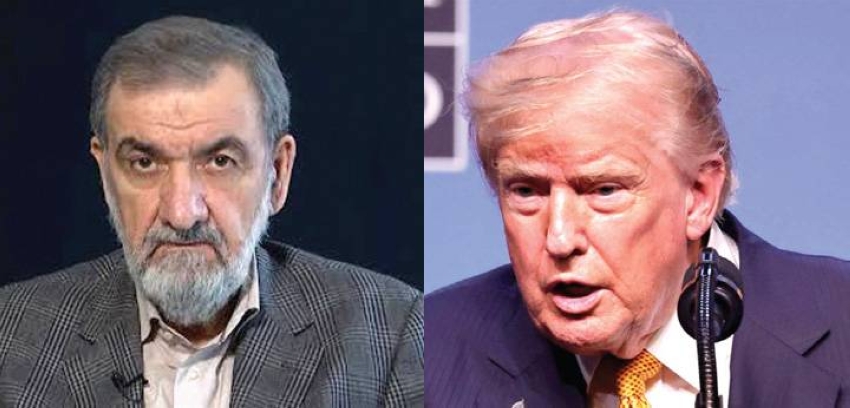
He also points to a personal dimension in the stance of US President Donald Trump, who sent a firm message to the Iranian interior that threats directed at him will not be silenced, and the response will be preemptive.
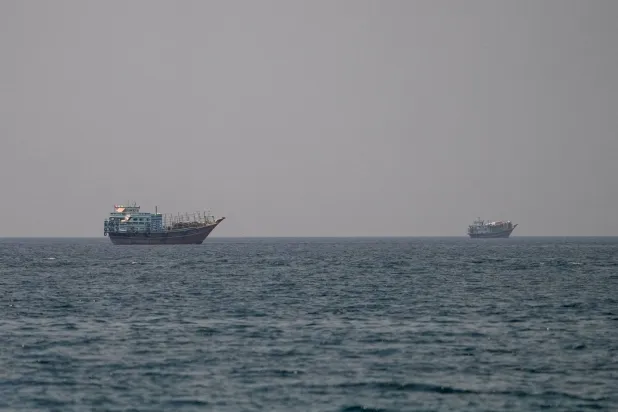
Diab considers that the provocation was mutual; Iran targeted commercial vessels days ago without apparently realizing the magnitude of the consequences, while Washington escalated to send deterrence messages to the Iranian regime.
Diab stresses that neither party has a genuine will to quickly return to the negotiating table, as each tries to consolidate its positions first.
He doubts Tehran's ability to justify its internal escalation, considering that its resort to what he describes as 'piracy' reflects that it has run out of options.
He also notes the contradiction in media narratives about the recent Oman negotiations, and a statement by the Iranian Supreme Leader calling for revenge, which according to Diab gave 'legitimacy' to the escalation initiated by Iran.
He believes that targeting Oman's Musandam Governorate raises serious questions about Tehran's logic in dealing with neighboring countries, calling on regional states to unify their positions and deal with the Iranian negotiator more firmly, instead of allowing him to maneuver after each round of negotiations.
In contrast, Emad Abshnas, editor-in-chief of Iran Diplomatic, believes that Iran expected the US response and was prepared for it, and that its main message is that it will not allow ships to cross the Strait of Hormuz without coordination with it, and that it is ready to return to all-out war if necessary.
Abshnas accuses Washington of not fulfilling its commitments under the framework understanding, asserting that Iran does not need radars to monitor ships passing through the geographically narrow strait, that US military action will not achieve results, and that the only solution is the diplomatic and peaceful path.
Related News
From another angle, political researcher Jafar Salman describes what is happening as a continuation of the Iranian escalation approach that has not achieved strategic gains previously, stressing that Gulf Cooperation Council states fundamentally reject war and reject placing the Strait of Hormuz under Iranian administration in violation of international law.
Salman sees that the opening of the Omani corridor legally stripped Iran of its last card, prompting it to resort to force to impose a new reality, expressing his belief that it will not succeed in that and will eventually be forced to concede, as it did with previous 'no's'.
Salman adds that the Iranian regime has not learned the lessons from its dealings with US President Donald Trump, who previously carried out his threats with precise timing in past negotiations, warning that the continuation of the war and the expansion of the parties involved could lead to the military overthrow of the regime, something he describes as 'costly but possible.'
He points out that the US goal is to raise the cost of targeting ships for Iran to the point of pushing it to seriously consider negotiations, not to destroy its full ability to threaten navigation.
As for Fadi Hilani, director of the Middle East program at the National Council on US-Arab Relations, he believes that the memorandum of understanding was 'stillborn' and is now in the 'ICU'.
He noted that the gradual increase in the number of targets across the three rounds (80, then 90, then 140 targets) carries US messages at three levels: leveraging military superiority to prevent Iran from clinging to the Strait of Hormuz as a bargaining chip, balancing military firmness with diplomatic channels that remain partially open, and holding the entire Iranian regime responsible for any disruption to navigation, regardless of which internal faction is responsible.
Hilani affirms that swapping the Strait of Hormuz for the nuclear file is not on the table for the US, according to what Secretary of State Marco Rubio conveyed to Gulf states, stressing that Washington does not abandon its strategic goals.
He points out that the United States is pursuing a policy of 'blinding' Iran's surveillance capabilities by targeting radars and drones, in parallel with working with Oman and the International Maritime Organization to route ships through alternative corridors, in addition to having additional escalatory options such as a naval blockade that has not yet been imposed.
Hilani considers that Iran has not complied with any clause of the framework understanding despite Washington's commitment to lifting the blockade and suspending sanctions, questioning the legitimacy of Tehran's talk about international law while it funds armed militias in several countries without their consent.
Related News
Original source: Sky News Arabia


Comments (0)
Be the first to comment.