Who Revived the Houthis?

Hamoud Abu Talib
Who Revived the Houthis?
July 8, 2026 - 00:03 | Last updated July 8, 2026 - 00:03
Follow Okaz channel on WhatsApp
It is strange and suspicious that the Houthi group issued its latest statement, which included threats of escalation at this time, when US-Iranian negotiations are still ongoing, for which a memorandum of understanding was previously agreed upon, setting sixty days to discuss details for the possibility of reaching a final agreement.
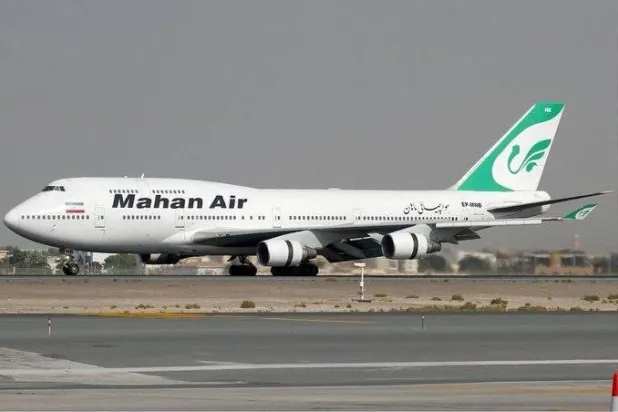
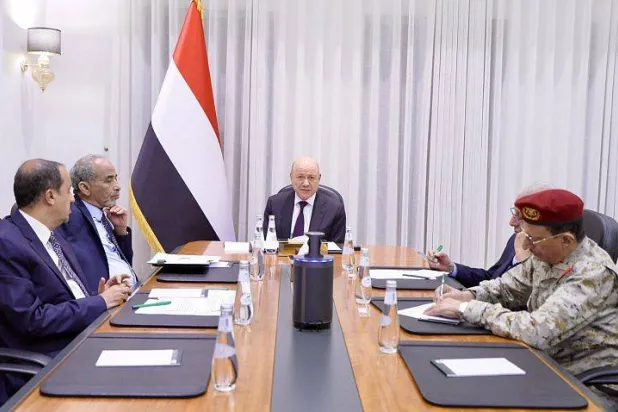
Coinciding with the Houthi threat, an Iranian plane arrived in Sanaa to transport a Houthi delegation to Iran to participate in the funeral of the former supreme leader, but this event has other dangerous dimensions that must be considered. The breach of the embargo imposed on the Houthis by the arrival of an Iranian plane, and allowing Iran to send its plane, which turned out to have carried Iranian military and security experts specialized in developing missiles and drones, along with electronic technologies and communication devices for command and control systems, in addition to monitoring the repeated shutdown of the plane's tracking system over Yemeni airspace, according to Yemeni President Rashad al-Alimi, who described the flight as 'a highly dangerous qualitative development, a blatant violation of Yemeni sovereignty, and a challenge to the international order,' and called for an independent international investigation and tightening sanctions on the Houthi group. All these facts raise disturbing questions about leniency towards the Houthis, or more precisely, the revival of the line between them and the Iranian regime and allowing them military support in this critical phase that the region is still experiencing after the US-Israeli/Iranian war.
There have been and still are questions regarding the file of Iranian proxies in the anticipated agreement between the US and Iran. Regarding Hezbollah, due to its direct contact with Israel and its geostrategic importance to Iran, its presence in initial or subsequent negotiations might be understandable to some extent. But did the US turn a blind eye to the Houthi group as a concession to Iran in exchange for some compromises on Hezbollah? And is the permission for an Iranian plane carrying military equipment to land in Sanaa evidence pointing to this possibility, and did it encourage the Houthi to resume its media rhetoric of threats after a long period of silence?
The statement issued by the official spokesman of the Coalition to Restore Legitimacy was very strict and very clear in response to the Houthi rhetoric. The Kingdom will not be able to stand idly by if its security is tampered with, and it possesses military superiority and the legal right to protect its borders and deter any attempt at aggression in any form. It has been and remains a sponsor of peace in Yemen and a caller for the Houthi faction to engage in a peaceful Yemeni process as a political component, not as a group that extends its control over Yemen and imposes a fait accompli. Here, it is necessary to address the American side, which is now engaged in negotiations with Iran to reach a peace agreement, that it is not right to end up with a flawed, distorted, and incomplete peace equation. The Houthi faction, which threatens its neighbors and threatens the most important waterways in the Arabian Sea, Bab el-Mandeb, and the Red Sea, must not, should not, and cannot be a concession to Iran in exchange for other compromises that may benefit only Israel and the US. This is a grave strategic mistake that will leave the region in a state of tension and unrest that is not in the interest of anyone, not even the US-Israeli-Iranian trio.
Original source: Okaz


Comments (0)
Be the first to comment.