Why fears are growing that Sudan’s El-Obeid could become the next El-Fasher
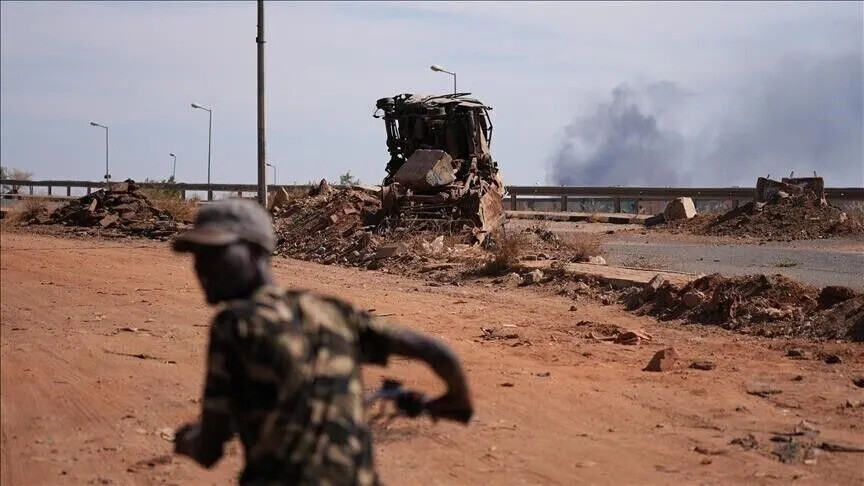
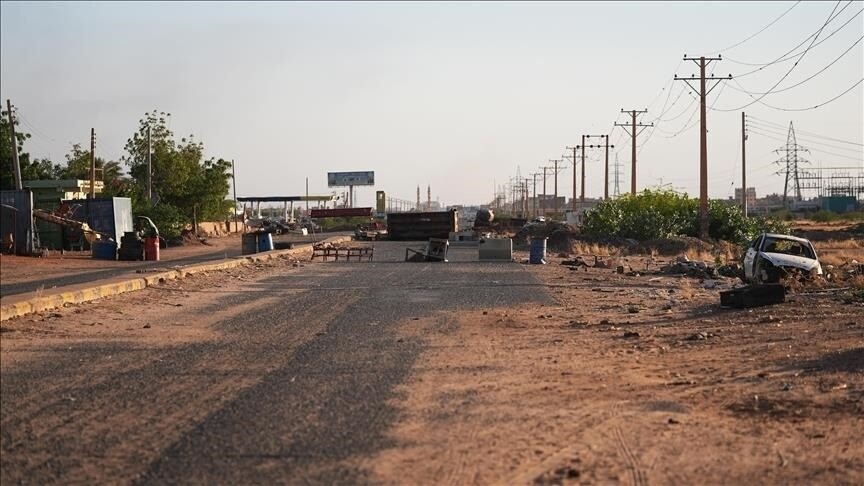
LONDON: El-Obeid, once a bustling crossroads linking Darfur, Kordofan, and central Sudan, is now being gradually encircled by the Rapid Support Forces in a tightening siege that threatens to echo the horrors of El-Fasher.
The conflict, which erupted in April 2023 between the Sudanese Armed Forces and the Rapid Support Forces, has already triggered one of the world's worst humanitarian crises.
Urgent warnings escalated on Wednesday as the International Criminal Court briefed the UN Security Council that Sudan faces imminent mass atrocities, calling on member states to act before history repeats itself.
“We cannot say we did not know,” said Nazhat Khan, the ICC’s deputy prosecutor. “It is for this council and all states to act now, to prevent further atrocities.”
Echoing the UN Human Rights Office, she warned that El-Obeid, in North Kordofan, could become the next site of grave international crimes as fears mount of an RSF offensive.
Sudan’s war began in April 2023, when fighting erupted between the RSF, led by Mohamed Hamdan Dagalo, known as Hemedti, and the Sudanese Armed Forces under Gen. Abdel Fattah Al-Burhan after months of tensions following the 2021 coup.

The conflict has since displaced more than 14 million people, including 4.5 million over international borders, and left 33.7 million — two-thirds of the population — in need of humanitarian aid, according to the International Rescue Committee.
Analysts still cannot determine the true death toll, with estimates ranging from about 61,000 in Khartoum state alone during the war’s first 14 months to far higher nationwide totals in other assessments.
Despite the scale of the crisis, analysts note that Sudan has largely fallen off the international diplomatic agenda. Yet fears of a repeat of the atrocities in El-Fasher in October 2025 are now forcing renewed attention from global institutions.
“The situation in El-Obeid is very bad,” Dr. Eva Khair, founder and director of the Sudan Global Consortium Group, told Arab News. “Funerals have been targeted, fuel stations, medical facilities — they (the RSF) are really squeezing the life out of El-Obeid.”
Known locally as the “Bride of the Sands,” El-Obeid sits on the edge of the desert along a key route linking Darfur, Kordofan, and central Sudan.

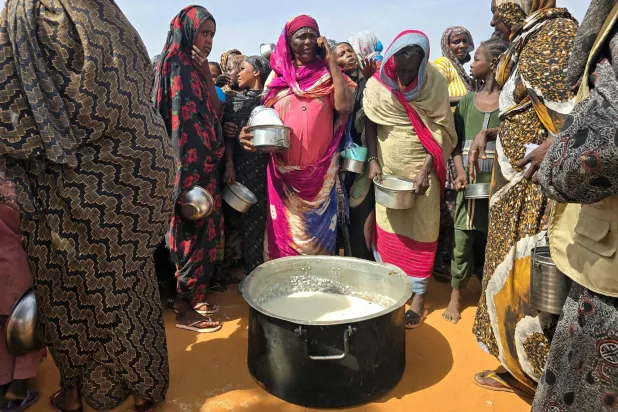
Sudanese women gather for a hot meal in al-Rahmaniyah camp for displaced people, near the city of El-Obeid in the southern Kordofan region on July 7, 2026. (AFP)
Long a trading center for gum arabic, livestock, and agricultural goods, it is one of Sudan’s most important commercial hubs and a vital logistics center for both military operations and humanitarian aid.
The city is also crossed by a pipeline carrying South Sudanese oil north to Port Sudan, adding to its strategic importance.
Since government forces retook Khartoum in March 2025 and fighting shifted west across Kordofan and Darfur, the RSF has steadily increased pressure on SAF-held El-Obeid.

This image grab taken from handout video footage released on Sudan's paramilitary Rapid Support Forces (RSF) Telegram account on October 26, 2025, shows RSF nighters holding weapons and celebrating in the streets of El-Fasher in Sudan's Darfur. (AFP)
With movement restricted, essential services under attack, and humanitarian access severely limited, civilians in El-Obeid and surrounding areas face growing danger as drone strikes intensify and RSF forces close in.
Khair said the RSF appears to be trying to “strangle” the city rather than storm it.
“We’re not using that language (of siege) at the moment because there isn’t enough data to support that,” she said. “But it is an embattled place with drone strikes almost daily, which means essentially starving the population and weakening SAF’s control and ability to provide services and maintain a presence there.”
Analysts say the pattern resembles the RSF’s campaign against El-Fasher, which fell in late 2025 after an 18-month siege. UN investigators and rights groups later concluded that mass killings, gang rapes, and deliberate starvation there amounted to genocide and crimes against humanity.

Khair cautioned, however, that the comparison has limits.
“There isn’t enough to support that it would become another El-Fasher,” she said.
“The racial and ethnic dimensions of what happened there — and what happened in El-Geneina before that — are just not the same in El-Obeid. But the risk to civilians is still of massacre proportions.”
Genocide Watch, an advocacy group focused on atrocity prevention, issued a genocide emergency alert for the city on Wednesday, warning of the risk of an impending massacre.
As fighting intensifies and services come under increasing pressure, some civilians are trying to flee while they still can. Medecins Sans Frontieres said buses are still running and the road remains open, but many people cannot afford to leave, while others fear being struck by drones on the main route out.
“El-Obeid matters not for the pipeline beneath it, but for the half-million lives above it,” Amgad Fareid Eltayeb, executive director of Fikra for Studies and Development, a Sudanese policy institute, told Arab News.
A political and foreign relations adviser to Sudan’s Transitional Sovereignty Council, Eltayeb accused the international community of issuing statements instead of taking meaningful action.
“It (the UN) issues the statement, convenes the session, passes the motion, and mistakes the sound of its own concern for the substance of action,” he said. “By dressing paralysis as prudence and equivalence as fairness, it is helping to enable it.”
Observers say foreign support has helped prolong Sudan’s war by keeping both sides strong enough to fight, but too weak to win.
In late June, rights groups called on the ICC to investigate foreign powers for their alleged complicity in atrocities in Darfur.
In November 2025, Secretary of State Marco Rubio said the US knew who was supplying the RSF and that “pressure is being applied to the relevant parties.”
The European Parliament has also moved to restrict Sudan’s gold trade, including the use of mercury and cyanide in mining, as the UN warns that control of resources and the “war economy” is helping sustain the conflict.
“Those are good steps,” Khair said. “But what we need to see is that the UN does the job that it’s supposed to do and is honest and full-throated in its condemnation and naming the sort of actors involved.”
She said the international response must include enforcing — not simply extending — the arms embargo on Darfur, which has been in place since 2004.
“The bureaucratic process of extending the arms embargo is not intervention, that is not atrocity prevention in the direct sense,” she said.
“What we need to see is enforcement of the current embargo on Darfur as a deterrent to show they mean business, to show that the international community is serious when it decrees something from the UN Security Council.”
For Khair, the failure to stop atrocities in El-Fasher has shown how little deterrence exists.
“The RSF seems untouchable,” she said.
The slow international response has also given the RSF more room to advance its political project, she warned. In 2025, the group declared a rival government in areas under its control in an effort to bolster its claim to legitimacy.
She warned that this could push Sudan toward a de facto partition similar to Libya’s, where rival administrations have remained locked in stalemate since the 2011 overthrow of Muammar Qaddafi.
Eltayeb rejected the suggestion that Sudan could split yet again.
“The RSF does not have a parallel government. It has a stage set,” he said.
“What was proclaimed in Nyala is not a state but a performance — mercenaries in neckties reciting the vocabulary of governance to borrow a legitimacy they do not possess and cannot confer upon themselves.”
He argued that accepting such a framing would only benefit the RSF.
“There is a state, however wounded, and there is an armed enterprise of predation wearing the costume of one,” he said.
“The threat to Sudan’s unity has never been a rival state with a rival vision. It is the attempt to launder a looting operation into statehood, and to persuade the world to call it by that name.”

El-Obeid's strategic location makes it a critical lifeline for humanitarian aid deliveries to Darfur and other regions. If the city falls to the RSF, it could cut off supply routes and exacerbate the already catastrophic displacement crisis. The international community's response—or lack thereof—will be decisive in determining whether history repeats itself in Sudan.
Original source: Arab News

Comments (0)
Be the first to comment.