2026 World Cup: FIFA Confirms Validity of Bellingham's Goal Against Norway

Ball sensor did not detect contact with overhead camera cable before equalizer.
Istanbul / Ahmed Hassan / Anadolu
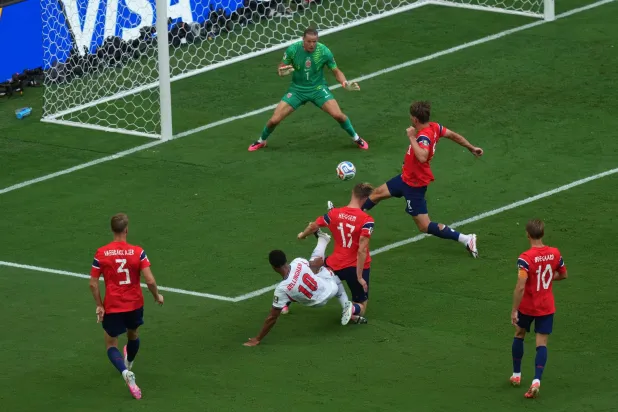
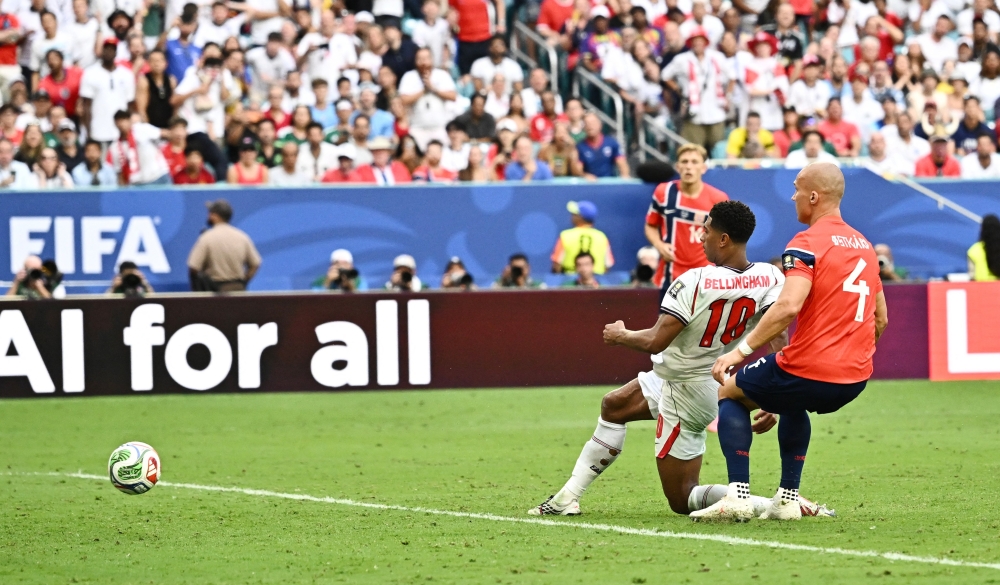
The International Football Association (FIFA) confirmed on Sunday the validity of the equalizing goal scored by Jude Bellingham in England's 2-1 victory over Norway in the quarter-finals of the 2026 World Cup.
The association denied in a statement claims that the ball hit the overhead camera cable at the start of the attack that led to the goal.
It explained that the sensor inside the ball did not record any peak in its pulse while in the air before England's goal in the 45+2 minute.
It added that there is no evidence that the ball touched the overhead cable or changed its path as a result.
Norwegian players protested to French referee Clement Turpin after Bellingham scored the 1-1 equalizer in the second minute of first-half stoppage time at Miami Stadium in the US state of Florida.
Footage of the goal kick taken by Norwegian goalkeeper Orjan Nyland at the start of the attack showed that the ball's trajectory appeared to suddenly change before landing in front of England midfielder Elliot Anderson.
Anderson passed the ball to Anthony Gordon, who then passed it to Bellingham, who found the net.
According to the laws of the game, contact between the ball and the overhead cable would have resulted in a stoppage of play and a drop ball restart.
The anger of the Norwegian players increased after a goal scored by Torbjørn Heggem with a header in the second half was disallowed following a VAR review.
The review spotted Erling Haaland pushing Elliot Anderson during a corner kick.
The sensor inside the ball is being used for the first time at the 2026 World Cup.
This technology previously contributed to disallowing a late equalizer for Croatia during their 2-1 loss to Portugal in the Round of 32, after detecting that one of the forwards touched the ball with his hair, resulting in an offside call.
Original source: Anadolu Agency


Comments (0)
Be the first to comment.