2026 World Cup: Football as a Mirror of the International Order

An analysis of how the 2026 World Cup transcended sport to become a mirror of global power dynamics, political interference, and soft power struggles.
In international relations, the value of events is measured not only by their mass appeal but also by their ability to reveal the nature of power balances. From this perspective, the 2026 World Cup surpassed being just an exceptional sports tournament due to its expansion to 48 teams or its joint organization by the United States, Canada, and Mexico, turning into an open political laboratory that showed how soft power intertwines with political influence, and how traditional boundaries between sports and diplomacy are receding.
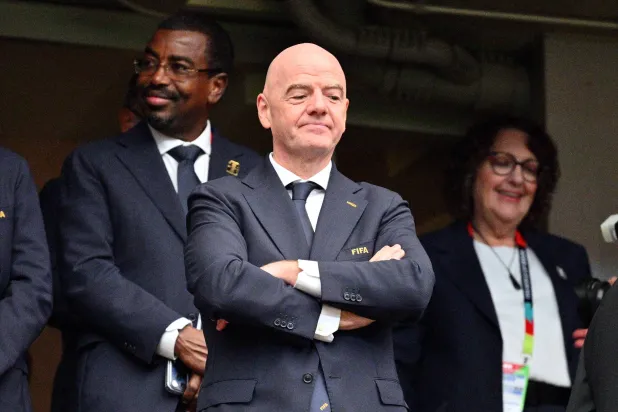
Before the tournament began, FIFA President Gianni Infantino was keen to repeat his usual message calling for 'relaxation' and enjoyment of the tournament, and for keeping politics away from football. However, the course of the tournament moved in the complete opposite direction; the higher the ceiling of attempts to neutralize politics, the more facts emerged confirming its presence at the heart of the event.
A Clear Test
It can be said that the 2026 World Cup provided the clearest test of the concept of independence for international sports institutions. The case involving American striker Folarin Balogun went beyond the limits of sports discipline to a direct test of FIFA's ability to resist political pressure. US President Donald Trump's announcement of his personal intervention, his call to the FIFA president, and then his public talk about the success of that intervention, moved the case from the scope of regulations to that of influence. The question asked globally became about the ability of the sports institution to apply its rules when they intersect with the interests of the host country.
This incident carried a significance beyond the player himself. FIFA, which for decades had been strict about any government interference in the affairs of national federations, found itself facing interference from the president of the world's most powerful country, without resulting in an institutional crisis commensurate with the traditional rhetoric it adopts regarding sports independence, despite opposing statements from continental federations. This paradox revived the old debate about selectivity in the application of standards within international organizations.
Policies of the Host
The tournament also revealed that the host country not only hosts the sporting event but also imposes part of its political and legal environment on it. US immigration policies became one of the most prominent issues during the competition, following repeated complaints about delays in the entry of fans, journalists, and sports officials, along with human rights criticisms regarding inspection, interrogation, and deportation procedures. Here, the debate shifted from the quality of organization to a deeper question about the ability of global tournaments to maintain their inclusive character when subjected to a political system with strict security considerations.
This scene was reinforced with the Iranian team, whose participation became linked to security and political calculations more than to technical aspects. Regional developments imposed themselves on the team's arrangements and movements, and its presence in the tournament became an extension of the prevailing regional balances in the Middle East.
Soft Power
From another angle, the tournament proved that regional conflicts are now capable of redefining the image of national teams. The public support provided by Israeli Prime Minister Benjamin Netanyahu to the Argentine team, based on the close alliance with Argentine President Javier Milei, turned the team into a party in a global political debate. The competition moved from the green rectangle to the digital space, where campaigns spread linking the team's performance to the Argentine government's positions on the war in Gaza and relations with Israel. Thus, the identity of the team, in the eyes of large segments of public opinion, became linked to the choices of its government's foreign policy more than to its sporting achievements.
This development reflects an important shift in the concept of soft power. Countries are no longer only using major tournaments to improve their image, but their political positions are now able to reshape the image of their teams as well. Football has thus become one of the arenas of international reputation management, subject to the same rules governing the struggle for political influence.
In the same context, old accusations regarding favoritism towards Argentina and Lionel Messi returned to the forefront on a wider scale. The debate over refereeing decisions, match schedules, and the management of video technology did not remain within the sporting framework but turned into a political narrative about centers of influence within FIFA and a tournament subject to calculations beyond competitive fairness. Regardless of the validity of those accusations, their wide spread reveals a crisis of trust in the organizing institutions more than it reveals details of the refereeing incidents themselves.
Regional Conflicts
The Argentina-England encounter also revived the issue of the Falkland Islands (Islas Malvinas), when post-match celebrations turned into a platform to reproduce Argentine sovereignty rhetoric. Within hours, a conflict that occurred in 1982 returned to the forefront of global debate, a development confirming that sports tournaments have become a space for reactivating national memory, and that sports symbols possess an exceptional ability to summon files that were supposed to remain in the archives of history.
The broader picture reveals that the 2026 World Cup transcended being a global sporting event to become a direct reflection of the nature of the current international system. The world is experiencing a phase in which multilateral institutions are retreating in the face of rising national considerations, the influence of populism is expanding, and competition to shape the media narrative is increasing. All these trends were reflected within the tournament in a way that is hard to ignore.
Perhaps the most influential development is the role played by social media platforms. In previous tournaments, governments and major media institutions monopolized the production of the narrative. But in the 2026 edition, millions of accounts participated in shaping narratives and interpreting events, turning any refereeing decision or political statement into an international crisis within minutes. Thus, managing the public image became part of managing the tournament itself.
Football and Politics
Historically, football reflected the political mood of countries. But in the 2026 World Cup, it became one of the tools for shaping that mood. Therefore, the tournament can be viewed as an indicator of deeper transformations within the international system, where sports intersect with security, diplomacy with media, and national identity with soft power, in a single space where governments, public opinion, and international institutions compete to produce the most influential narrative.
From this perspective, it is difficult to consider what the 2026 World Cup witnessed as a series of separate events. The overall picture indicates the transition of major sports tournaments to a new stage, where the sports arena becomes an extension of the global political field, and where competition for the cup turns into a parallel competition for influence, legitimacy, and the ability to shape the world's perception.
US President Donald Trump and FIFA President during the closing of the 2026 World Cup (AFP)
Exaggerated Israeli sympathy with Argentina turned fans against the 'Tango' (Agencies)
The Iranian team complained of discrimination and mistreatment in the tournament based on political factors (Agencies)
Trump's intervention to cancel Folarin Balogun's red card makes it the most controversial case (Agencies)
The cancellation of Somali referee Omar Artan's visa is one of the issues that opened the World Cup (Agencies)
Original source: Al-Riyadh


Comments (0)
Be the first to comment.