2026 World Cup: Messi aims for second title at place where he faced darkest moments
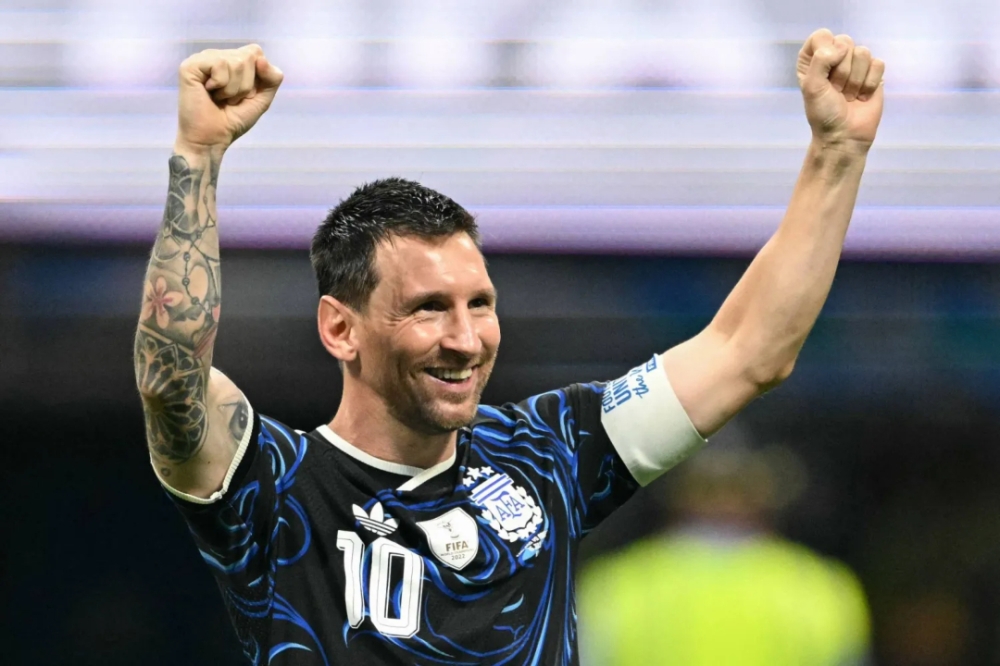
If Lionel Messi leads Argentina to global glory again on Sunday by beating Spain in the World Cup final at MetLife Stadium in the suburbs of New York, he could end any debate about being the greatest player in the history of the game, in the place where he heartbreakingly announced the end of his international career a decade ago.
Messi turned 29 in June 2016, and was already regarded as one of the greatest players of all time.
Related news
He had already won the Ballon d'Or five times, and led Barcelona to the Champions League title the previous year, the fourth time he lifted that trophy. But his stunning club success was not matched with the national team, as he suffered the bitterness of three defeats in major tournament finals with Argentina. The first came against Brazil in the 2007 Copa America final. Between that loss and the 2014 final, Argentina exited the World Cup twice in the quarterfinals, and also left the 2011 Copa America that they hosted in the quarterfinals against Uruguay. Messi led Argentina to the 2014 World Cup final, but the campaign ended with a loss to Germany at the Maracanã, then a penalty shootout loss to host Chile in the Copa America final the following year added to his suffering. So he headed to the centennial Copa America in 2016 in the United States determined to finally win a major title with his country, which reached the final after five wins in five matches and scoring 18 goals. But Chile stood in his way again in front of a packed stadium at MetLife, and the result was exactly the same: a new goalless draw and another penalty shootout defeat, with Messi this time missing his kick.
- Heartbreak -
Messi, who had already surpassed 100 international caps, was devastated. His teammate Sergio Aguero said he had "never seen him in such a state" inside the dressing room after the match. Messi told journalists, "For me, it's over with the national team." He added, "I did everything I could, I played in four finals, and it hurts not to be a champion." Argentina sank into a gloomy atmosphere in the depths of winter in South America. Diego Maradona was among the first to urge Messi to reverse his decision, telling La Nacion: "He must stay because he still has many years to play." The country held its breath. Six weeks later, Messi changed his mind. He said, "Many things crossed my mind on the night of the final, and I seriously thought about retiring, but my love for my country and this shirt is much greater than that."
The second half of his international career could not have been more different from what came before. The 2018 World Cup ended with a round of 16 exit to eventual champion France, but the appointment of Lionel Scaloni as coach after that led to a resurgence of Argentine football.
The loss to host Brazil in the 2019 Copa America semifinal marked the beginning of a new phase, before Argentina returned to Brazil two years later for another edition of the continental tournament.
- Redemption -
This time, amid the COVID-19 pandemic, the 'Albiceleste' defeated the hosts 1-0 in the final with a goal from Angel Di Maria, securing their first major title in 28 years, while Messi had turned 34.
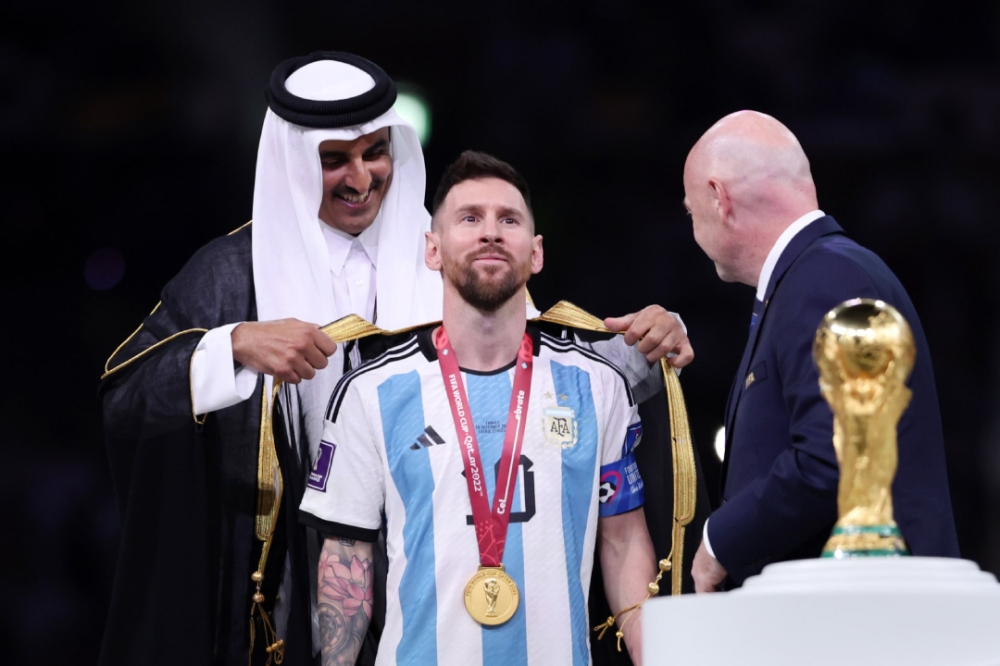
Then came global glory in Qatar in 2022, when Messi led his country to the final and then to a penalty shootout win over France, thus crowning his legendary career.
He said then, "Obviously I would like to end my career with this achievement, and I can't ask for more than that."
But he continued playing, and Scaloni's team kept winning, adding a new Copa America title in 2024, despite Messi leaving injured in the final against Colombia in Miami.
The current World Cup, the sixth of Messi's career, initially seemed like a farewell tour for him, but he clearly showed, even at 39, that he still has a lot to offer.
He inspired his country to a comeback and victory over England in the semifinal, and enters Sunday's final with a chance to win the tournament's Golden Boot.
More importantly, he can win a second World Cup and a fourth title with his national team, in an astonishing redemption story after the tears of 2016.
And if Argentina beats Spain in New Jersey, voices calling on him to continue playing even after entering his fifth decade of life may rise.
The Argentine newspaper Olé quoted Cristian Romero as telling Messi after the win over England: "If we win, I hope you stay for two more years."
Original source: Al-Yaum


Comments (0)
Be the first to comment.