9 Rare Birds Spotted in King Abdulaziz Royal Reserve
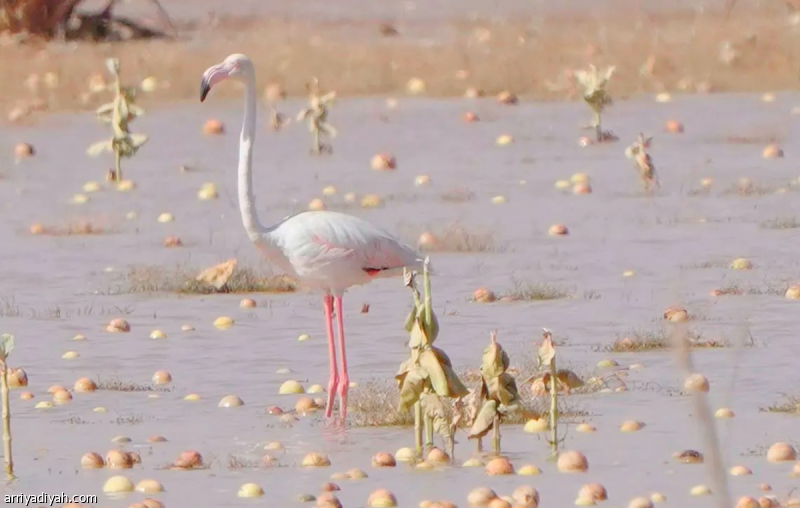
The King Abdulaziz Royal Reserve Development Authority announced a new environmental achievement that reinforces its status as one of the leading national destinations for biodiversity conservation, by documenting the first confirmed sighting of nine species of migratory and rare birds within the reserve's boundaries, a scientific record that represents a significant addition to the avian records of Saudi Arabia and the Arabian Peninsula. Abdulaziz Al-Freih, official spokesperson for the King Abdulaziz Royal Reserve Development Authority, revealed that these species were documented through a comprehensive field survey that lasted a full year, carried out by a joint research team comprising specialists from the Authority and King Saud University, relying on a precise scientific methodology known as the 'regular point count method.' The study monitored birds belonging to five orders and eight taxonomic families, varying among terrestrial, aquatic, and vagrant birds off their usual migration routes. The study results were published in the peer-reviewed international journal 'Check List,' one of the leading scientific periodicals specialized in documenting biodiversity and ornithology data, playing a pivotal role in monitoring rare and vagrant species and updating geographic maps of migration routes. This publication serves as a reference scientific documentation of bird diversity in Saudi Arabia and confirms the quality of joint scientific efforts within the reserve. The list documented for the first time included: the Saker Falcon, Long-eared Owl, Rosy Starling, Yellow-throated Sparrow, Black-headed Bunting, Slender-billed Gull, Eurasian Dotterel, and Spur-winged Plover, in addition to the Greater Flamingo, indicating an environmental diversity reflecting the reserve's ability to attract rare species traveling long distances across the Arabian Peninsula. The field study recorded these results across the reserve's topographic diversity, spanning an area exceeding 28,000 square kilometers, including valleys rich in vegetation, water bodies, and artificial lakes behind dams, which have become vital habitats for migratory birds and contributed to enhancing ecosystem efficiency following improvements due to protection measures and the prevention of overgrazing and poaching. According to the Saudi Press Agency, this discovery extends a series of scientific achievements by the reserve in recent years, culminating in its inclusion on the IUCN Green List, strengthening its status as a national and global platform for environmental research and monitoring, and affirming its role in supporting wildlife conservation and ecosystem sustainability.
Original source: Arriyadiyah





Comments (0)
Be the first to comment.