Al-Shabi: Saudi Team Let Me Down, Tunisia Struggles
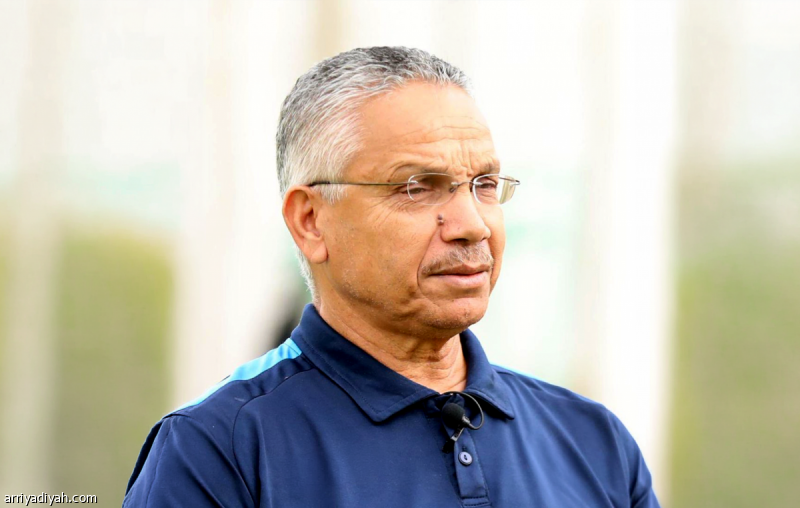
Veteran Tunisian coach Abdelrazek Al-Shabi said that his country's national football team and its Saudi counterpart did not perform at the required level during their recent World Cup participation. He told Al-Riyadiya: 'This is due to several technical and organizational factors that directly affected overall performance, foremost the lack of technical stability, disparity in physical and technical readiness among players, as well as some choices that were not sufficiently successful.' Al-Shabi is one of the experienced Tunisian coaches in Arab football, where he has coaching experience…
Veteran Tunisian coach Abdelrazek Al-Shabi said that his country's national football team and its Saudi counterpart did not perform at the required level during their recent World Cup participation. He told Al-Riyadiya: 'This is due to several technical and organizational factors that directly affected overall performance, foremost the lack of technical stability, disparity in physical and technical readiness among players, as well as some choices that were not sufficiently successful.' Al-Shabi is one of the experienced Tunisian coaches in Arab football, having coached in Tunisia and Saudi Arabia, where he oversaw a number of clubs, most notably Abha, Al-Faisaly, Al-Raed, Al-Hazem, and Al-Tai, giving him extensive experience in assessing Arab football and Gulf leagues. He added: 'The Tunisian team did not perform at the required level; its results were poor and weak on both technical and physical levels, in addition to preparation, planning, and player selection. This problem has become recurrent in Tunisian football in recent years.' He noted that the domestic league in Tunisia is no longer at the required level, whether this season or in previous seasons, attributing this to several reasons, including the financial conditions of clubs and weak infrastructure, especially stadiums that need development and renovation, which affects the quality of competition and player preparation in a way that allows them to reach higher levels. He explained that the player selection process was not always based on precise technical foundations, relying on elements with varying readiness between players who regularly participate in their clubs and others who are substitutes or returning from injuries, pointing out that some interference in technical decisions negatively affects cohesion and stability within the team, compared to previous periods when work was more balanced. Regarding the Saudi team, Al-Shabi said he expected a stronger performance, especially given the significant development in Saudi football in recent years, whether at the league level, infrastructure, or attracting global players, which has clearly raised the pace of competition. He added that this development was supposed to reflect positively on the level of the Saudi player, but it did not appear as required in the tournament, explaining that the lack of regular participation of some players with their clubs due to heavy reliance on foreign players may affect their technical and physical readiness with the national team. He also stressed that technical stability remains a key element in the success of any football project, affirming the need to give the coach sufficient time and confidence to build a homogeneous team whose work extends for several years, not through short intermittent periods. Al-Shabi concluded his remarks by talking about the World Cup, noting that competition has become very strong, stating that the French team is the most stable and high-quality, followed by Morocco, Spain, Portugal, and Egypt, which has ambition and capabilities that qualify it to go far. He pointed out that the Moroccan team remains a prominent model in Arab football after reaching advanced stages in previous editions, with the possibility of surprises in the upcoming rounds.
Original source: Arriyadiyah



Comments (0)
Be the first to comment.