Clash of Argentine Genius and Spanish Philosophy in the Final

The 2026 World Cup final brings together Argentina and Spain in a historic match that blends Lionel Messi's experience with Lamine Yamal's ambition, and a clash between two different football schools to decide the most coveted title in the world.
When Argentina and Spain were supposed to meet in Qatar early this year for the 'Finalissima' between the champions of South America and Europe, it seemed like a mere friendly between two great teams. But the war that erupted after the US-Israeli strikes against Iran canceled the match, postponing their meeting to a bigger stage.
Months after that cancellation, the two teams will not compete for a symbolic cup, but for the most prestigious prize in football.
The 2026 World Cup final in New Jersey not only brings together the best two teams in the tournament, but also presents the world with two completely different schools of understanding the game. Argentina lives on emotion, faith, and the ability to survive no matter the circumstances; Spain built its project on control, calm, and possession, to the point that dominating the game has become part of its identity, not just a playing style.
Perhaps for this reason, the final feels bigger than just a match between South America and Europe. It is a clash between a team that has turned chaos into fuel for victory and another that tries to eliminate chaos altogether by keeping the ball, controlling the tempo, and preventing the opponent from imposing their narrative on the match.
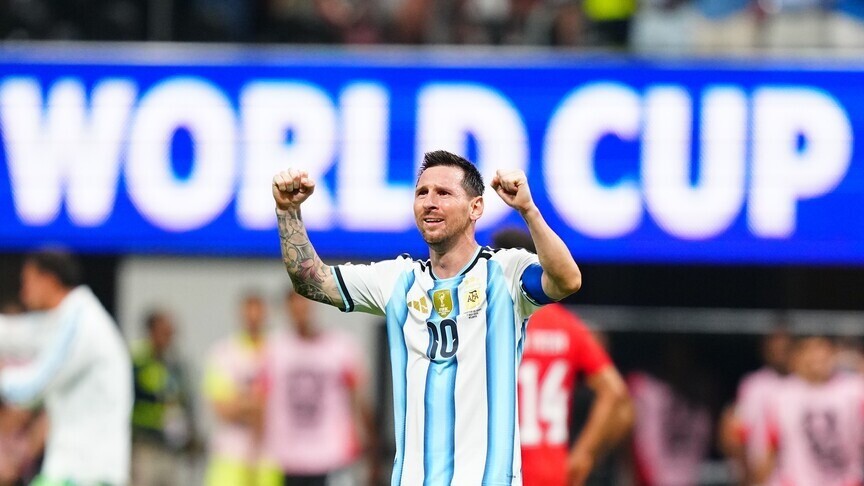
The symbolism of the match is heightened because it could be the final chapter in Lionel Messi's World Cup journey, and at the same time, the start of a new chapter starring Lamine Yamal, the talent who represents the future of Spanish and perhaps world football. Both are among the most important graduates of Barcelona's La Masia academy in its history.
Messi leads Argentina in the title defense journey
Four years ago, Messi finally lifted the trophy at Lusail Stadium in Qatar. That night, which many considered the end of his World Cup story and the completion of his football legacy, he was 35 years old, and reaching another final four years later seemed like a fantasy. But the player who has always defied logic returned, at age 39, to lead Argentina to the final for the second consecutive time.
But this time, the path was not like that of a champion defending his title with ease. On the contrary, the Argentine team seemed to fight at every stage for survival. They needed extra time to overcome Cape Verde, struggled against Egypt, Switzerland, and England, and came through more than one test after looking close to falling, before Messi or one of his teammates found a new way to survive.
Perhaps this edition was more expressive of the character of coach Lionel Scaloni's team. Argentina was not always the best technically, but it was the most capable of enduring difficult moments and the most believing that it could turn events around no matter how complicated the scenario seemed. With 17 players who had previously lifted the trophy in Qatar, experience became a psychological weapon before a technical advantage.
Argentine fans give the team extra strength
Scaloni does not hide that the fans have been a key part of this journey. The Argentine coach believes that seeing an entire nation celebrating until dawn, and Boca Juniors and River Plate fans forgetting their historic rivalry to embrace behind the team, gives the players an extra reason to fight.
He said before the final that this scene 'touches the heart,' emphasizing that the team does not play just for themselves, but for an entire country that lives every match as a national cause. Goalkeeper Emiliano Martínez echoed the same idea when he described the Argentine fans as 'completely crazy,' pointing out that seeing them celebrate in the middle of the night and in the Argentine winter cold makes the players feel they must bring the trophy home no matter the cost.
Spain imposes its dominance with possession philosophy
In contrast, Spain's journey looks completely different. The team that arrived in North America as European champions and bookmakers' top favorites did not need miracles, late comebacks, or dramatic saves. Everything seemed calculated from the start, to the point that many of its matches suggested the earlier rounds were merely a prelude to what was coming.
Read more
Wildfire smoke covers US cities ahead of World Cup final, Trump blames Canada
Messi's exceptional skill knocks out England, leads Argentina to final
Spain reaches World Cup final after beating France
Spain's unbeaten record of 37 consecutive matches sums up the magnitude of the project built by coach Luis de la Fuente since he took charge. This team relies not only on the quality of its players, but on years of joint work. De la Fuente previously coached many of them in youth teams, creating an extraordinary level of harmony that is difficult to build in just a few months.
Under his leadership, Spain has become capable of suffocating opponents through possession, not as an aesthetic goal, but as a means of both defense and attack. Keeping the ball not only gives them the chance to build attacks, but also denies the opponent possession and forces them to chase the ball until they lose their balance.
Lamine Yamal and the symbol of the passing of the torch from Messi
However, this discipline does not come without room for creativity, and the best embodiment is Lamine Yamal. The player who entered the European Championship two years ago at age 16 has since been breaking every age-related record, becoming the most exciting name in Spanish football.
Perhaps the most beautiful irony of the final is that his opponent will be the man he has often been compared to since his debut: Lionel Messi.
The old photo taken 19 years ago at Barcelona, showing Messi bathing the infant Lamine Yamal, has become one of the most famous images in football in recent months. It is no longer just a cute shot from an old advertising campaign; it has become a symbol of the passing of the torch between two generations. The player's father even joked when asked if Messi had given his son his talent, replying, 'And who said it wasn't the other way around?'
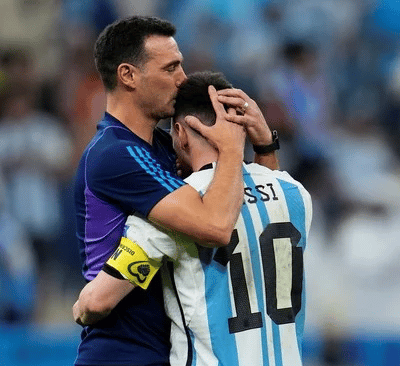
The links between the two teams go beyond this photo. In the technical area, Scaloni faces the man who once oversaw his training in a course at the Spanish Football Federation: Luis de la Fuente. The student and the teacher are now competing for the biggest prize in football, a scene that reflects how paths within the game intersect more than they clash.
Decisive factors in the historic New Jersey final
Despite the magnitude of the occasion, de la Fuente seemed the calmest of all. When asked what made him nervous before the final, he laughed and said that what worried him most was the helicopter ride back to the hotel after the press conference, not the match itself.
This calmness does not seem just a personal trait, but a reflection of the entire Spanish team. The coach insists that reaching the final is an honor in itself, and that his team came to enjoy the occasion, not to consume themselves thinking about its enormity.
Original source: Independent Arabia




Comments (0)
Be the first to comment.