Former Arsenal Manager Arsène Wenger: The Future of Football Begins with Academies, Not Quick Results
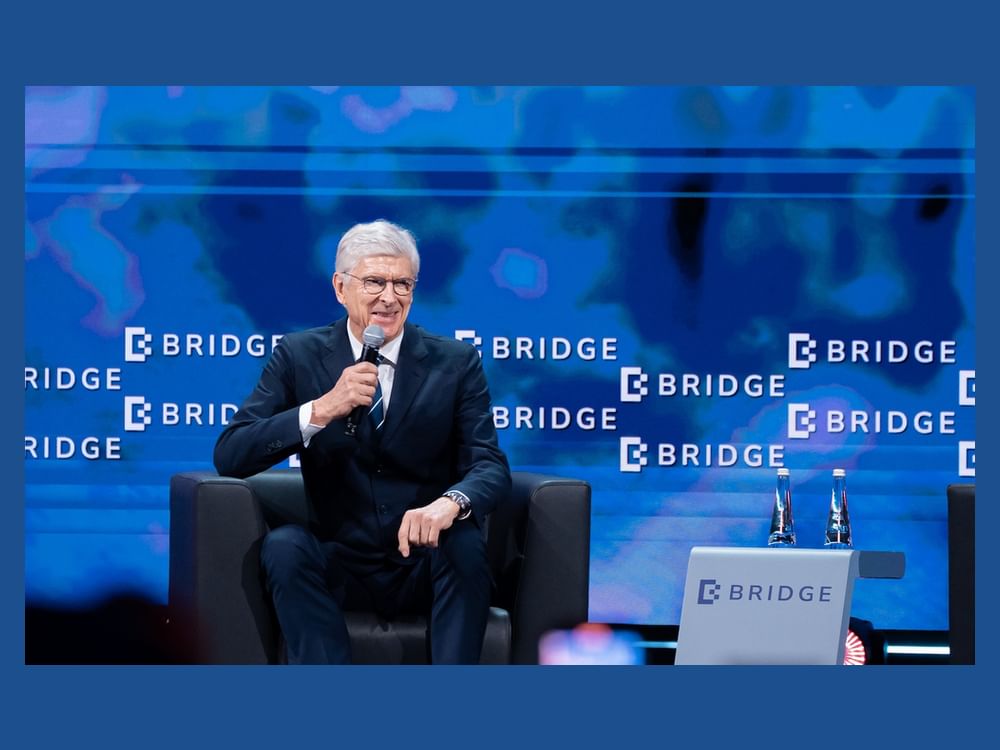
Abu Dhabi, 10 December / WAM / Arsène Wenger, FIFA's Chief of Global Football Development and former Arsenal manager, stressed the importance of developing academies and youth, considering that every football institution needs a long-term plan to reach its full potential, and that focusing only on the short term does not lead to development and growth.
This came during a panel discussion titled 'The Legacy That Tells Our Story', hosted by the Bridge Summit 2025, where Wenger revisited various milestones of his story with football and shared with the summit audience the transformations he experienced as a player, coach, and sports analyst. The session was moderated by media personality Robbie Lyle, founder and CEO of RL Media.
Wenger noted that he always considered his primary mission to present the club as an organized entity with a clear plan, and he sought to be part of this plan that influences the way football is played across Europe. He pointed out that his focus was always on the club's interest, and he never looked at the individual or the career path of players in isolation from the institution as a whole, adding that his commitment to the club was greater than to himself, and that this feeling always drove him to act according to that vision.
Wenger also touched on the pressure that accompanies the coaching profession, noting that it comes from the inability to predict everything and from the constant feeling of lack of control, especially when facing difficulties.
He said: 'Fan expectations make every defeat a kind of insult, and amid the noise and criticism, staying steady becomes difficult. Therefore, I always resorted to extracting the best from the team, while summoning all my ability to focus under pressure.'
Wenger pointed out the influence of money in modern football, especially in the English Premier League, where some clubs spend large sums on players.
Regarding crisis management within teams, he explained that a manager must deal with problems quickly.
He said: 'What amazed me most was that players often knew the faults without telling me, and this taught me that good communication is essential.' He noted that during 22 years of coaching, he never lost more than three consecutive matches, and that every loss pushed him to think about winning the next match, although he believed that a strong desire to win can sometimes lead to haste and increased frustration.
Wenger affirmed that patience is a fundamental value in any coach's career, as he believes in the human factor and that development does not happen at the same pace for everyone. He noted that building trust within a team requires continuous communication and consistency in behavior.
Regarding his current work at FIFA, Wenger explained that many children in the world do not get the opportunity to develop their talents, so he created the academy model that starts with selecting talents from age 12 and training them until age 16 or 17. He noted that the selection of countries is done through a specific formula, and that a technical team is sent to ensure the suitability of conditions before establishing the academy. He clarified that the goal is to reach 60 academies by the end of this year, within a broader plan towards 100.
At the conclusion of his talk, Wenger expressed his conviction that Arsenal is capable of winning the title this year, considering that the team is the best, and that the competition with City is ongoing, but Arsenal has a strong team.
He gave his advice to young coaches, saying: 'You want to win, but build value; because it will last forever.'
Original source: WAM





Comments (0)
Be the first to comment.