From Popular Frenzy to Chaos: How the World Cup Placed FIFA in Crisis?
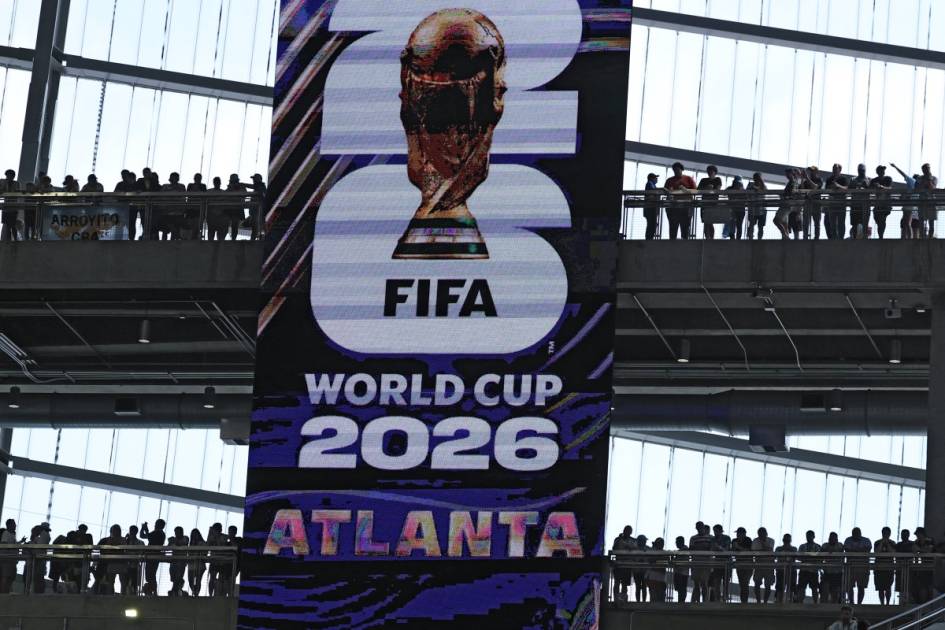
Summary: The excitement of football merged with overwhelming emotions in a World Cup that presented exceptional matches, but refereeing controversy and financial and political considerations cast their shadow over the integrity of the competition, opening a wide door for questioning the tournament's image.
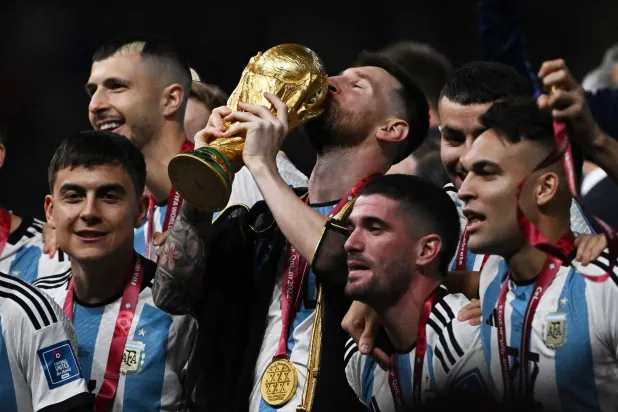
When Lionel Messi was lifted into the air while the Egyptian national team players collapsed on the pitch, the scene seemed to surpass what cinema could offer. Or as they say here, 'prime-time television.'
It was a first-class popular spectacle, and any director would have wished to capture every detail, down to the unique soundscape created by the Argentine fans.
This edition of the World Cup witnessed many similar moments, as the drama was exceptional, pushing emotions to their limits. Just look at the tears shed by Messi and his coach.
Lionel Scaloni said, 'I can't look at you. I'm sorry, I feel overwhelming emotion. What a group of players, my brother, that's all... I can't.'
While Messi's tears seemed more understandable, because this thrilling victory over Egypt carried the weight of the possibility that it could be his last World Cup match, Scaloni is the coach who won the title in the previous edition. And this was just a round of 16 match.
This is not the first time Argentina appears as the most emotionally driven team in the World Cup, but the striking difference this time is that this feeling extended to everyone.
World Cup Drama and Football Quality
Just look at what England went through. Practically, no national team managed to advance quietly without experiencing some kind of chaos, as West Germany did in 1990 or Brazil in 2002.
Even the Colombia vs. Switzerland match seemed different because it was largely calm, as if it were a match from about 20 years ago. In the 2006 World Cup in Germany, the round of 16 saw only 15 goals, the lowest number in the current millennium, compared to 23 goals so far.
In the modern World Cup, players have broken free from the tactical constraints imposed by club football, while the tournament's unique status has driven them to give their utmost.
What has become more evident is that every match truly seems like a national event in every sense, and the open play often reflects the magnitude of accompanying emotions.
We may be living in a golden era in this regard, at least in terms of the quality of the football itself.
Much of what we have seen was truly exceptional. In most World Cup editions over the past 30 years, it was enough to have one match as epic as England's 3-2 win over Mexico. But in this tournament, just two matches later came another epic when Argentina faced Egypt.
Refereeing Controversy and Rising Conspiracy Theories
Naturally, the round of 16 also stirred other emotions, foremost among them resentment over the Folarin Balogun affair. It is unfortunate that the story is defined this way, because the player himself had no role in that blunt political intervention.
Nevertheless, this case has fueled a more worrying sentiment that was supposed to remain marginal, but is clearly expanding.
Egypt coach Hossam Hassan did not hesitate to express that, albeit in a sharper tone than most others.
After expressing anger over several decisions that accompanied his team's honorable loss to Argentina, Hassan said his team 'was wronged.'
He said, 'It's all about money. They want Messi to stay in the tournament. In football, many things happen off the pitch because of interests. What happened was unfair. Egypt deserved to qualify. We were the better team.'
He added, 'We were treated unfairly today. We were wronged. This is my way of expressing and defending my position. I will not watch any other match in this tournament.'
Hassan is not alone in thinking this way; officials from major European clubs told The Independent that many of these aspects in matches have become off-putting.
The disallowed goal by Mustafa Zico was suspicious because the preceding foul seemed minor and occurred far from the dangerous area, and the decision went against the refereeing approach that prevailed in this tournament, where officiating in most matches was characterized by limited intervention.
Read more
America Bids Farewell to the World Cup Despite Trump's Intervention and Balogun's Participation
Ronaldo's New Failure in the World Cup Revives His Expected Regret
But in this match, which brought together the world champions with the largest fan presence, and perhaps the greatest player in history, things went in a different direction.
Of course, the most likely explanation is that it is just an inevitable natural variation in refereeing decisions, especially with referees interpreting situations according to different standards reflecting multiple football cultures, along with the obvious fluctuation that now characterizes decision-making.
This is simply what happens. But the specific problem FIFA faces now is that Donald Trump's crisis changed the way people look at things.
Ultimately, many began to wonder about something that should worry Gianni Infantino: if Trump's chaos happened, what else could happen?
Any controversial refereeing decision that leans in a certain direction, especially if it benefits big names, will be viewed from a different angle, as if the tournament, like movies, follows a pre-written script.
It must be emphasized that The Independent is not saying at all that this is reality, but rather sees this idea as absurd. However, the fact that many do not share this view is evident in the large number of satirical posts on social media comparing the tournament to 'WrestleMania' shows.
Again, if this type of thinking usually does not deserve any attention, it becomes a real problem when it starts to spread to the point where it cannot be ignored.
The English Premier League faced the same problem, with the spread of banners accusing it of 'corruption,' which naturally coincided with the rise of what has come to be known as 'legal wars.'
In FIFA's case, this is the price when the line that protects the integrity of sports competition is crossed.
The world governing body now faces a crisis regarding its legitimacy, which seems more painful at a time when football itself, with all its emotions, has given this edition of the World Cup an inspiring credibility.
Money, Politics, and the Future of Global Football
The great paradox is that the tournament has now become subject to financial considerations, even if it is not 'fabricated.'
Just look at the lineup of teams that qualified for the quarter-finals. Six out of eight teams belong to the richest Western European countries: France, Spain, England, Switzerland, Belgium, and Norway.
The debate in America is intensifying, after its disappointing exit, about its anomalous 'pay-to-play' model, where children bear high fees to play football.
Ironically, these European countries maximize their football wealth in a different way.
It has been said repeatedly in these pages, but they have essentially turned training into a comprehensive industry. America, however, has failed to achieve anything close to that, even though it looks at talent development from a short-term financial return perspective.
Original source: Independent Arabia


Comments (0)
Be the first to comment.